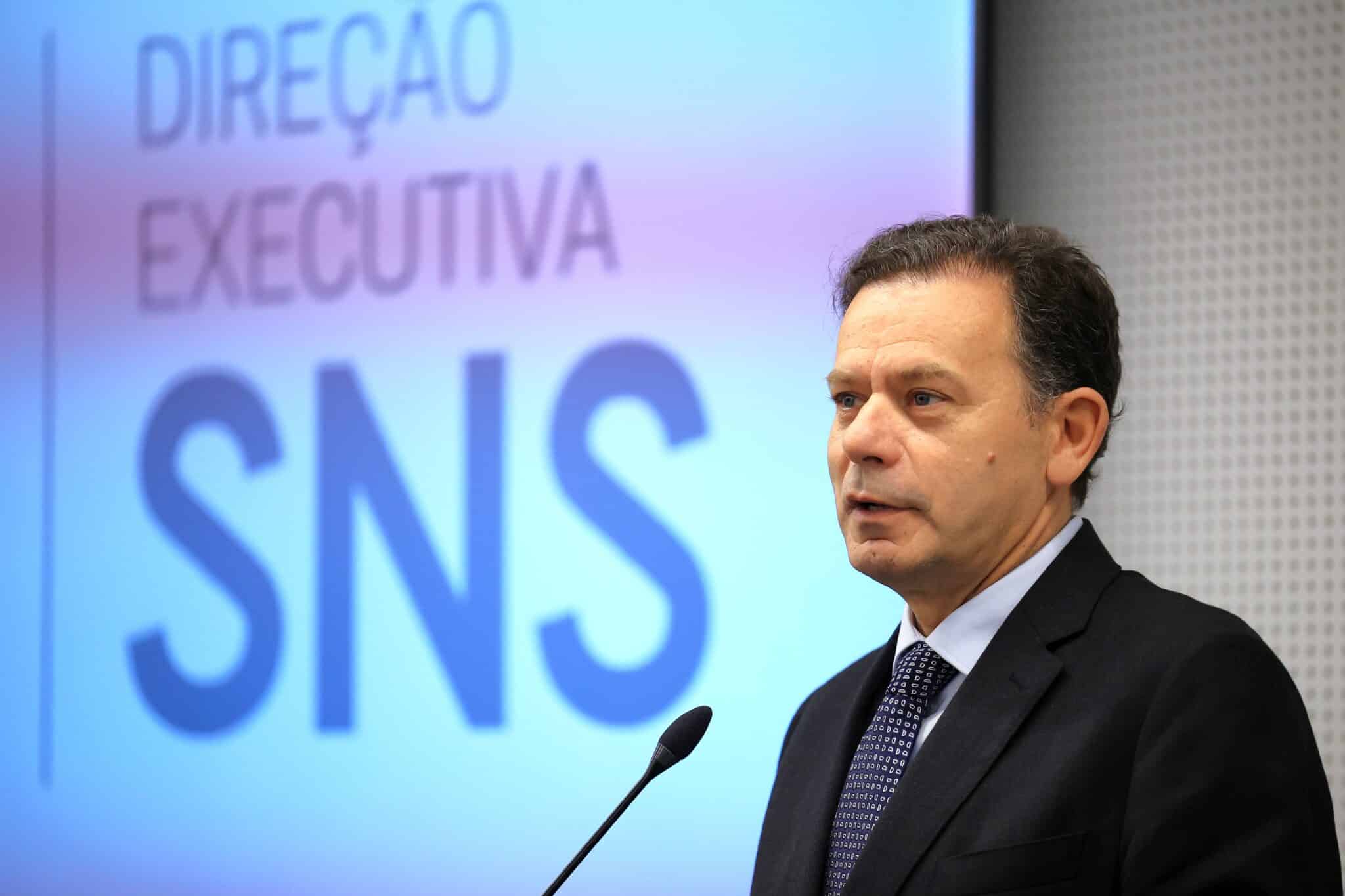
In an attempt to turn the tables on national news focus this week, prime minister Luís Montenegro told a captive audience (at the inauguration of the SNS executive board headquarters in Porto) that ‘the chaos’ unfolding in the state health system is, in fact, merely a ‘perception of chaos’.
“This (perception) is not the reality,” he assured.
As for the stories of waiting times at hospitals stretching into double figures, of ambulances out of commission, of health service workers complaining government budgeting is ‘strangling services and compromising patient care’, these are all down to what the prime minister seems to see as a ‘news frenzy’.
Indeed, he sought to re-package hospital waiting times (which for ‘urgent patients’ in the Greater Lisbon area can stretch into many hours), calling them “the best they have been in five years”.
“Waiting times in emergency departments in Portugal are lower than they were last year; lower than they were two years ago; lower than they were three, four, and five years ago,” said the PM.
“They are the best in the last five years! They are the best from a performance point of view. I repeat, this is not a reason for us to be satisfied because we can still improve even more.”
Then came a surprising punchline: “Our national health system has the difficulty of seeing many of its qualified staff seeking opportunities abroad and, therefore, seeing many of its human resources migrate, while at the same time seeing many migrants entering the country who are, quite rightly, entitled to healthcare.”
The sentence suggests there just might be a problem – but this is where reporting on the speech ‘stopped’.
It took no time at all for PS Socialist leader José Luís Carneiro to suggest that the prime minister is “living in an alternative reality”; “completely disconnected from the country (…) demonstrating insensitivity and incompetence”.
Pundits confirm that a politician’s last port of call is the accusation that people are “seeing it all wrong”. Thus, Mr Montenegro may well have decided to follow the ‘political textbook’ on what to do when headlines become ‘too much’.
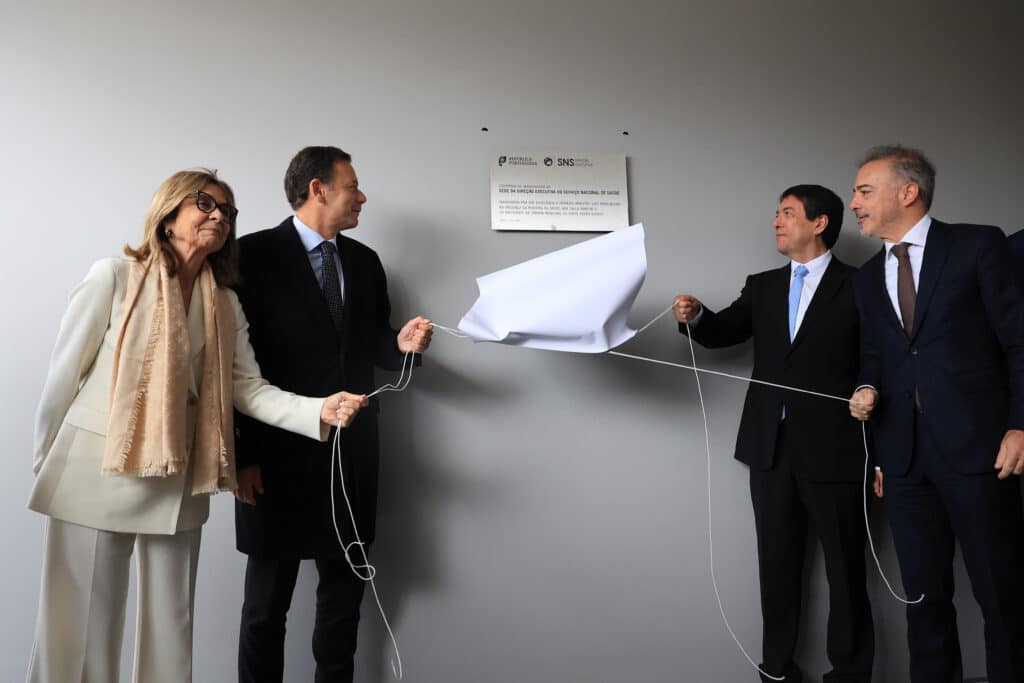
(left), the Executive Director of the National Health Service (SNS), Álvaro Almeida (second right),
and Pedro Duarte (right), Porto Mayor, during the inauguration of the new SNS Executive Board
headquarters in Porto, on January 12, 2026 – Photo: Estela Silva/Lusa
The problem is that his speech has not stopped the headlines. It has not stopped the problem of ambulances failing to arrive promptly to assist people in their worst moments; it has not speeded up patient queues at A&E departments, and it has not assuaged healthcare workers fighting to be conceded more human resources.
Worse than that: it has underscored this government’s seemingly knee-jerk management strategy.
Last week, after three people died waiting for ambulances to arrive, the prime minister made a surprise announcement in parliament about ‘the largest investment’ in ambulances in ‘over a decade’. The inference was that this PSD/CDS government had decided things had reached such a point that new ambulances were most definitely needed. Only it wasn’t quite like that.
PS Socialists were quick to go back through their own files and realise that it was the last PS government, under António Costa, that had authorised the spending of public money on these ambulances (more ambulances, even, than the PM had announced)… and that Luís Montenegro’s government has actually delayed their purchase until now (when the situation has become ‘headline critical’).
Adding insult to injury, the government is refusing to say to which company the tender for these ambulances has been awarded.
For a ‘lay reader’, from which company/supplier ambulances are being purchased may not seem so important, but for political parties like PSD and PS, both ‘mired’ in histories involving cronyism and corruption, it is hugely relevant.
On Tuesday, PS leader José Luís Carneiro reiterated that there will be many months between Luís Montenegro’s announcement of this “largest investment in ambulances in over a decade” and the ambulances actually arriving – and the country deserves to hear why it took the government so long to move forwards with the purchase, and to which company the tender has been adjudicated.
At some point, Luís Montenegro might need to consider whether the ‘news frenzy’, as he calls it, has been prompted by his own way of ‘running’ the country.
Civil Protection agency blasts firefighters
Seemingly following the prime minister’s predilection for seeing things from a different perspective, ANEPC – the country’s Civil Protection Agency – has blasted fire stations which decided to ‘think outside the box’ to bolster ambulance cover around Lisbon (the area worst affected by shortages of ambulances).
Calling the ‘task force’ of eight vehicles mobilised over the weekend “illegal”, ANEPC sought to suggest it would not increase capacity “in any way”, and be essentially pointless.
ANEPC was proved wrong almost immediately.
Just on Sunday, the various ambulances stationed in and around the capital were called out by state medical emergency institute INEM no less than 16 times.
INEM theoretically should have been relying on the ‘traditional ANEPC/CODU system’ for its ambulance services. When this failed to deliver an instant response, INEM ‘reached out’ to the firefighters’ task force (manned by firemen and women in their free time and for no pay) and these ‘swung into action’, proving – in the eyes of fire stations posting online – that “volunteer firefighters continue to be the pillar of protection and rescue in Portugal.”
ANEPC may not have liked that one bit.
Lusa reports that ANEPC’s president called a meeting with his INEM counterpart on Monday – and the latter left the premises after the meeting “without making any comments” to waiting reporters.
How does all this play into the ‘confidence’ of citizens in their institutions? Again, pundits and observers might find themselves agreeing with one observation highlighted by the prime minister: “We are living in strange times.”