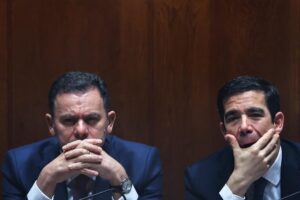
The woes of the AD government when it comes to unions within public administration have amplified today with the Common Front announcing that it is not agreeing with the administration’s idea of salary increases this year.
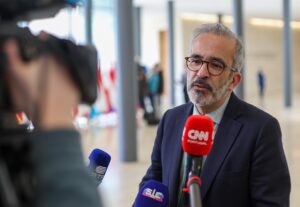
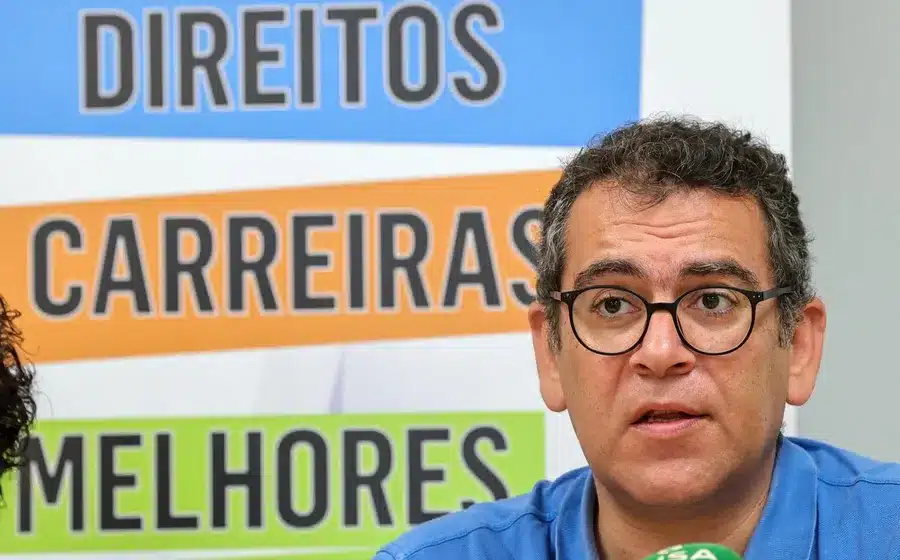
Coordinator Sebastião Santana told reporters as he left a meeting with the secretary of state for public administration: “We continue to reject agreements that harm workers, that take away their purchasing power, that do not restore what has been cut over the years.”
While yesterday saw a major demonstration led by the CGTP (confederation of Portuguese trade unions) outside parliament, in which a petition containing 190,000 against the government’s proposed labour reform was delivered, today has seen a new spanner inserted into the works of the public administration sector.
Sebastião Santana indicated that this morning’s meeting formally closed the process of the Annual General Negotiation for Public Administration – and that the Secretary of State conveyed that this was the last meeting.
For the Common Front, the agreement proposed by the government is “impoverishing” and “falls short of what is necessary.” As a result, the federation will not sign it.
“We will not ask for further negotiations, nor will we participate in them if they take place,” Santana added.
According to the Common Front coordinator, the government’s proposed agreement did not bring anything new compared to what had already been reported, providing for increases of 2.15%, with a minimum of €56.58 for this year and an increase in the civil service meal allowance of 15 cents (per day) per year until 2029.
In practice, this means that the remuneration base for the civil service (commonly known as the minimum wage) will rise from the current €878.41 to €934.99 in 2026.
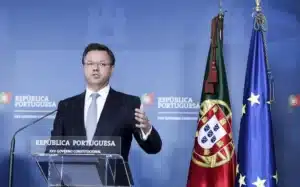
Sebastião Santana also said that he had set the government a “challenge” to “sit down at the table” with unions and open “another extraordinary negotiation process with a view to an interim wage increase in the first phase and then respond to the other four priorities” delivered today by the Common Front and included in the federation’s list of demands.
“They are not going to wait until September this year to start renegotiating salaries for the following year,” he said, criticising the way the process was conducted, given that it ends when the State Budget for 2026 is not only “approved, but also enacted and in force”.
In addition to the salary issue, Sebastião Santana mentioned that among the Common Front’s “priorities” are “the restoration of the public appointment bond” – the replacement of the civil servant evaluation system with a system “that does not have the conditions that exist today”, plus the valorisation of careers, and investment in public services.
“We need valued public services – not what is happening, as we have unfortunately been seeing every day (with) news of public services in serious decline, (as is the case) with the SNS national health service,” he added.
On that specific point, presidential candidate António José Seguro lambasted the prime minister’s ‘there-is-no-chaos-in-the-state-health-system, just-a-perception-of-chaos’ speech in Porto earlier this week, saying the situation within the SNS is very serious indeed.
As to the wider context of civil service pay increases generally, the government has already shown itself willing to move forward with an extension of the multi-year agreement on the enhancement of civil servants currently in force, in order to cover the current legislative term, i.e. until 2029, proposing in this case increases of 2.30%, with a minimum of €60.52, writes Lusa.
The proposal presented to civil service unions includes other matters, such as “the remuneration status of managers, the inclusion of other careers, the revision of SIADAP, as well as those provided for in the current agreement: the revision of the allowance and transport allowance scheme, assessment of the impact of the career accelerator and the review of general careers,” the Ministry of Finance said in a statement on December 17.
Source material: LUSA/ Correio da Manhã