Portugal’s presidential elections taking place Sunday week (on January 18) are perhaps the most ‘unusual’ elections of their kind in living memory. It isn’t just that they come at a time where the wider ‘global order’ is shape-shifting dramatically; it is that they coincide with the moment in Portuguese politics where the traditional parties of the left and right are desperately trying to hold on to their sense of ‘superiority’ and ‘belonging’ – and not really doing a very good job of it.
Before Christmas, the leader of the PS Socialist party (beaten into third place nationally at the last elections) actually appealed to ‘all candidates of the left’ to ‘desist’ from the campaign in favour of the only left-winger ‘with the conditions to go to the second round’ (meaning the PS choice António José Seguro).
“The merit, respectability, and legitimacy of all the other candidates to the left of the Socialist Party are not in question,” stressed José Luís Carneiro – but not one of these candidates (Catarina Martins – Bloco de Esquerda, António Filipe – PCP communists, Jorge Pinto – LIVRE, or André Pestana – trade unionist movement) took the appeal seriously, and they all remain on the ballot paper.
Then, last Sunday, the PSD party leader, and prime minister, Luís Montenegro – also made an appeal for voters to ‘vote tactically’ – in favour of his party’s preferred candidate, Luís Marques Mendes. “We cannot fall into the trap of dispersing votes and being tied to not having good choices in the second round,” Luís Montenegro told a lunch of party faithful in Batalha. “We must concentrate our vote on Luís Marques Mendes right now.”
Montenegro clearly believes that exuding confidence and authority is important, but somehow the message hid an air of desperation. Luís Marques Mendes represents “a safe haven”, the PSD leader told his audience, before referring to ‘populists’ in the campaign, “whether they come from civil society and sometimes even from youth movements, or whether they are populists who come from a more disguised or militarised space”.
Without naming two of the front-runners in this ‘race’ to the presidency, Montenegro left no doubts: he was talking about CHEGA leader André Ventura, and former Naval Admiral Henrique Gouveia e Melo – both seen as men who do not represent ‘the system/status quo’.
“We want the moderate space of social democracy, Christian democracy, moderate socialism and liberals to be in the second round (…) to win the second round (…),” he went on. “This is not the time to distribute the vote based on sympathies, or momentary impulses. If we fail to elect Luís Marques Mendes (…) we will not be able to correct that later.”
And this was probably the ‘overkill’ moment: certainly, Gouveia e Melo reacted with ‘displeasure’ that the prime minister was clearly trying to influence people’s voting, and André Ventura seemed delighted that Montenegro had shown such desperation.
For Ventura, getting into the second round is, and always has been, the focus – and he is not doing badly. The latest poll, carried out by Pitagórica for CNN Portugal, TVI, Jornal de Notícias and TSF Rádio, shows how exceptionally close the race remains, even after so many weeks of debates and interventions. Of the 11 candidates, only five appear to have any fighting chance (meaning voting intentions for them are in double figures) – but none are polling anything close to the required 50%.
The Pitagórica poll actually suggests that the PS candidate, António José Seguro, is leading voting intentions on 19.3%, a short neck ahead of Gouveia e Melo on 19.2%, followed by André Ventura on 18.3%, João Cotrim de Figueiredo on 18.0% and Luís Marques Mendes on 15.4%.
The other six contenders are trailing in positions unlikely to see them getting anywhere on January 18 (very much as José Luís Carneiro tried to explain before Christmas).
Of course, one can dismiss the poll as ‘just another poll’, but it perpetuates the ‘feeling’ that people are changing. They may not see the point in ‘playing safe’ when the wider world is lurching perilously towards new levels of chaos.
Sunday, January 18, will give us an inkling of where this race is going. This is actually ‘the boring part’: the spicy bit will be when it comes down to two candidates on February 8.
In the meantime, readers may wonder ‘why all the fuss? Presidents don’t really have a lot of power’. This is absolutely true. But they are figureheads; points of reference of a nation – and with everything that is going on in the world right now, Portugal needs a strong one.
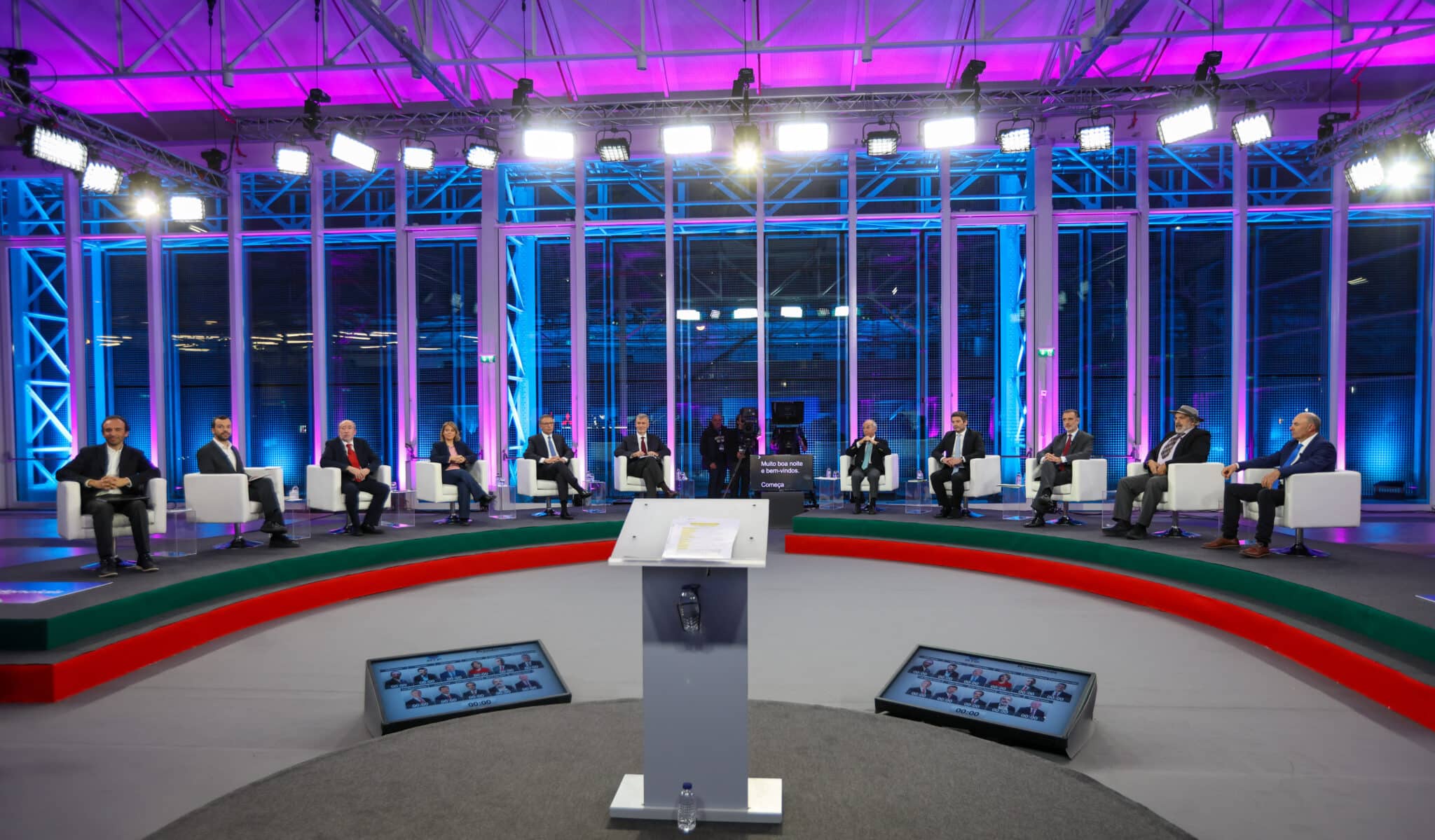
Candidates (in alphabetical order)
André Pestana, André Ventura, António Filipe, António José Seguro, Catarina Martins, Henrique Gouveia e Melo, Humberto Correia, João Cotrim de Figueiredo, Jorge Pinto, Luís Marques Mendes and Manuel João Vieira.