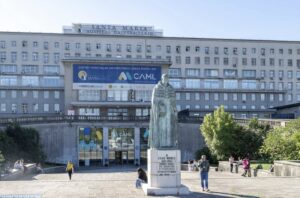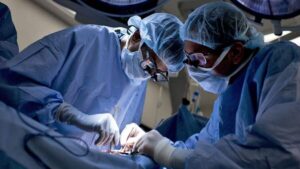
The controversy over a 33-year-old dermatologist who earned more than €700,000 in three years performing ‘additional surgeries’ on the SNS at Lisbon’s Santa Maria Hospital appears to be deepening.
According to tabloid Correio da Manhã, “all the additional surgeries performed by Miguel Alpalhão were poorly classified and paid over the odds.
“In three years, the doctor earned €714,176.42 in 450 surgeries, including on his parents, without justification.
“The two operations (on his parents) cost the state €8,632 – of which €5,524 was for the doctor.
“Of the total of 450 surgeries, 356 were coded by the doctor” who “had powers” to organise additional dermatological surgeries “always and only on weekends, and Bank Holidays”.
A report by IGAS (the general inspectorate of health activities) has also been scathing, says the paper.
IGAS verified “improper coding of additional comorbidity diagnoses that led to grouping at severity level 2, in minor surgeries that did not use sedation, anesthetic monitoring or recovery stay”.
In the dermatology service, “surgical proposals were not inserted into SIGIC” (the system for this purpose) “during consultations, being registered only in paper format, which “adulterated the list of registered patients for surgery”.
In the case of the surgeries performed on his parents, Miguel Alpalhão appears to have scheduled their consultations without any previous reference, IGAS points out. He then came up with the surgical proposals “and performed the surgeries”.
The Santa Maria ULS (local health unit) has already instigated a ‘disciplinary process’, which is currently in the ‘defence phase’. IGAS however has sent its conclusions to the Public Prosecutor’s Office, “to determine potential financial liability for improper payments”.
Bottom line, says CM: “Miguel Alpalhão may have to return a large part of the €714,000 euros” that he earned in additional procedures over weekends and on Bank Holidays.
When it comes to the ‘disciplinary aspect’, the IGAS inquiry may already have been archived as “the doctor does not have a public servant work contract”, explains CM.
Lusa adds that the doctor’s ‘additional surgeries’ were noticed by his immediate hierarchy, but nothing was ever taken further.
“There was an alert in 2022 from the person responsible for the area’s administration regarding deviations in additional surgical production in the Dermatology Service”, says Lusa, stressing “no alarm was raised, neither in terms of the number of surgeries nor the amounts paid and received, although this was always known to the service director”.
Lusa adds that in his own statements to IGAS, the young doctor said that his coding “always respected good practice”, that “until this controversy, all the colleagues in the service proceeded in the same way and according to the same instructions” and that “there was no information about what minor surgery was versus outpatient surgery”.
sources: Correio da Manhã/ Lusa