Energy (and environment) minister Maria da Graça Carvalho has admitted to being particularly worried about an increase in the price of gas as a result of the ongoing conflict in the Middle East.
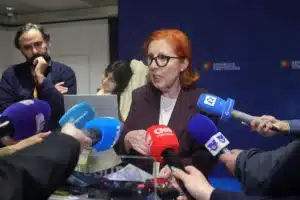
Speaking during a visit to Guimarães, Ms Carvalho said: “What worries me most is gas for industrial production, even more than the electricity market itself, because there are vital sectors in Portugal, such as glass and ceramics, which need gas for their production and which have recently suffered the effects of storms.”
With “gas right now very dependent on Russia and countries of the Middle East”, Portugal is preparing a series of scenarios, said the minister, “analysing European legislation that exists in relation to gas and the price of electricity.”
If, for example, there was a massive increase in gas prices (Carvalho mentioned 70%…), this would be considered an ‘energy emergency’ and “the European Union would give member states the possibility of protecting their businesses, their consumers, without additional legislation”.
In the context of a military conflict that is showing little sign of calming, increasing prices across the board appear to be looming. Social media is awash with posts warning that Iran now is not so much fighting a military war any more: it is waging an economic one, the aim of which is to “make the price of oil so painful, so unbearable, so devastating to the global economy” that countries start pressuring the US/Israel to stop their bombardments.
Whatever the reality, Portugal has enough gas reserves to get the country through around 93 days, Dinheiro Vivo wrote earlier this week.
Another bit of ‘good news’ is that this country “does not have exposure to the Strait of Hormuz when it comes to quantities acquired and/or transported”, says the online.
According to data from the platform Gas Infrastructure Europe (GIE), “levels of gas storage in Portugal (at 76.2%) are close to maximum capacity – very much higher than the European average which is significantly lower at the moment (29.4%), due to the fact that we are approaching the end of the winter”/colder months.
However, in absolute terms, Portugal has one of the smallest storage capacities in the European Union – which is why our levels ‘appear frequently close to maximum capacity in percentage points’, DV explains. (Meaning one can be at almost full capacity of a bucket, when another country may be below half capacity of a swimming pool). And this is where the country yet again appears to have come up against its own surprising level of complacency: “The reinforcement of gas storage capacity was announced in 2022, in the context of the energetic crisis that unfolded because of the war in Ukraine.
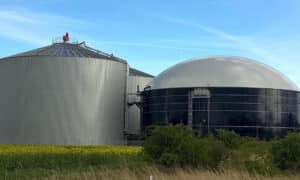
“At the time the secretary of state for energy, João Galamba, advanced with the creation of a strategic national gas reserve, and the reinforcement of storage capacity in the underground complex of Carriço, in Pombal.
“Two new subterranean caverns with an additional capacity of 1.2 terawatts-hour (TWh) are planned in an investment of around €90 million”, says the online – but they have not yet been constructed.
“The Gas Network Development and Investment Plan (PDIRG 2026-2035) indicated a forecast for sequential entry into operation between 2027 and 2028”, although this depends on a final investment decision, licensing and objectives, etc.
Asked to comment on the status of this expansion, REN (the company running Portugal’s energy grid) simply stated that “the timeframe for the entry into service of two new gas storage cavities, presented in the PDIRG, is indicative and its actual implementation depends on the intended date/objective and the approval decision by the grantor,” i.e., the state (meaning the government).
Thus all the good intentions of 2022 – when one could argue: ‘the writing was already very much on the wall’ – were not taken up, and now a new minister in charge of energy in Portugal admits that she is worried.