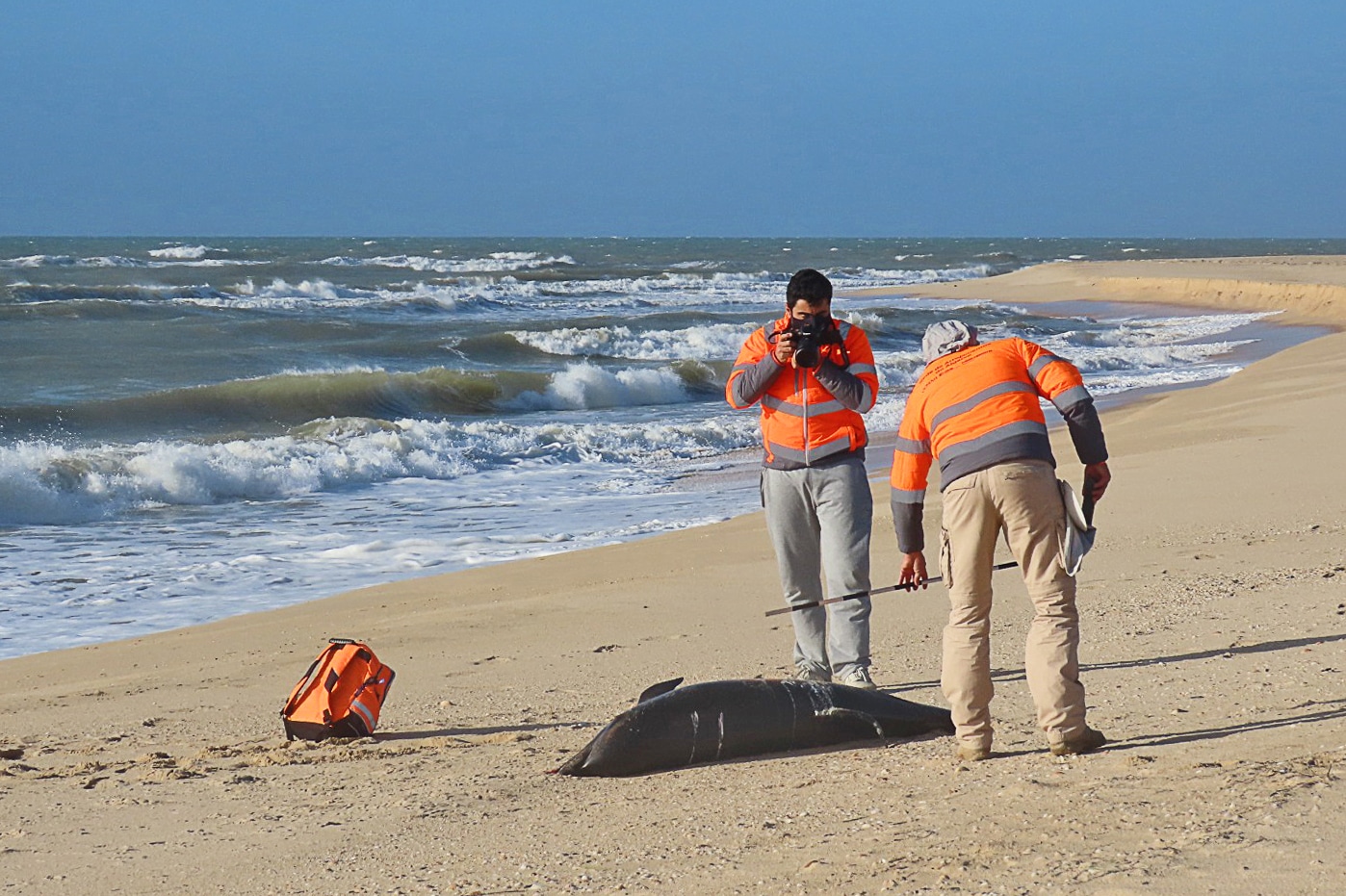
A major study has found that a significant number of dolphin and whale strandings in the Algarve are linked to fishing.
The research, led by the University of Algarve’s Sea Science Centre (CCMAR), analysed more than 1,000 strandings recorded over a 46-year period.
According to the study, in cases where the cause of death could be determined, 45% of the animals showed “signs of interaction with fishing”.
Researchers say the data helps to “better understand the phenomenon” in the region and provides a solid scientific basis to improve fisheries management and protect marine ecosystems.
Certain areas were identified as hotspots for strandings, including Cabo de Santa Maria in Faro, the coastal stretch between Portimão and Lagos, and the area around Sagres.
The study also raised concerns about the number of young animals found, which could affect the long-term sustainability of cetacean populations.
According to the researchers, records were collected “in an irregular way” for decades, but the continuous work of the Algarve Stranding Network (RAAlg) has made it possible to build the “first consistent diagnosis of cetacean mortality in the region”.
Coordinated by CCMAR and part of the national stranding network, RAAlg permanently monitors the coastline, with teams supported by local communities. This allows for the collection of biological data and the carrying out of necropsies.
“Since the network became operational, the ability to identify species and determine causes of death has increased substantially and the number of records has doubled, revealing a reality that had previously been underestimated,” said Jan Hofman, the study’s lead author.
The research identified 19 species of cetaceans stranded along the coast, with the common dolphin the most frequent and the minke whale the most common among whale species.
Strandings show clear patterns over time and across locations, reflecting the distribution of species in the region.
For Ana Marçalo, a CCMAR researcher who coordinated the study, the findings “do not point fingers, but rather show pathways”.
She said the new knowledge will help design “more effective mitigation measures and reduce accidental catches without compromising fishing activity”.
“By understanding the seasonality of species, the most sensitive areas and population structure, we can identify critical zones and reduce accidental catches without compromising fishing activity, a sector that is vital to the Algarve’s economy and identity,” she added.