The deal could be completed before the end of 2026
The Portuguese government expects to complete the four stages of the TAP reprivatisation process within a year, and the timetable will become final as soon as the regulators approve it.
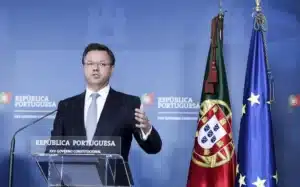
After the government kicked off the sale of the airline on Thursday with the approval of the decree-law, which still has to be promulgated by the President of Portugal, the goal is to take the specifications to the cabinet within 15 days, explained Infrastructure Minister Miguel Pinto Luz at a meeting with journalists.
Following the promulgation of the decree-law by Marcelo Rebelo de Sousa, there will be a 60-day pre-qualification phase for interested parties. In October 2023, the president vetoed the document drawn up by António Costa’s government to start the privatisation of TAP.
At the time, Marcelo Rebelo de Sousa decided to return the bill, approved by the cabinet on September 28 of that year, because he “requested further clarification and input to ensure the desired maximum transparency of the process”.
After the initial phase, selected candidates will have 90 days to submit proposals. This deadline is tentative and may be adjusted by the cabinet. The same timeline applies to the third phase, which involves submitting binding offers.
Finally, after the selection team selects the most attractive proposals, the negotiation phase will take place – if there is more than one proposal on the table for the purchase of up to 49.9% of the airline’s capital.
The team will carry out the operation through a direct sale model, with up to 5% reserved for employees, as provided for in the privatisation law.
The buyer will have a preference for the percentage remaining after employee subscriptions.
“We believe that the operation will be completed within a year,” said Miguel Pinto Luz, warning that this timetable is dependent on the European Commission’s Directorate-General for Competition (DGComp) approving the operation.
The specifications will also ensure that, if for any reason the government is not ‘comfortable’ with the proposals, “it can withdraw from the process without any burden”.
The government prefers, for the time being, to withhold any estimate of the proceeds from the sale of TAP to safeguard the operation.
“We will, of course, keep sensitive information confidential to safeguard the state’s negotiating position. We will wait for the proposals,” said the minister.
Parpública, the state’s holding company, will prepare a report evaluating the proposals for the cabinet. A special oversight committee will also be created, chaired by Daniel Traça, former director of the Nova School of Business and Economics (Nova SBE). Luís Cabral and Rui Albuquerque will also be part of this group. The committee’s role will be to ensure transparency, rigour, and impartiality throughout the process.
The cabinet’s approval of the decree-law is the first step towards the sale of TAP, which will once again have private shareholders after the government moved to nationalise it in 2020 due to the impact of the pandemic on air transport.
Interruptions due to the fall of the last two PS and PSD governments have paused the reprivatisation of the airline, which has been on the table since 2023.
Originally state-owned, TAP underwent partial privatisation in 2015, but the António Costa government reversed the process in 2016 and took back 50% of the company.
Last year, Luís Montenegro’s government revisited the issue and expressed its intention to proceed with the sale of a minority stake in 2025. Since then, the government has been negotiating with major European groups such as Air France-KLM, Lufthansa and IAG.