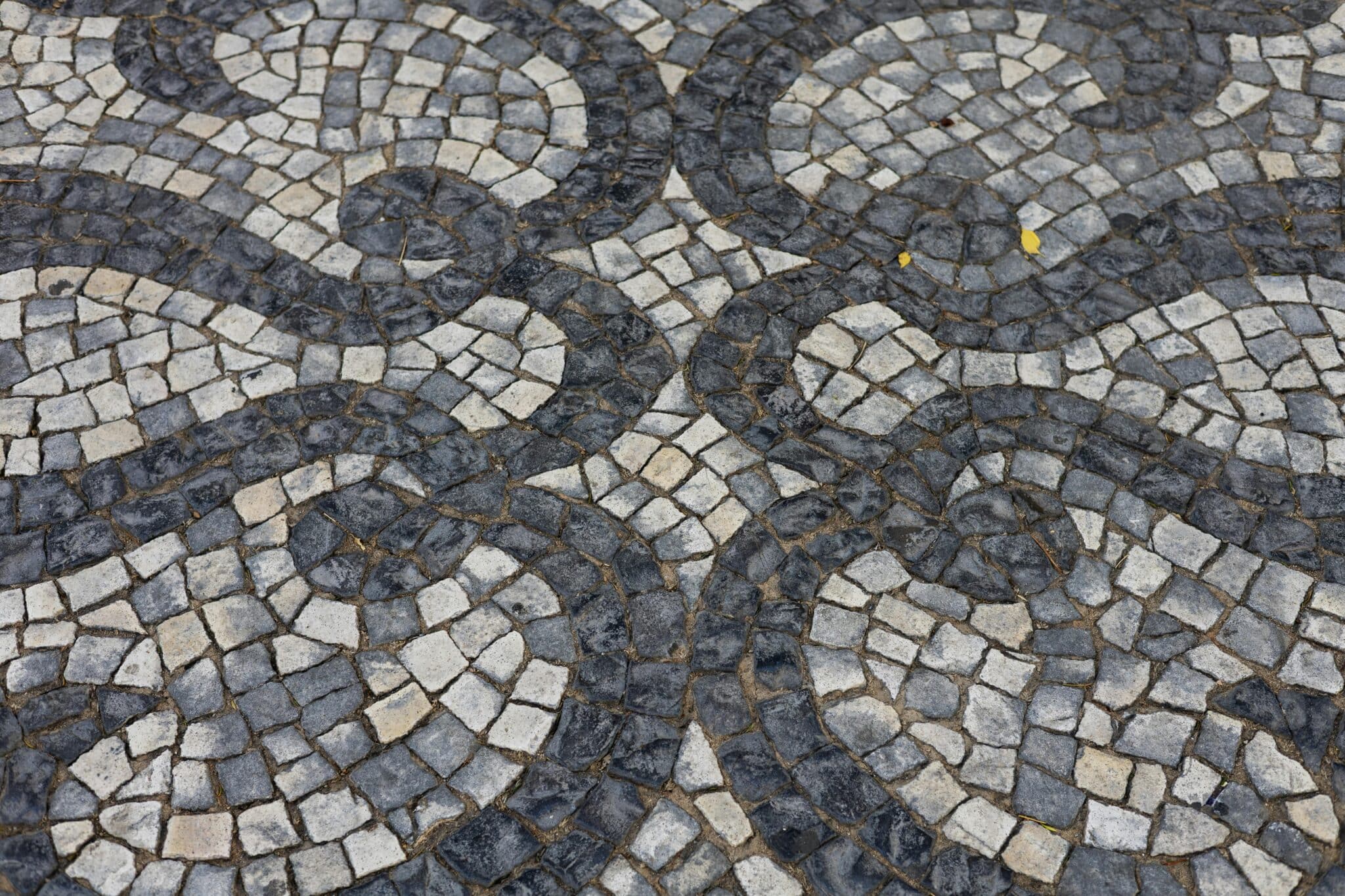
The Portuguese government is creating a working group to protect and revitalise Portuguese Calçada, the traditional hand-laid cobblestone pavements that are a defining feature of towns and cities across the country and far beyond its borders.
According to the Ministry of Culture, Youth and Sport, the task force will focus on the future of the calceteiro – the skilled craftspeople who create and maintain the intricate stone pavements – and will propose concrete measures to protect and value both the profession and the art form itself.
The ministry says the the initiative seeks to “protect, dignify and ensure the continuity of this intangible cultural heritage which is unique in the world”, and is currently a candidate for UNESCO Intangible Cultural Heritage of Humanity status.
The working group will include representatives from both the Ministry of Culture and the Ministry of Labour and will have six months to present a final report once the government order comes into force. Its mission will be to analyse the reality faced by calceteiros, present practical proposals and make legislative recommendations to ensure the long-term sustainability of the pavements and the profession.
Calçada Portuguesa was officially added to Portugal’s National Inventory of Intangible Cultural Heritage in 2021, with an “urgent need for safeguarding”. Although the technique has ancient roots, its development as a distinct form of stone paving began in Lisbon in the first half of the 19th century, later spreading across the country and to multiple continents.
According to the national heritage inventory, Calçada Portuguesa is created through “a traditional know-how of producing and maintaining pavements, executed on the ground by calceteiros with their mastery”, a skill traditionally passed down from parents to children or learned through apprenticeship alongside experienced craftsmen.
Yet the art – like many other traditional crafts – is now under serious threat. The same document warns that “the hardness of the work, carried out at any time of the year, low remuneration and a degree of social stigma” have pushed younger generations away, while master calceteiros are “disappearing”. In Lisbon alone, numbers have fallen from around 400 active workers in 1927 to just over a dozen today, most already of advanced age.
“This clearly reveals a trend towards the imminent extinction of this traditional technique,” the inventory notes.
Beyond Portugal, Calçada Portuguesa can be found in countries such as Spain, Gibraltar, Belgium, Czechia and China, but more noticeably in Macau, Malaysia, Timor-Leste, Angola, Mozambique, South Africa, Brazil, United States of America and Canada.