B&H classified in several countries as “terrorist organisation”
The government has been pressed further on the subject of extremist movements in Portugal, and the removal of a particular chapter from the Annual Internal Security Report (RASI) for 2024.
Bloco de Esquerda (a party hammered in Sunday’s elections, and now down to just one MP in parliament) presented 12 questions about the elimination of this information, which referred to extreme right-wing group B&H (standing for Blood & Honour – founded in the UK in the late 80s).
Writing about this situation last month, Expresso explained how B&H has been known for ‘violent attacks in the United States and Europe’ and is now banned in Canada, Germany and Spain. “In January (this year), it had its bank accounts frozen in the UK”, said the paper.
“The Portuguese chapter (of B&H) has been organising concerts for several years. Its presence in Portugal has already been noted in Europol reports. Internal B&H documents showed photographs of a large group of London skinheads travelling through Portugal. They are rivals of another neo-Nazi group: the Hammerskins. In the far-right sphere, B&H are considered ‘one of the most secretive’, police sources emphasise”.
Expresso stresses that concerts organised in Portugal by B&H serve as “venues for radicalisation and recruitment, and the financing of activities, including the production of propaganda”.
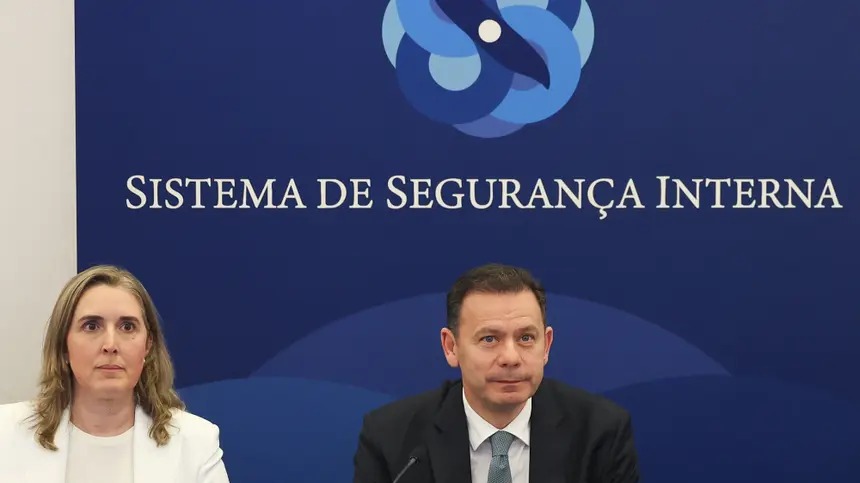
SSI (Portugal’s internal security system which liaises between security forces and services and the government) has not revealed the reasons for removing the chapter on ‘Extremism and Hybrid Threats’ (mentioning B&H) from the ‘working version’ of RASI – but Expresso “understands that at working meetings there were divisions between the security forces and services over whether the information (…) should be published. The decision was made to remove it in its entirety”.
Other threats to national sovereignty, such as the presence of far-right influencers who are captivating young people with their speeches on social media, were also among the data that was not made public, said Expresso.
By removing the chapter on ‘Extremism and Hybrid Threats’, the final version of RASI ended up with far fewer references to various movements.
Expresso says that “there were 15 direct reference to far right threats in the preliminary report; in the final version there were three.
“There were also fewer references to the presence of the far-left in the document.
“As for negationist and anti-system movements, they disappeared altogether in the report delivered to MPs”.
The trouble is that MPs (at least some of them) did get to see ‘the working version of RASI’, and this is why the government is being pressed to ‘come clean’.
The pressing, however, does not seem to be getting anywhere.
Last night, Lusa reported that the “government today admitted to being concerned about extremist movements and said, in response to the Left Bloc on the Annual Internal Security Report (RASI), that the police are using artificial intelligence to analyse data.
“Advanced techniques are being implemented by the police, such as the use of artificial intelligence and large-scale data analysis, which will facilitate the identification of patterns and the interconnection of criminal operations that take place in multiple territories,” read the document published on parliament’s website.
In other words, the official response ‘answered’ the Left Bloc’s questions by going into completely different territory.
As Lusa stresses, “the Left Bloc’s questions focused on the RASI chapter removed from the final version…”
And “on this matter, Luís Montenegro’s office reiterated what had already been explained by the Internal Security System (SSI) and by the national director of the Judicial Police (PJ), Luís Neves, once again stressing that “there is only one version of the RASI, the final one, which results from the Superior Council for Internal Security” and that the information released before the official version was part of working versions.
“Luís Montenegro also stated that “the document to which the journalists had access was not, and could never have been, officially disclosed to the media, as it was a classified working document of a ‘confidential’ nature”.
What particularly did the cut text discuss?
According to Diário de Notícias, the cut text drew attention to the fact that “the failure to adopt a common position, especially at EU level, on this type of extremist group can lead to the creation of safe havens for the development of their activities, which are taken advantage of above all by international extremist organisations with chapters in various countries, and some of their members are often relocated.”
According to the PJ’s investigation (of B&H, which has been active in Portugal since 2018), “online platforms have been the privileged stage of action for decentralised far-right movements with an accelerationist and/or satanic matrix, where, through a culture of communication via memes, they recruit and radicalise increasingly younger individuals, many of them under the age of 16.”
The PJ concluded that “the evolution of this phenomenon in recent years means that the threat posed by possible lone far-right actors, especially minors, cannot be dismissed out of hand”.
But, because this information appears to have been deemed confidential nature, no journalists, in the prime minister’s stated opinion, should have had access to it.
Diário de Notícias’ Valentina Marcelino wrote her thoughts on the “the extremists they want to hide from us” last month, explaining that the decision to cut very relevant information from the RASI report was, in the end, political, in that “the person with ultimate responsibility for the final text of the RASI is the secretary-general of the SSI, a public prosecutor who reports to the prime minister’s office”.