From now on, university graduates who have not yet ‘benefited from the reimbursement of student fees’ will have to choose between this perk (passed into law two years ago by PS Socialists), or IRS Jovem (the tax perks introduced last year by AD social democrats).
Lusa reports that the government has decided young people ‘can’t have it both ways’.
Previously, graduates who had successively concluded their university education and gone on to work in Portugal have (theoretically) been able to claim back money spent on tuition fees (a measure brought in 2024) AND be eligible for the tax breaks introduced by the government for the under-35.
But, in practice, this hasn’t been working – because the new social democrat government doesn’t agree with the reimbursement of tuition fees…
As Lusa explains, the 2025 State Budget (drawn up by Luís Montenegro’s first government) made no mention of the mechanism “and for various months the government portal, where requests (for what has been dubbed the ‘prémio salarial’) are submitted, stated that “new requests are not being accepted”, and that the “deadline for submitting requests in 2025 has still not been announced”.
In other words, something passed in law has not been being carried out, while potential candidates for the mechanism have been kept in the dark.
Now, the final thrust of the new government’s ruse: ‘either take the reimbursement of fees, or IRS Jovem (the ‘light’ income tax package for the under-35s). But you cannot have both’.
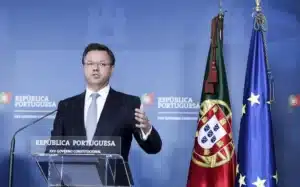
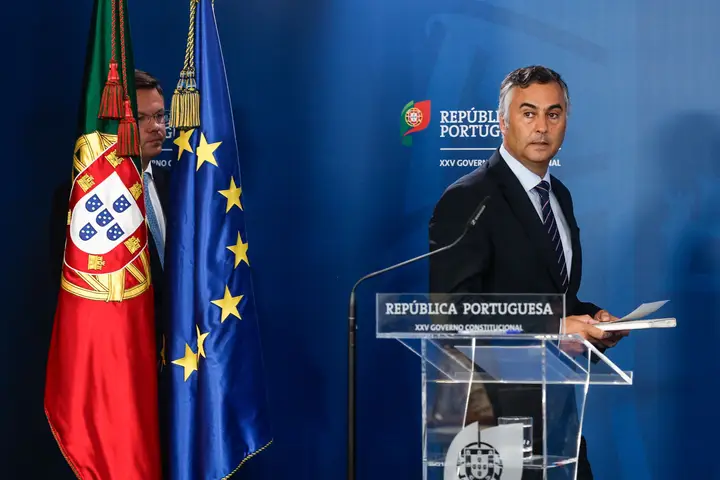
Fernando Alexandre, minister of education, science and innovation, stressed that requests (for tuition fee reimbursements) that have been approved in the past will continue to be paid, as announced by the Taxation Authority. But for new requests, graduates will have to opt between the ‘prémio salarial’ or IRS Jovem”.
This is a blatant case of ‘changing the goalposts in the middle of the game’, and in many ways, highly discriminatory: young earners who put in for the ‘prémio salarial’ last year will continue to receive it in the form in which it was conceived (see below), while at the same time being able to benefit from IRS Jovem, but candidates hoping for the same perks this year, will not be getting them.
There is something else that came from Fernando Alexandre’s various announcements yesterday (leaving little wonder as to the wrath of student bodies): this government is dead set against the previous administration’s plan of ‘slowly phasing out tuition fees altogether’. Mr Alexandre’s reasoning is that “it would be making the whole of Portuguese society pay for the education of those who had the privilege of frequenting higher education, and that is regressive”.
It is an attitude with which many will disagree.
How reimburse of tuition fees works/ worked
The mechanism involved a payment of €697 a year for a university degree, and €1,500 for a Master’s degree, payable during a period equivalent to the duration of the course that was undertaken. For example, a young person who studied a degree for three years, would receive payments of €697 for three years; a young person who studied for a Master’s (four years-plus) would receive €1,500 for the period of time spent at university.
Source material: LUSA