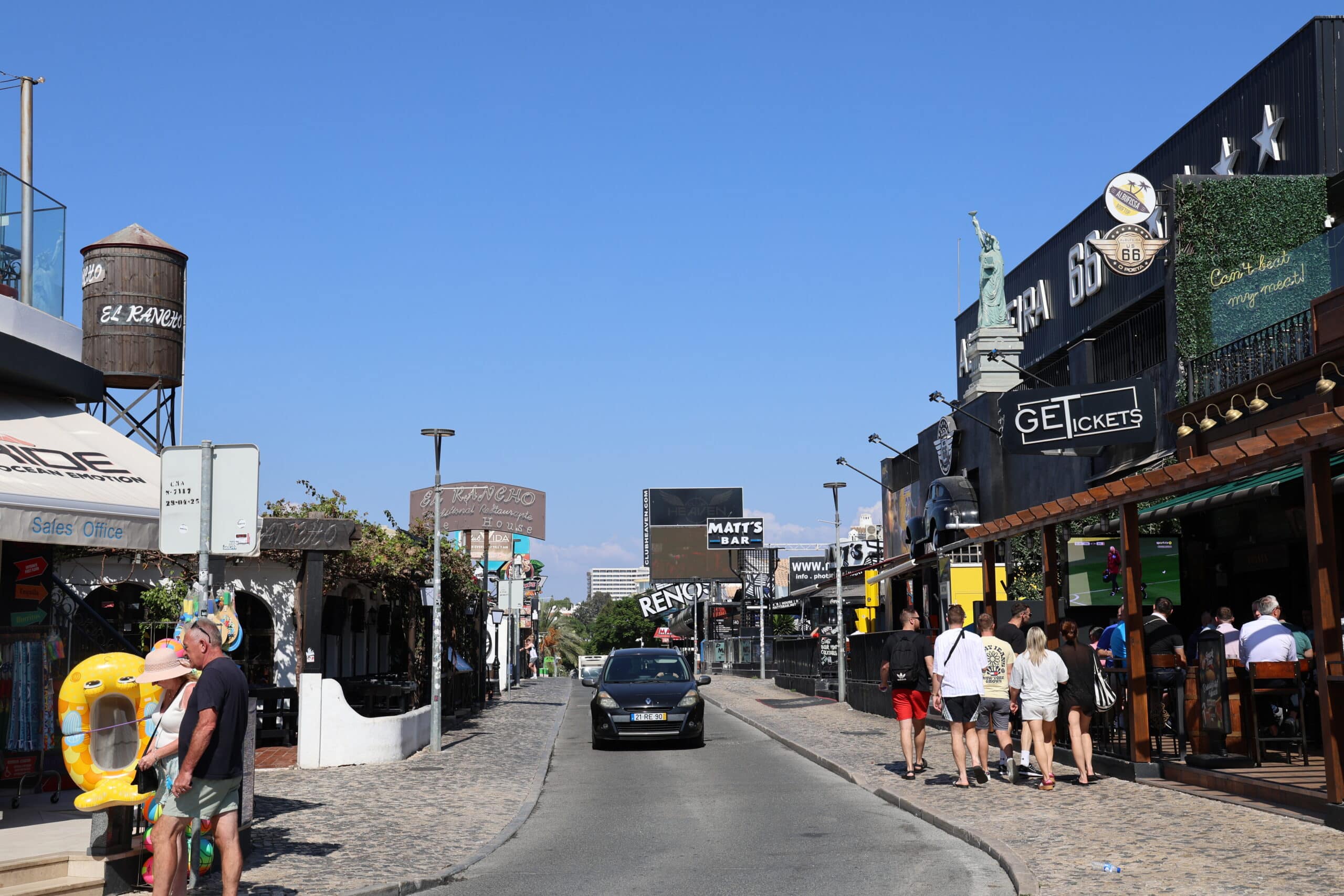
When Albufeira’s much-debated ‘Código de Conduta’ (Code of Conduct) came into effect at the end of June, it aimed to ‘clean up’ the Algarve’s most notorious nightlife destination. From bans on drinking in the street to fines for walking around in swimwear, the new rules promised a more respectful, family-friendly environment.
Four months later, locals and business owners in Oura say the idea was right – but the timing and follow-through have fallen short.
At Rick’s Café, owner Mischa Haasnoot believes the new rules arrived after the worst of the season’s rowdy tourism – particularly the notorious alcohol-fuelled stag and hen parties – had already passed.

“The Code of Conduct started in high season, when the tourists who are usually the worst behaved were already gone,” he told the Resident. “Now it’s mostly over the weekends when that kind of tourism comes, but since the high season has ended, once again there’s no enforcement of the rules.”
Haasnoot argues that while the concept of the Code of Conduct makes sense, timing and consistency are key.
“The idea is correct – something has to be done, or Albufeira turns into a jungle,” he said. “But right now, GNR police don’t have enough staff to patrol. In July and August, there was a boost in police numbers, but those aren’t the months with the worst behaviour. We’d often see officers ‘picking’ on normal tourists just because they weren’t wearing a T-shirt.”
While he also praised the ban on public drinking – which he described as a “terrible look” for the town – he said that the ban must be accompanied by appropriate rules. “It doesn’t make much sense to ban drinking on the street but allow supermarkets or liquor stores to sell alcohol until 2am,” he added.
At Fredis Sports Bar & Food, bartenders Bruno Costa and Diogo Guerreiro – both lifelong residents – say the new rules have brought some improvement, but only during a very limited period of the summer and without lasting effects.
“Albufeira has changed a lot in the last 15 years,” they said. “It used to be a place for families, but now it’s something completely different.”
“The Code was a positive measure, but there has to be constant enforcement,” Costa said. “There are still cases of drug dealing, vandalism, and violence. This is our home, and we don’t like seeing it this way.”
A bartender working during the day in the same area, who asked not to be named, said her experience differed, mostly due to her schedule: “During the day, it’s generally calm,” she said. “But at night, I know it’s a completely different world.”
Business association questions Code of Conduct’s legality
Meanwhile, the Albufeira Business Association – Associação Comercial de Albufeira (ACALB) – has taken a more critical tone, questioning the legal foundations of the regulation and its real-world impact.
In a written response to the Resident’s questions, the group said it has “always been committed to finding solutions” for the issues addressed by the Code but raised “reservations regarding the legal framework and the municipality’s competence to impose certain restrictions.”
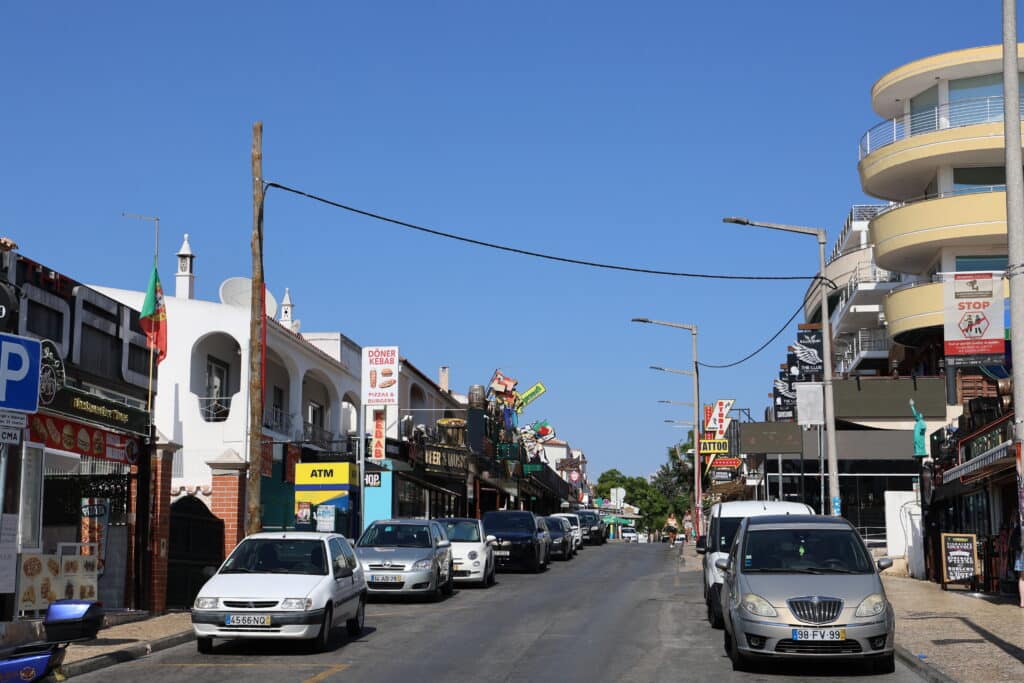
According to the association, the Code introduces sanctions for behaviour “not explicitly defined in national law,” potentially exceeding the local council’s authority under Portugal’s Constitution. ACALB confirmed that the Attorney General’s Office has been asked to review the regulation’s legality.
Beyond legal matters, ACALB called for a cost-benefit study and suggested replacing the current approach with a “manual of good practices” for businesses and tourists alike. The idea would be for local businesses, especially hotels, to promote it among visitors.
The association also renewed its appeal for the long-overdue redevelopment of the “abandoned” Avenida Sá Carneiro, the main Oura bar street, as well as better lighting and traffic management.
For five years, ACALB says it has been advocating for mixed patrol teams of GNR officers and firefighters permanently monitoring the avenue, supported by CCTV and access controls – a proposal which the local council began to partly accept in 2024. “The presence of these teams has contributed to mitigate many of the existing problems,” the association insists.
“Another of our biggest concerns is ending the illegal activity of dozens of travelling vendors,” the association says, adding that the implementation of its proposals is “vital to ensure safety and well-being in a municipality that is Portugal’s main tourist destination, attracting around three million visitors.”
With far-right political party CHEGA set to take over the local council from the previous PSD-led administration (see pages 12 and 13), it remains to be seen whether mayor-elect Rui Cristina will keep the existing Code of Conduct or introduce changes.