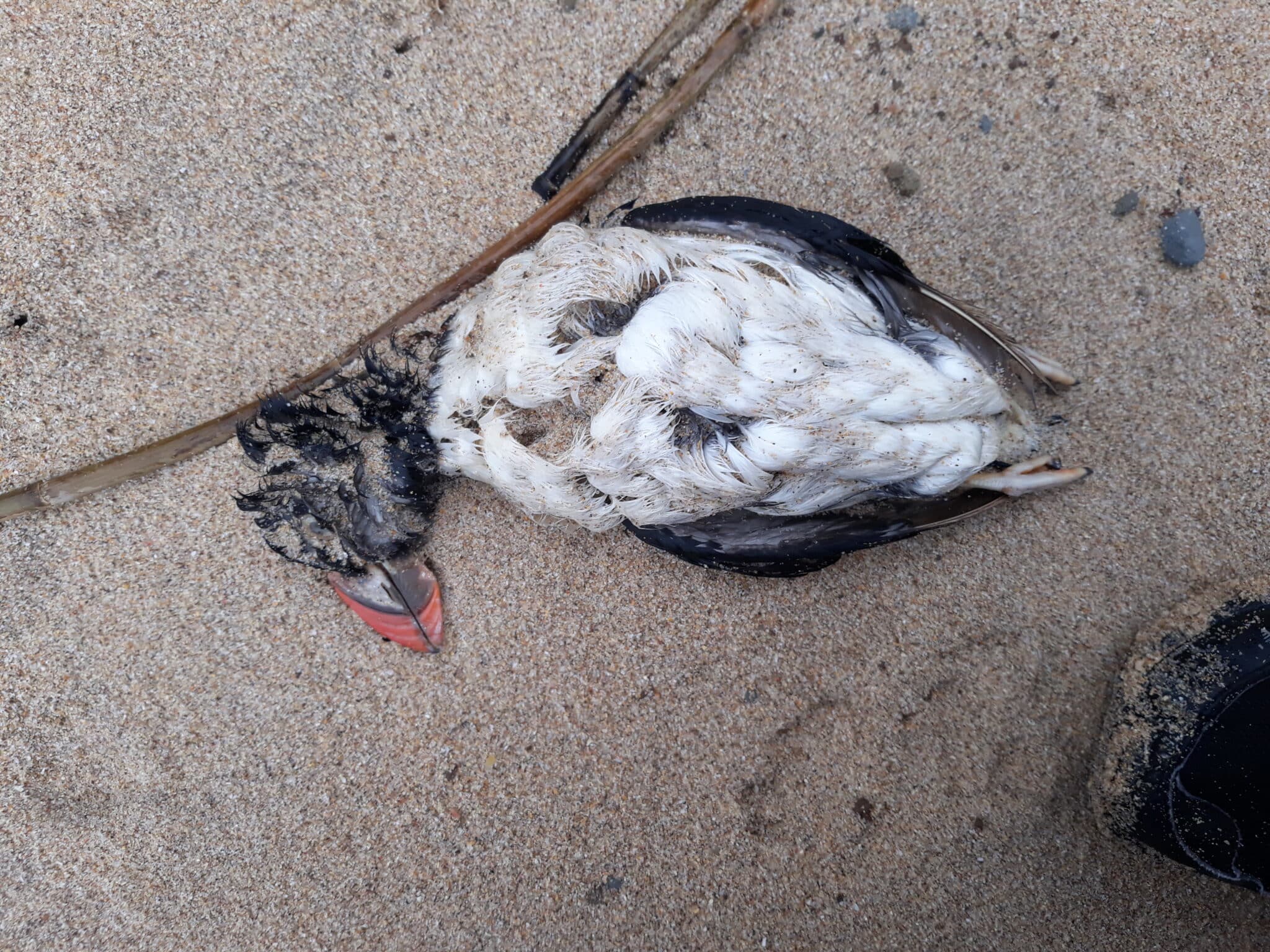
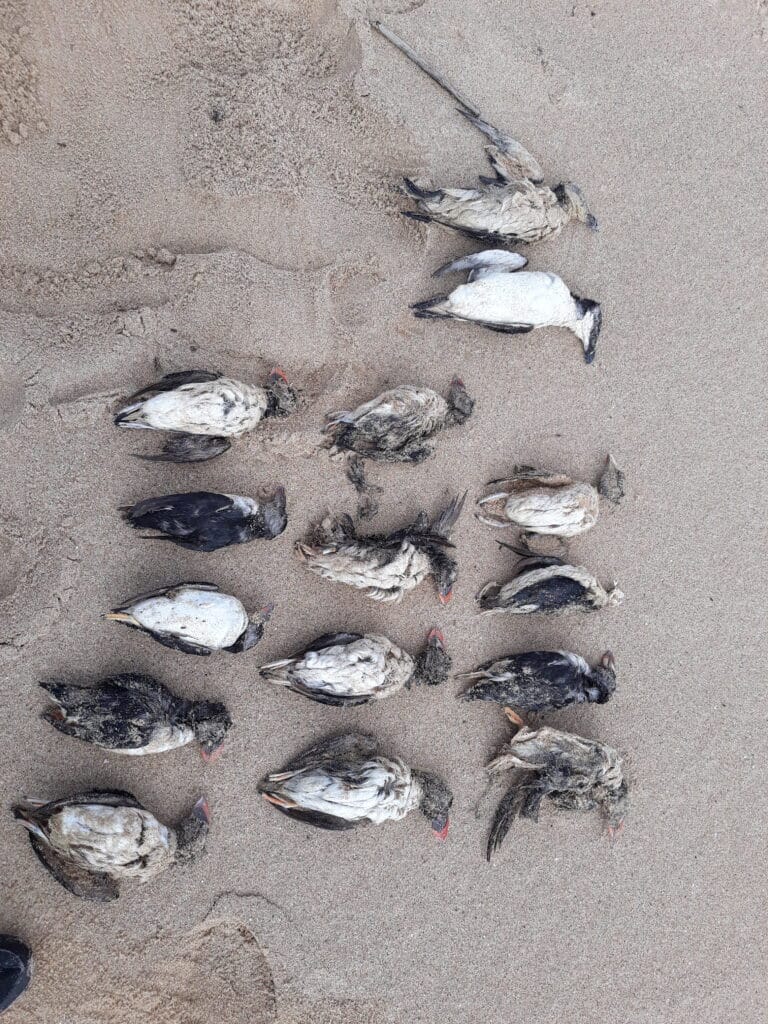
Portugal’s Bird Study Society (SPEA) has recorded over 400 puffins found dead along the Portuguese coast in recent days. The tally comes from monitoring by multiple organisations and volunteers, and the real number is said to be likely higher.
The mass strandings are believed to be linked to storms that have battered the country in recent weeks.
“We know these cases are happening along much of the coast, so it is very likely that the 400 records we have are only a small part of the total. We need help from citizens to understand the true scale of the situation,” said Hany Alonso, Senior Science Technician at SPEA. “This information is essential to identify the affected species, estimate numbers, and understand the impact on populations.”
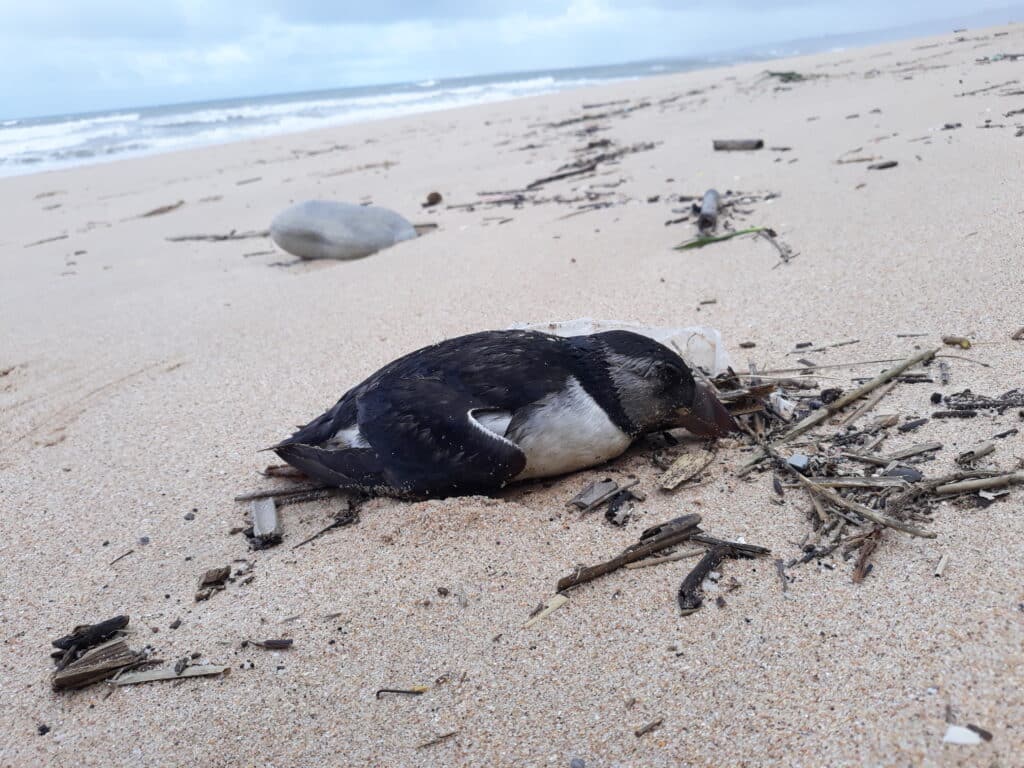
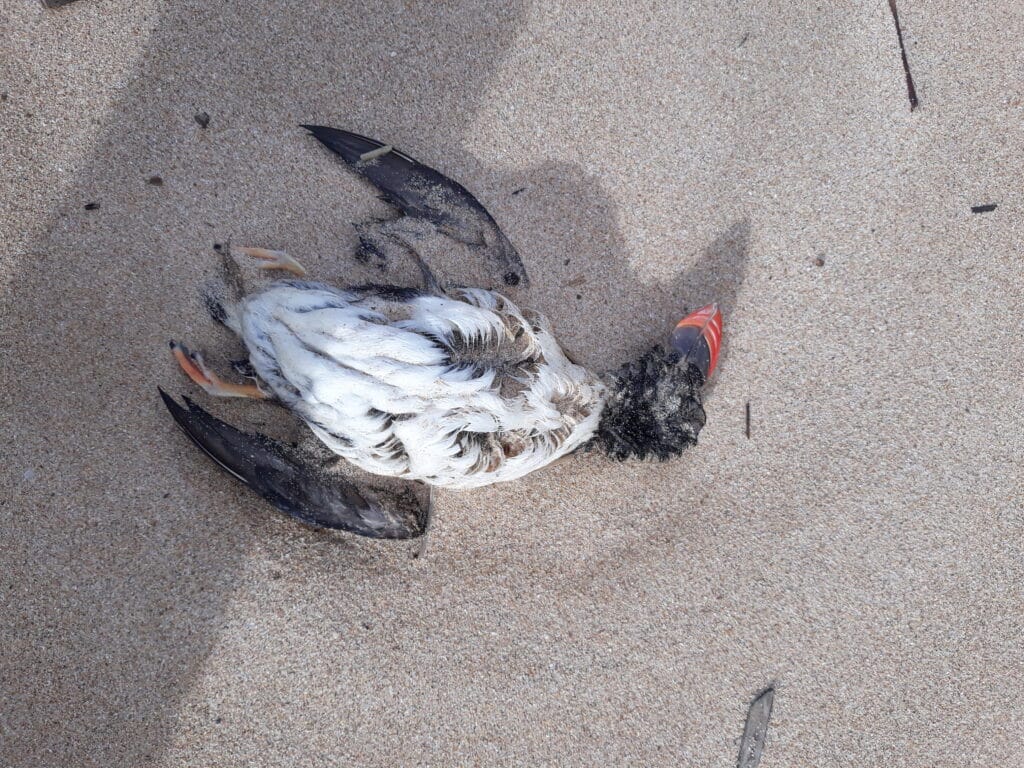
To help with this, SPEA is urging people to report any bids they see washed ashore through the ICAO platform, available online and as an app.
The strandings are being reported across mainland Portugal and the Azores. On the mainland, many cases have been recorded in the north, around Peniche, and along the southwest Alentejo coast. Similar events have been reported in Galicia, Spain (over 400 records), and along the Atlantic coast of France (more than 200), suggesting a large-scale phenomenon affecting the European Atlantic.
In the winter of 2022/23, over 1,700 puffins also washed up across Portugal in just two weeks following severe storms.
According to SPEA, storms can push coastal birds to seek shelter on land and can exhaust weaker ones, driving them ashore. When storms persist over long periods, rough seas and difficulty feeding can leave birds extremely weakened. “For puffins, if they struggle to feed for long periods, their physical condition deteriorates, and they may end up washed ashore exhausted and weak. Many die even after being rescued,” Alonso explained.
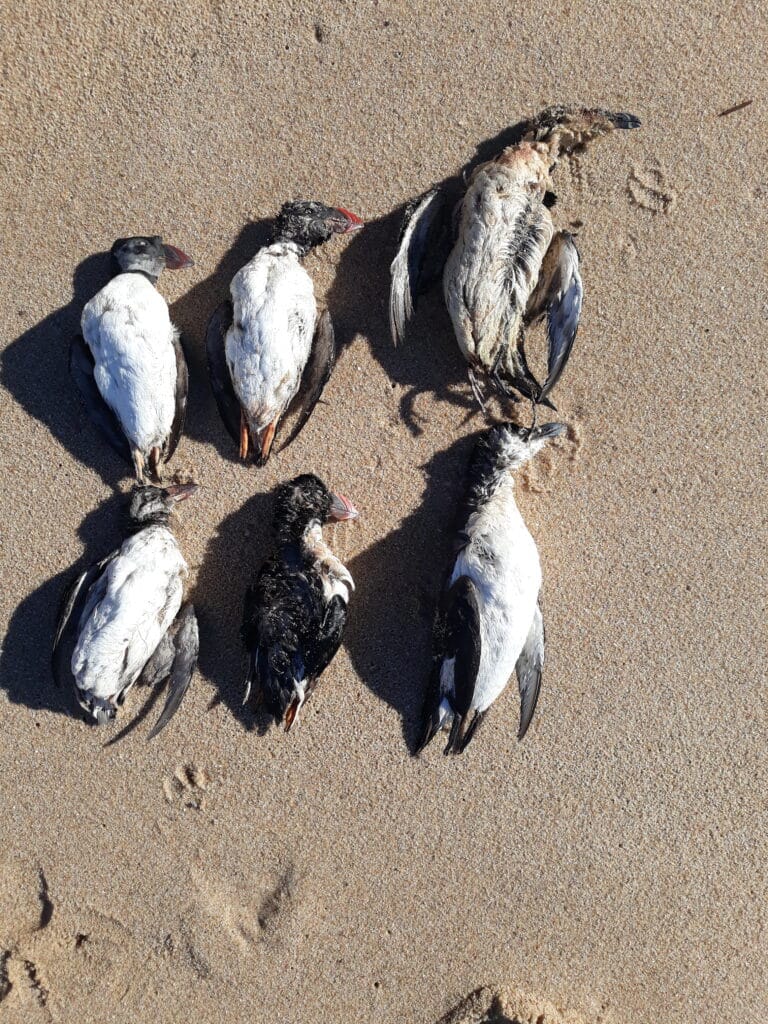
The group warns that these events are likely to become more frequent along the Portuguese coast as climate change increases the intensity and frequency of storms. Beyond storms, other factors such as accidental capture in fishing gear, pollution, and disease can also contribute to mass strandings.
What to do if you find a bird
If you find a live but weakened bird, SPEA advises to contact the SEPNA/GNR or the ICNF. If these organisations cannot respond, you may transport the bird to a recovery centre. Handle the bird carefully, using gloves or a cloth, place it in a cardboard box, and deliver it as quickly as possible. Do not try to feed or give water to the bird, as veterinary teams at the centre will provide the proper care.
How to report sightings
SPEA asks citizens to record all seabirds found alive or dead through the free ICAO platform (App ICAO SEO BirdLife, available on the App Store and Google Play, or at www.icao.seo.org/pt). Users can upload photos to help confirm species and age and include information on any rings or other details useful to researchers.