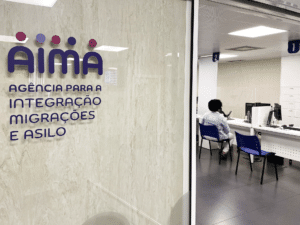
The country’s migration agency, AIMA, continues to struggle to clear a massive backlog of cases inherited from its predecessor, SEF, leaving many applicants queueing for hours outside offices, some even sleeping outdoors in hopes of getting an appointment.
“It’s a nightmare,” British citizen Gary Dobbing, who lives nine months of the year in the Algarve, told The Resident. “We can’t get through to AIMA anywhere, be it by phone, letter, email or in person.”
Visits to AIMA’s offices in Faro to renew their residency have led to further frustration, as “only 30 appointments are booked per day”.
“There are often around 100 people queueing outside. There are some who even spend the night outside the office,” he said. “There’s nobody there to check the queues and make sure no one jumps the line.”
While Gary and his wife have since tasked their lawyer with trying to sort out their residency with AIMA, they are reaching their breaking point.
“We’ll soon have to travel abroad, and we don’t know whether they’ll let us back in. It’s a hell of a mess and much worse now than in the SEF days. If they don’t sort this out soon, we’ll pack our bags and leave for good,” he said.
Reports from Público Brasil – the Brazilian edition of Portuguese newspaper Público – echo these frustrations among other immigrants facing similar obstacles. Brazilian resident Maria Aparecida said she received her residence permit through family reunification in June this year, yet continues to receive “absurd requests” from AIMA asking for documents she has already submitted. “It’s enough to drive anyone mad,” she said, adding that despite repeatedly informing the agency her case was resolved, “no one pays attention. This just proves how inefficient AIMA is.”
For Gilberto Horta, who has lived in Portugal for eight years, the situation feels hopeless. “I’m living an insoluble situation,” he told Público Brasil. His residence permit expired in March 2024, and since AIMA took over from the Institute of Registries and Notaries (IRN), he says he has made countless attempts to contact the agency – visiting offices in Porto and Lisbon, sending numerous emails, and waiting on hold for hours – without ever receiving an answer. “I’ve tried to contact AIMA in every way and don’t know what else to do.”
Two years after its creation, there appears to be little sign that AIMA’s problems will be resolved any time soon. Even Portugal’s political leaders now concede that the agency has failed to live up to its promises. Across party lines, there is rare agreement on one point: AIMA’s objectives – to streamline Portugal’s migration system and replace the much-criticised SEF – have failed.
Despite government assurances that progress is nonetheless being made, nearly 50,000 residency cases remain unresolved at AIMA. According to figures reported by SIC last month, of the roughly 300,000 foreigners awaiting residence permits at the end of last year, around 187,000 have since received their documents. Another 53,000 applications were rejected — leaving 46,000 immigrants still waiting for a decision.
Within that group, around 10,000 are waiting for their residence cards to be sent out, 14,000 are still waiting to learn whether their requests have been approved or not, and a further 22,000 remain caught in earlier procedural stages, such as hearings or preliminary reviews.
Between January and June this year alone, some 9,000 foreigners were forced to leave the country, many due to expired documentation or unresolved legal status.
The data comes as Portugal’s foreign population continues to reach record highs. In December 2024, AIMA recorded more than 1.5 million foreign residents living in the country – almost four times the number registered in 2017. Yet, despite this rapid demographic shift, the agency has struggled to keep pace with the administrative demands that come with it.