Company that won tender puts record straight
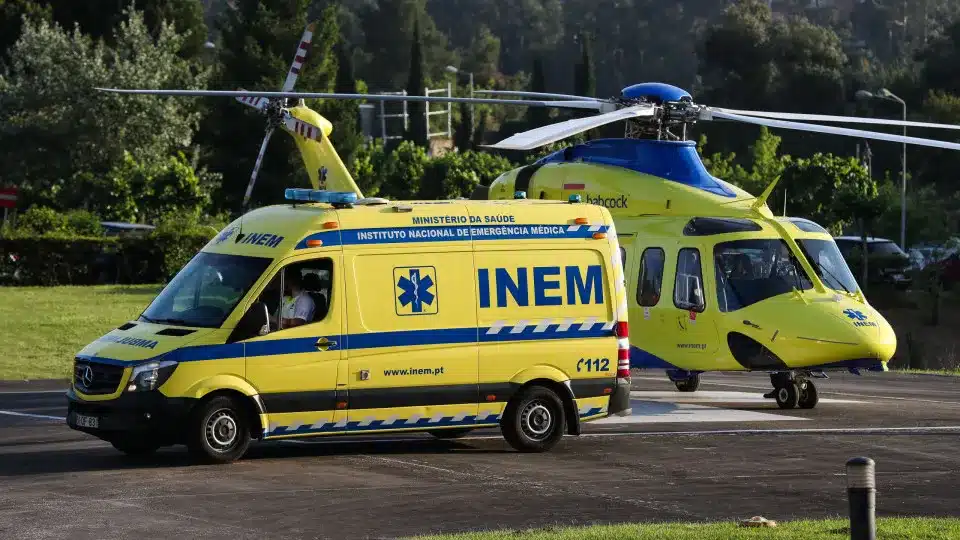
The company contracted to provide emergency helicopter transport in Portugal (but unable to start ‘on time’) blames the government and INEM (national institute of emergency medicine) for the delays, stressing that if tender deadlines had been met, all resources would have been in place by July 1 as specified.
In a blistering article published in Observador, Simon Camilleri, president of Gulf Med Aviation Services, based in Malta – the company described by the national press as having ‘won the €77.4 million tender to provide emergency helicopter cover without having either helicopters available, or pilots’ – says that the entire process was carried out in a “rushed manner” – starting with a two-month delay in launching the international public tender, which should have been launched by September 30, 2024.
In a chronology of events, Camilleri explains that the period for analysing proposals “should have ended in January”, but actually extended also by two months, to March; the contract was signed on May 21, yet Court of Auditors’ approval (to release the funds) only occurred on June 30 – one day before Gulf Med was supposed to have started operations.
“Therefore, it is clear to all involved – as long as they are acting in good faith, as we have always been – that the deadlines with which this process unfolded made it difficult to begin operations on July 1st,” says Camilleri, stressing that the company “was always transparent about the technical and regulatory difficulties that the tight deadlines added” to a project that was already “very complex”.
With Gulf Med temporarily unable to fulfill the terms of the contract, what ended up happening was that INEM entered another ‘contract’ – this time ‘direct’, meaning no tenders put out – for four H145 helicopters, for the so-called transitional period required by Gulf Med to get its operation up and running.
In spite of consulting 14 companies, none were in a position to ‘step in’.
As Camilleri points out: “no company in the world has helicopters sitting idle waiting for a contract to come up that requires their use. It simply doesn’t happen”.
It was Gulf Med itself itself that came up with a limited offer of aircraft, albeit none were able to operate at night.
In the resulting scramble to provide nighttime cover, Air Force helicopters were called in – an imperfect solution as these are much too heavy to land on almost all hospital landing pads in the country.
Fast-forward to today and Gulf Med is almost completely ‘ready’ with the terms of the original contract – but it also clearly wants to ‘set the record straight’.
Camilleri’s article shines a very different picture on this ‘story’, and shows the commitment the company has to providing its service. Simon Camilleri refers to his decades working in emergency medical care. “I know the difference that helicopters can make in responding to different types of life-threatening situations.
“For me, this is not just a business issue. It’s also a matter of social responsibility.
“When a child has an accident in a remote area, when an elderly person suffers a heart attack in an isolated village, when a young person is injured in a road accident – these people can’t wait for bureaucracy or administrative procedures. They need immediate help”.
His article also referred to some of the “tragic accidents” involving INEM helicopters that have “victimised pilots and medical teams”, stressing they “should serve as a lesson to us not to repeat the mistakes of the past. Every life lost in a preventable accident is a responsibility that no responsible manager should accept.
“Gulf Med Aviation Services is complying with the progressive implementation plan presented to INEM, always with safety as its absolute priority,” he reiterated.
All this reflects (again) poorly on INEM/ the government (in this case Ministry of Health) – both of which have been under fire since catastrophic preparedness failures during a strike by technicians last November.
Source material: Observador/ Lusa