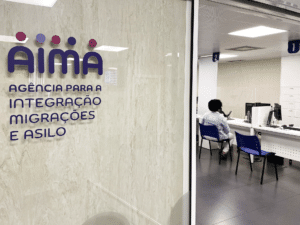
The Portuguese Bar Association (Ordem dos Advogados, OA) has launched a new online channel to collect complaints and feedback from lawyers about the Agency for Integration, Migration and Asylum (AIMA) following a wave of frustration over delays and inconsistent procedures.
Speaking to Lusa news agency, Bar president João Massano said the initiative is meant to improve communication between lawyers and the agency and “help relieve some of the pressure and bad feeling that exists on all sides.”
According to Massano, AIMA currently tops the list of public bodies most criticised by lawyers, ahead of the national registry offices (IRN) and local civil registries. Under an agreement between the two institutions, OA will gather all submissions and forward them to AIMA in batches.
The creation of this channel doesn’t mean the situation has suddenly worsened, Massano said, adding that “it was the right time to make this operational.”
The Bar has warned that unresolved AIMA cases are clogging administrative courts as lawyers increasingly turn to litigation to get answers from the agency. “When a lawyer’s only way to get a response from a public service is to take it to court, that means the service isn’t working properly,” Massano noted.
OA hopes the new system will not only flag specific problems, such as delays, lack of access, or disregard for lawyers’ rights, but also push for consistency between regional AIMA offices.
“I don’t think it makes sense for one AIMA office, say in the islands, to accept a document that another rejects on the mainland,” Massano said. “And that really happens.”
In a statement, the Bar Association said the two institutions aimed to “create a permanent communication channel to share information on specific cases reported by lawyers that may represent barriers to access, violations of rights or professional prerogatives, and/or discrepancies in regional procedures regarding the interpretation of the law and document validation.”
“The Portuguese Bar Association considers institutional cooperation one of its core goals,” the statement added, “particularly to improve the quality of public services, always starting from the input provided by its members and ensuring that citizens have genuine access to those services.”