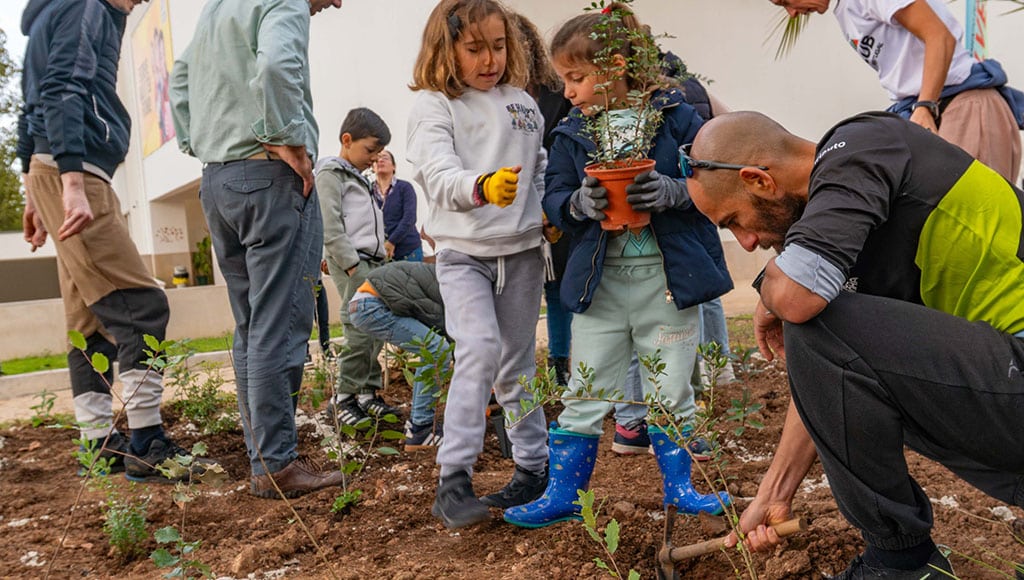
This week, an entire forest was planted in an urban area of the city of Silves. In fact, it’s right on the grounds of the secondary school. It is actually a “Mini-Forest”.
“When it matures, it will be a fully self-sustainable ecosystem”, said biologist/ecologist Sónia Soares, who created the design of this Mini-Forest. “All these trees and plants are native to the Algarve, and can coexist as they do in nature.”
“Urban forest planting was first devised 50 years ago by Japanese botanist Akira Miyawaki”, said Soares, “Today there are many successful Mini-Forests all over the world.”
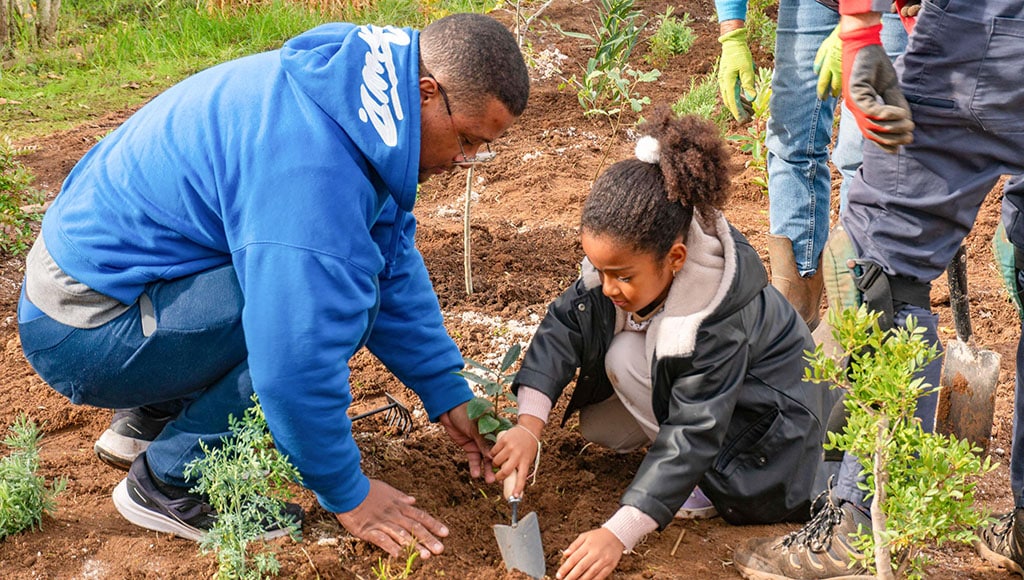
This newly planted Mini-Forest has a total of 300 closely placed native plants. There are 32 different varieties of trees, shrubs and ground-covering herbs. They will grow in different layers, with tall trees at the top, shrubs in the middle, and ground cover below. All the plants support each other. Soon, there will be birds, insects, and other wildlife in this small habitat. As it matures, it will need no irrigation.
This is where Rainer Eduardo Kroth, former president of the Rotary Club Silves, and all the generous members of the Rotary Club, deserve our heartfelt thanks. Rotary paid for the plants and helped make the Mini-Forest happen. Kroth is passionate about this project, and this reporter asked him why… he has ten reasons:
Why Plant Trees and Forests?
1. Combating Heat and Drought
Portugal faces long, hot summers and frequent droughts. Trees help cool the air, create shade, and improve local microclimates — making schoolyards more comfortable places for students to learn and play.
2. Preventing Soil Erosion
The Algarve’s dry, sandy soils can erode easily, especially after summer fires or winter storms. Tree roots stabilize the ground, prevent erosion, and help rainwater soak into the earth instead of washing precious soil away.
3. Supporting Biodiversity
Native Portuguese trees – such as cork oak, strawberry tree, or stone pine – provide food and shelter for birds, insects, and small mammals. Planting a mini-forest on school grounds turns a simple plot of land into a home for dozens of species.
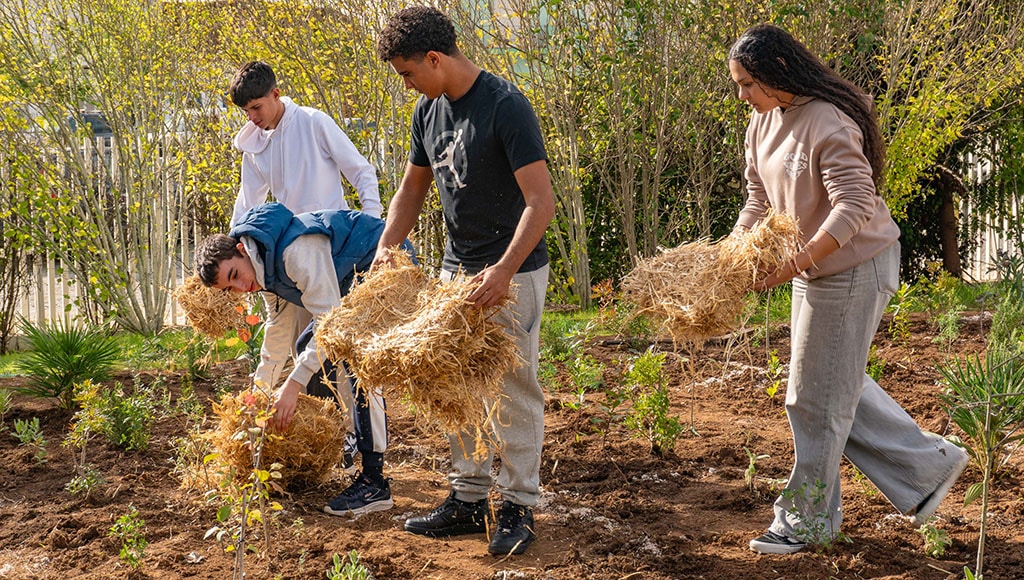
4. Reducing Wildfire Risk in the Long Term
Healthy, diverse forests retain more moisture and are more resilient than abandoned or monoculture land. Teaching children to care for young forests creates a generation that understand how to reduce fire risk through thoughtful planting and stewardship.
5. Improving Air Quality
Trees absorb carbon dioxide and release oxygen. In towns and cities, they also trap dust and pollution. A mini-forest on a school campus makes the air cleaner for students and staff.
6. Teaching Environmental Responsibility
By involving schools, children don’t just hear about climate change and sustainability – they experience it. Planting a tree is a physical, memorable act that teaches responsibility, patience, and respect for living ecosystems.
7. Strengthening Community Spirit
Tree-planting projects connect our Silves Rotary Club to teachers, students, and families. The forest becomes a shared achievement – something everyone helped create and can continue to care for.
8. Hands-On Science Education
Caring for a young forest naturally supports lessons in biology, climate, soil science, ecology, and geography. Students observe growth, measure rainfall, study insects, and see classroom knowledge come alive outdoors.
9. Creating Green, Beautiful School Grounds
A mini-forest transforms a bare or dusty schoolyard into a shady, green, inviting place. It brings joy, pride, and a sense of ownership to the students – “those are our trees!”
10. Leaving a Living Legacy
Trees planted today will still be standing when the children are adults. Planting forests in schools turns environmental protection into something personal, lasting, and emotionally meaningful.
With his Rotary Club’s support, Kroth approached Titus Romeo Maia Mendes, Director of the Silves School Group who loved the idea, and so did Geography Teacher Florbela Reis Cabrita. The Silves Câmara was enthusiastic. With their support, plans moved forward.
Then another Algarve club called “Clube dos Bons Jardins” caught wind of the project and became very interested in helping.
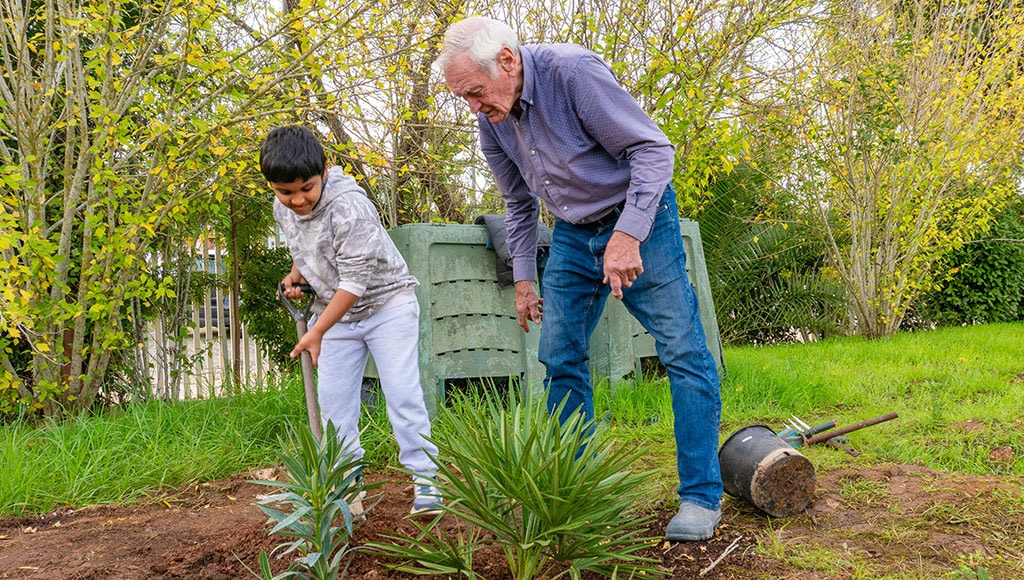
They soon contributed necessary soil enrichments. They also pledged their gardening skills for planting day.
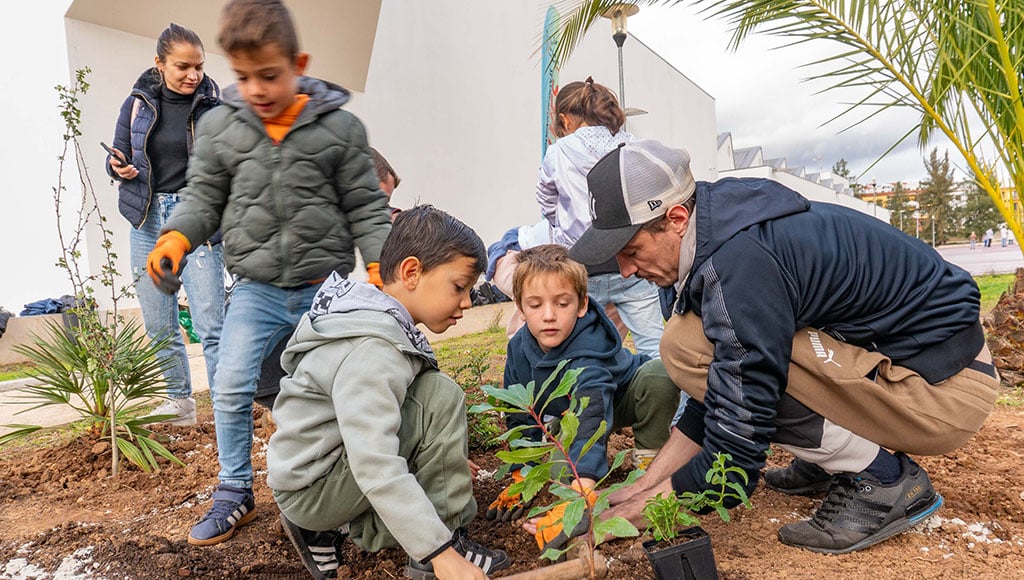
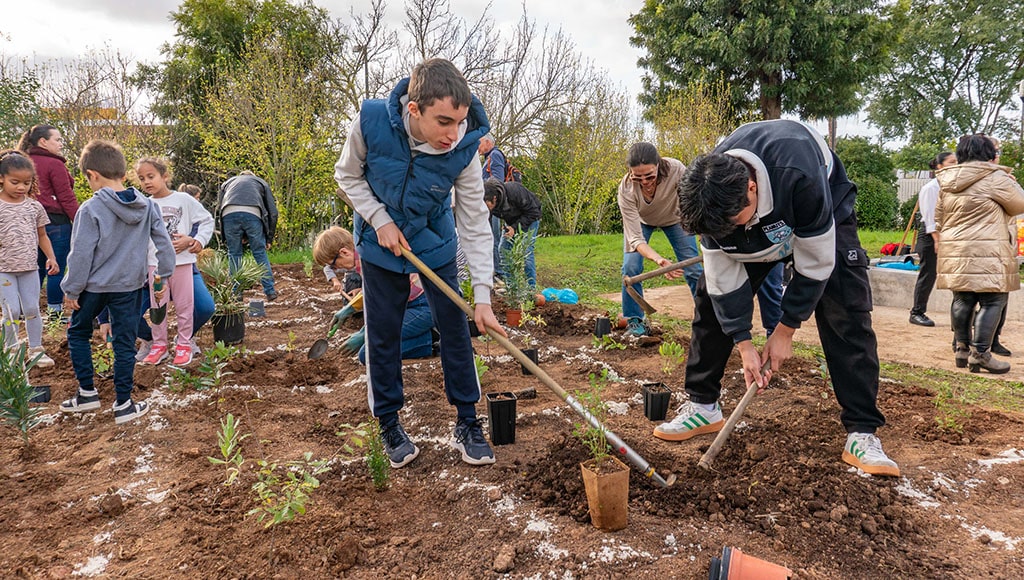
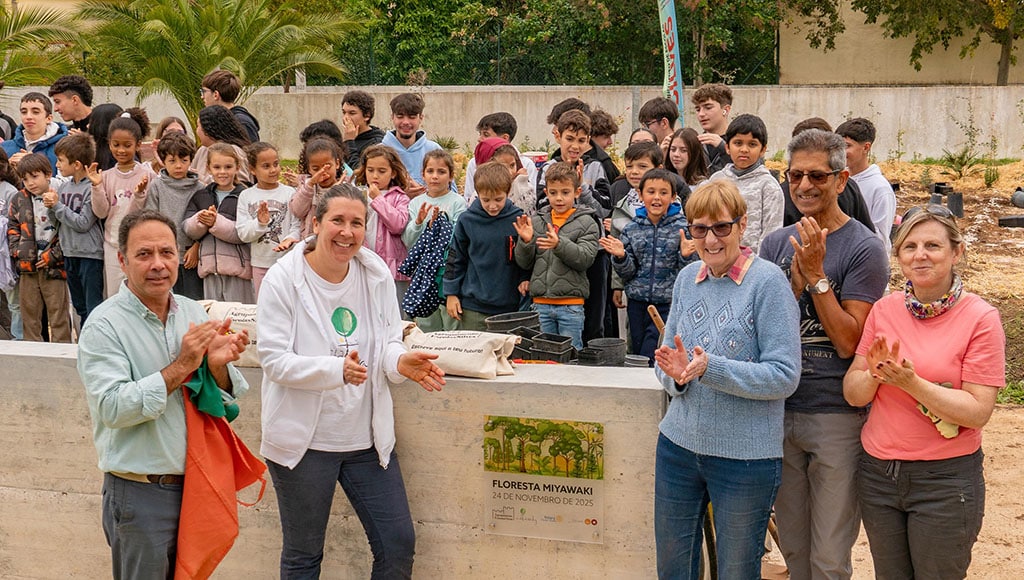
And, when the big day finally came to plant the Mini-Forest, members of Silves Rotary and “Clube dos Bons Jardins” got their hands and knees dirty, working with the students.
“We enjoyed teaching the children about sustainability”, said Maggie Baldock, a member of Club dos Bons Jardins. “They will develop a connection with nature by digging the earth, planting, watering, and caring for the Mini-Forest.”
Now we get to the best part. Sorry for the cliché, but the look on the children’s faces was priceless. Move over Father Christmas; these children were loving their Mother Earth, and she was giving them a beautiful gift… the love of nature.