Legal noise limits were exceeded in Lisbon in more than 70% of measurements taken during the summer by the Vizinhos em Lisboa association, placing the Portuguese capital among the noisiest European cities, with global effects on health.
The Vizinhos em Lisboa (neighbours in Lisbon) residents’ association conducted the RuídoLX (NoiseLX) survey between July 28 and September 30 this year, with measurements taken by volunteers using a portable sound level meter, with the aim of documenting noise levels in critical areas of the city.
In the report, the residents’ association suggests measures to Lisbon city council to reduce noise, namely a “real reduction in road speed at night, a municipal plan for silent urban cleaning, complete replacement of municipal and public transport operator, Carris fleets with electric vehicles, creation of noise limits in terraces and bars, and creation of certified ‘Silence Zones’ in residential neighbourhoods”.
According to the report, measurements revealed that the overall average dB(A) (decibels A, the standard unit of measurement for assessing the sensitivity of the human ear to sound pressure levels) was 75.35 dB(A), “about 20 dB above the figure recommended by the World Health Organisation (WHO)”.
The document adds that the limits are exceeded even at night, when 75.5% of measurements exceeded the legal limit of 55 dB(A).
However, it was found that the worst period was between 8pm and 11pm, when 81% of measurements were above the limit.
The authors emphasised that WHO recommendations indicate that “levels above 55 dB(A) during the day and 40 dB(A) at night increase the risk of physiological stress, sleep disorders and cardiovascular disease”, although in Lisbon the levels “never fall below 60 dB(A), even in the early hours of the morning”.
According to the study, the most critical parishes were Alvalade, Santo António, Areeiro, Arroios, Misericórdia and Avenidas Novas.
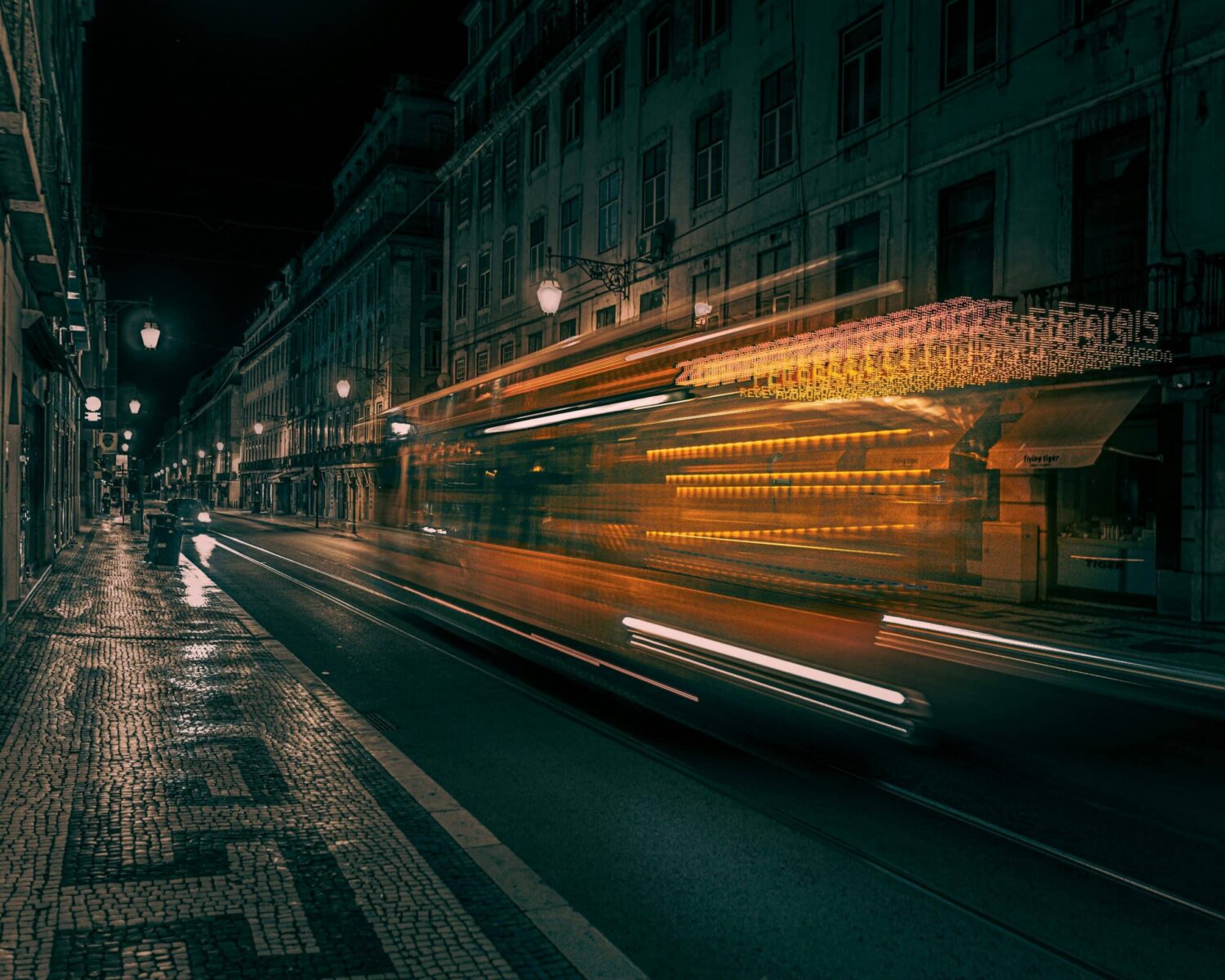
The main sources of noise are buses, motorbikes, street cleaning (especially at night), outdoor cafés and airplanes, and even during periods of less traffic, “more than half of the measurements” were above the limit.
The maximum noise peak, 103.9 dB(A), was recorded next to a Carris bus, “one of the most significant urban sources of noise in Lisbon, not because of the number of vehicles, but because of the repetition and proximity to the building facades”.
The residents’ association argued that quantified targets should be adopted by 2030, such as a 5 dB(A) reduction in the night-time average on the main roads, an 88% decrease to less than 60% of the number of measurements above the General Noise Regulation (RGR) law and the publication of real-time acoustic data.
Among the proposals, the association advocated the expansion of the permanent network of automatic sound level meters per parish, with public data, the creation of “30 Zones” with a speed limit of 30 kilometres per hour (km/h), and a real reduction in speed during the night.
It also proposes a municipal plan for silent urban cleaning – with a ban on noisy operations between 11pm and 7am in residential areas and night-time collection only on commercial and restaurant streets -, the creation of certified ‘quiet zones’ in residential neighbourhoods, and a noise limit of 60 dB until 10pm and 55 dB after that time on outdoor cafés and bars.
The association also advocated the “complete replacement” of Carris buses with electric fleets, the reorganisation of bus stops and the control of acceleration.
According to residents, “noise is not inevitable”, but rather “the result of urban choices and public management”.
Source: Lusa