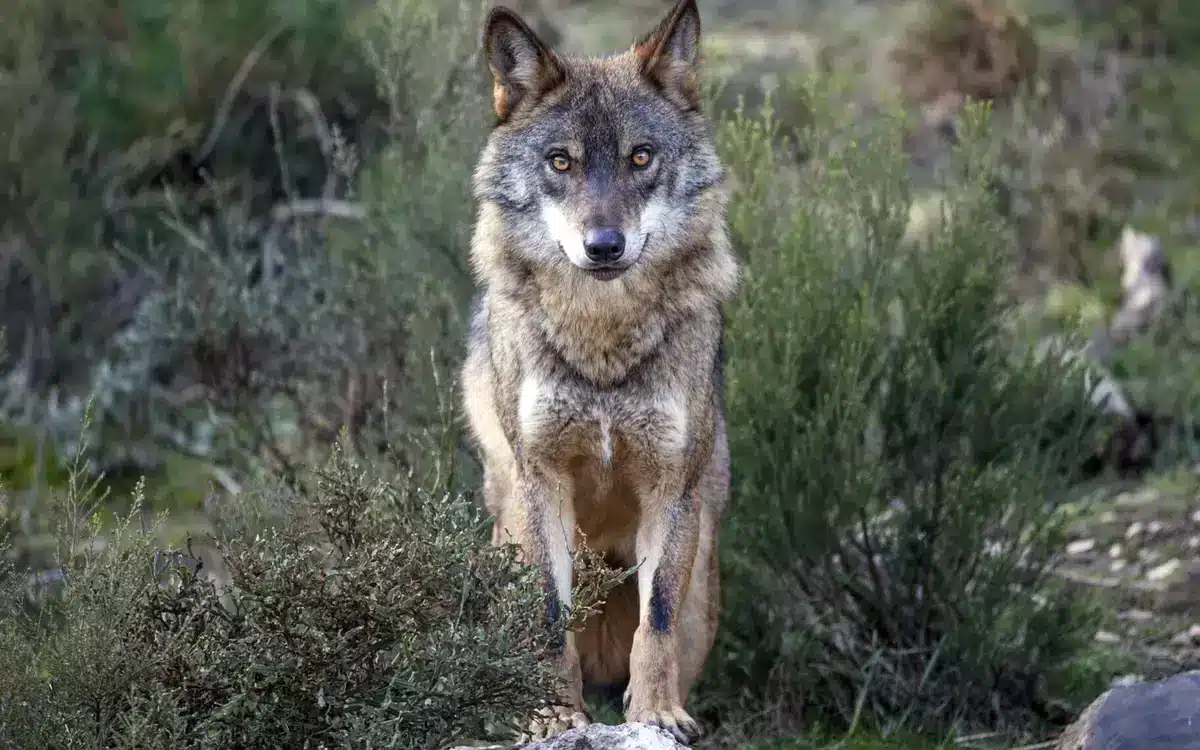
Portugal’s livestock producers have had enough of wolves: they have banded together to create a national movement to push for wolves’ protected status to be revoked.
Orlando Gonçalves of UPGALL (the Union of Cattle Farmers Damaged by Wolves) warns the movement ‘won’t give up’ – and will resort to national and European ‘instances’, if necessary.
UPGALL came together ‘spontaneously’ in January after another bloody attack on a herd of 16 sheep in Santa Maria de Geraz do Lima, in the Viana do Castelo municipality. Thirteen sheep were ripped to pieces. Gonçalves likened what has been happening to “terrorism”.
In the breeder’s view, wolves are “a malignant tumour” that cannot be allowed in spaces used for livestock farming.
As for the government’s ‘so called compensation’ to breeders who lose animals to wolf attacks, “it’s a bad joke”: when money does come through, it is “a pittance that doesn’t even cover the bureaucracy that the breeder has to fill out”.
Antipathy towards the conservationists’ ideal of ‘preserving the Iberian wolf’ has been clear for years. But now it has solidified. A petition is circulating – and Spain has also provided a precedent by deciding in March last year to return to allowing the hunting of wolves north of the Douro River.
The Iberian wolf (Canis lupus signatus) has been a protected species in Portugal since 1988. Its protection is guaranteed by Law No. 90/88, of August 13, which prohibits the killing or capture of wolves throughout the national territory, at any time of the year, except in specific cases.
In addition, “the species is covered by several international laws, including the Bern Convention and the Washington Convention — CITES”.
Source material: LUSA