With the finance minister telling Bloomberg that Portugal is well placed to face the crises resulting from the Middle East conflict – and ECB chief Christine Lagarde warning of ‘an excess of optimism’ – the absolute reality of how key sectors of society and the economy are viewing ‘support measures’ offered by the government this far could hardly be less positive.
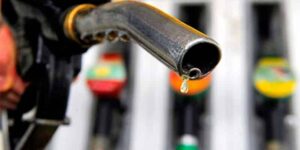
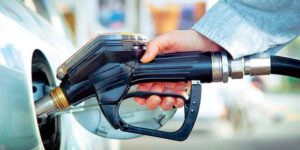
Confagri – the confederation of agricultural cooperatives and agro-industries – labels the extra 10 cents per litre subsidy for professional diesel as “laughable in comparison with Spain”, which has hoed its own row since the start of the conflict: rolling out an impressive €5 billion raft of tax cuts to help citizens with the financial consequences of this crisis, while turning its back decisively on the legality of the war, even refusing U.S. military passage through Spanish airspace.
By comparison, Portugal has done a lot less – and continues to allow its air base in Lajes, Azores, to be used pretty much as the United States requires.
Thus, Confagri’s criticism ‘joins an already substantial line’ of dissent, and dissatisfaction.
Confagri president Idalino Leão focuses on how his members stand in terms of competition with Spain, and for their own sustained survival. He is not impressed. He told journalists at the close of the 58th AGRO seminar in Braga today that the government’s set of measures to ‘mitigate the rise in the cost of fuel’ are “absolutely insufficient” ” – and neither serve to compensate farmers for the increases in their costs of production, nor to narrow the ‘competitive gap with Spain’.
The differences now for Portuguese producers in relation to Spain are “striking”, he said. Spain “has introduced a 20-cent-per-litre discount, and made available an agricultural support package worth €877 million”.
For CONFAGRI, this disparity creates a competitive gap that is detrimental to Portuguese producers. “It is impossible to strengthen the competitiveness of the Portuguese agri-food sector against its Spanish counterpart without ensuring Iberian equity in fuel and energy prices,” said Leão – something that certainly up until now does not look like it is coming.
Stressing that the agro-food sector in Portugal is being “absolutely asphyxiated”, Idalino Lẽao’s comments show how misplaced the finance minister’s positivity answering questions from Bloomberg might be. The Confagri president makes no bones about it: the sustainability of the sector, and its capacity to compete in the Iberian market, is at stake.
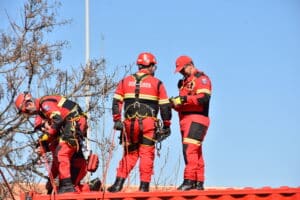
Firefighters too are far from content with the measures that the government appears to think ‘show willing’.
“These measures of state support are mere band-aids that do not help firefighting corporations very much at all,” Ricardo Domingos, the commander of Coimbra fire station concedes. Stations will have to make a “huge financial effort to cover expenses. We feel as if we are having to finance emergency response in Portugal,” he told SIC Notícias.
Commander Domingos explained that costs are going up all the time – yet the government’s support is finite: €360 for heavy vehicles, €120 for the lighter ones – paid only once. It means that vehicles leaving the station are having to count every drop of fuel. It is not the way to run an effective emergency response system.
It is certainly looking as if the country’s ‘historic budgetary surplus’ of €2 billion may well be required a lot sooner than the government may have imagined.
Source material: SIC/ RTP/ Jornal Económico