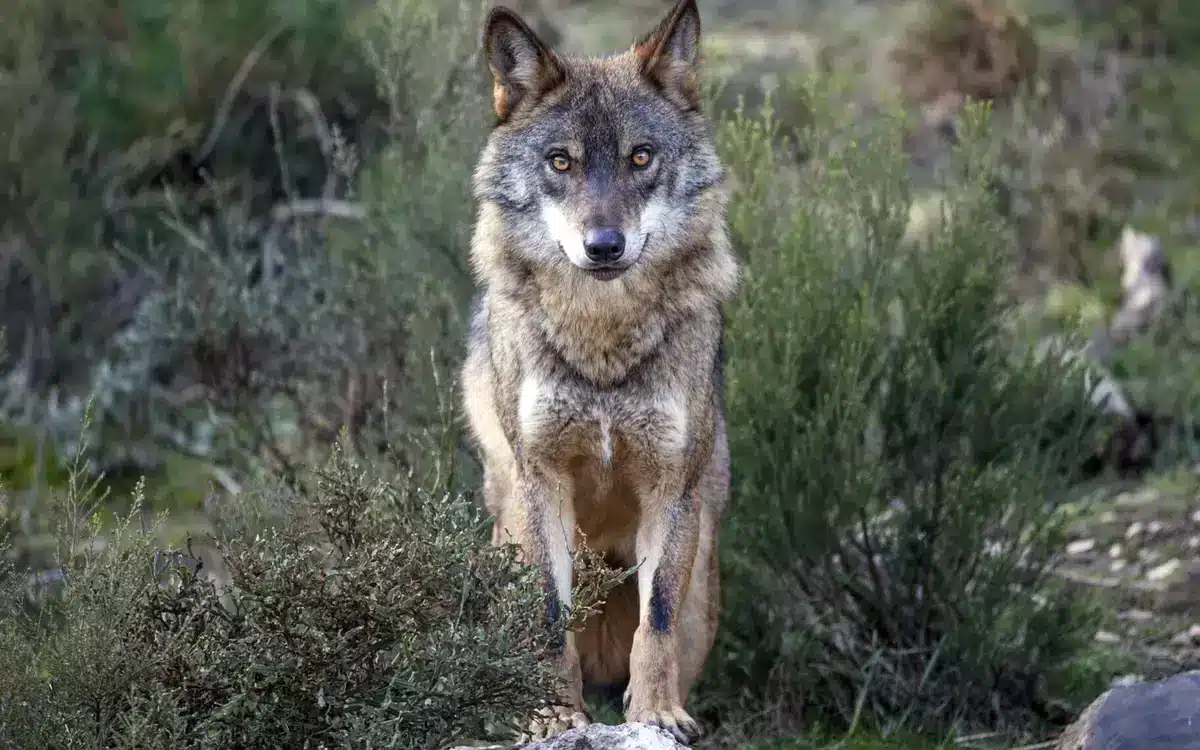
Livestock farmers in the Mirandês ‘planalto’ are in despair: they say daily attacks by wolves are decimating herds. If nothing is done to solve the problem, they warn they cannot continue raising animals – which will be a bitter blow to the region’s economy.
“We urge the Ministry of the Environment and the Ministry of Agriculture to address this calamity, because it is becoming unbearable”, António Padrão, speaking for livestock producers of the northeastern municipalities of Miranda do Douro, Vimioso, and Mogadouro, told Lusa.
“If they (the government) want to protect wolves, they must create the necessary conditions, since nothing, neither dogs nor fences, seems to be able to stop them.
“This is becoming unsustainable… livestock farming in the Mirandês Planalto (…) is being destroyed,” he added.
In Padrão’s case, he explains that he dare not leave his animals alone, as a wolf attack could happen at any moment. “I’ve been sleeping in the stables and not letting the sheep out (…) I have my property well fenced, but even so, I’m not safe.”
He recounted a daylight attack by a wolf in September, which he only fended off with the help of staff and his own pack of dogs.
Others in the same business have told of their experiences: Viriato Domingues said wolves attacked his farm mid-June, in Uva, in the municipality of Vimioso, where they killed 20 sheep and four lambs; seriously injuring eight more.
To date, Domingues has not received any compensation (as is meant to be forthcoming) in spite of reporting the case exactly as authorities direct.
Fellow livestock producer Isidro Carvalhino stressed that”there must be a public entity that looks closely at what is happening here in these lands, to resolve this serious problem.”
“We’re here in the Mirandês Planalto, where most people make their living from agriculture. We like to care for our animals, and if they (the authorities) want to care for the wolves, they’re welcome. But the money that entities or organisations that protect the wolves receive must also be used to buy food for them, to reduce these attacks” – otherwise it is livestock farmers who pay the price.
Carvalinho conceded that the current lack of food is related to the fires that have raged in border areas (with Spain) in recent years. Wolves live in forests, and by nature, like to keep away from people – but when there is no food in the forests, they are forced closer to villages and areas where farmers graze their herds.
On September 19, the Institute for Nature Conservation and Forests (ICNF) reported that 32 wolf attacks were recorded in the Planalto Mirandês region from the beginning of 2024 to mid-September in this border area of the Bragança district. Attacks have continued, and latest numbers are currently unknown, albeit locals wil tell you they happen every day.
In July, the Alcateia 2025-2035 Programme for the protection of the Iberian wolf was presented. This programme has a budget of €3.3 million for this year and includes a review of compensation for wolf attacks on livestock, bringing them closer to market values – but this is no use to farmers if they are never compensated.
Lusa said it has contacted the ICNF – which is meant to handle requests for compensation – for explanations as to why farmers are being left so apparently unprotected, but the institute “postponed providing explanations until later”.
The problem with this kind of ‘response’ is that it often sends people affected by wolves’ encroachment to take matters into their own hands – and this invariably ends badly for the wolves. Indeed, 10 months ago, the government reportedly gave the ICNF three months to come up with a solution that ‘works’ for wolf conservation. Since that report, at which point the country’s wolf population was thought to be down to only 300, almost nothing has appeared in the press.
Source material: LUSA