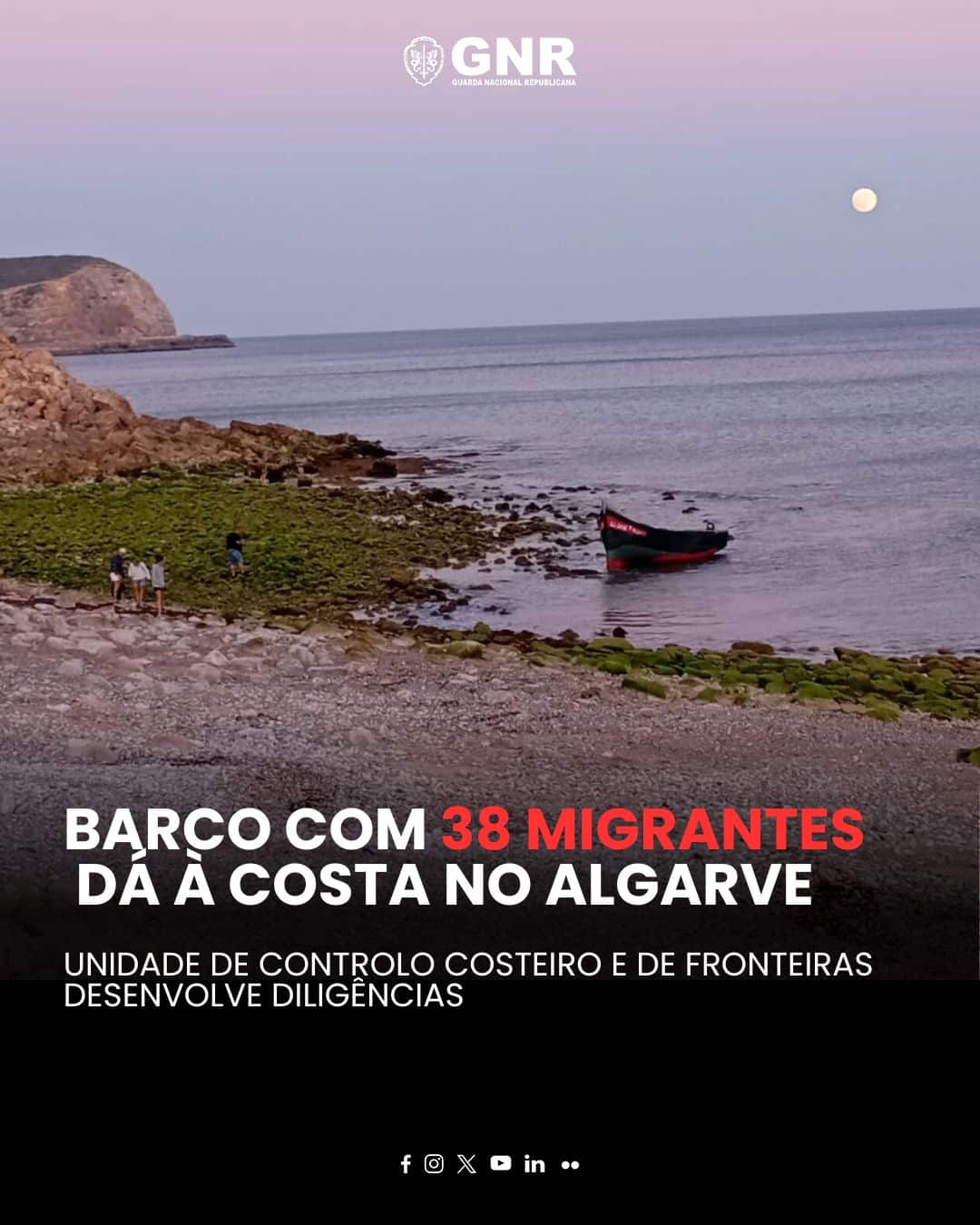
Two hours after Portugal’s Constitutional Court informed the government that its plans for controlling immigration violated the Constitution (drawn up long before such problems existed), a rickety wooden boat arrived in the failing light at Vila do Bispo’s little-known Boca do Rio inlet, carrying 38 migrants (including six minors and one baby).
The boat had almost certainly not made the over 400km crossing from North Africa (this seems the most likely start point of these people’s journey). Understanding is that a trafficking mafia will have put the group into the boat at some point relatively close to the Algarve coast.
But the arrival of these people (mainly young men) came so close to news that the government has to ‘rework’ its intentions over how best to control immigration that there has been a veritable explosion over social media – with many calling for the Constitution to be ‘rewritten’ so that the country does not remain at the mercy of values from another time.
As a number recalled, the introductory text of the Constitution refers to the nation’s desire to “defend national independence; guarantee the fundamental rights of citizens; establish the fundamental principles of democracy; ensure the primacy of the democratic rule of law and pave the way for a socialist society, respecting the will of the people”.
That will, commentators insist, was expressed clearly at the last elections: Portuguese citizens want their politicians to control immigration.
Thus, a ruling by the Constitutional Court suggesting proposals violate a document drawn up in the 70s is not sending people scuttling back into their boxes. Far from it.
Reactions yesterday saw not only members of the coalition government say “we are not giving up” (CDS-PP MP João Almeida being particularly scathing, saying the Constitutional Court – and the President who has vetoed the Foreigners Law on the basis of the court’s decision-making – “cannot give the left the majority that the people took away from it”); CHEGA too has lambasted “the spirit of the left that has taken over institutions to contradict what people voted for on May 18”.
The ‘future’ has not been made any easier by the Constitutional Court’s decision.
But, as to the 38 migrants, some of these were found to be showing signs of ‘frailty of health’ and taken for medical evaluation.
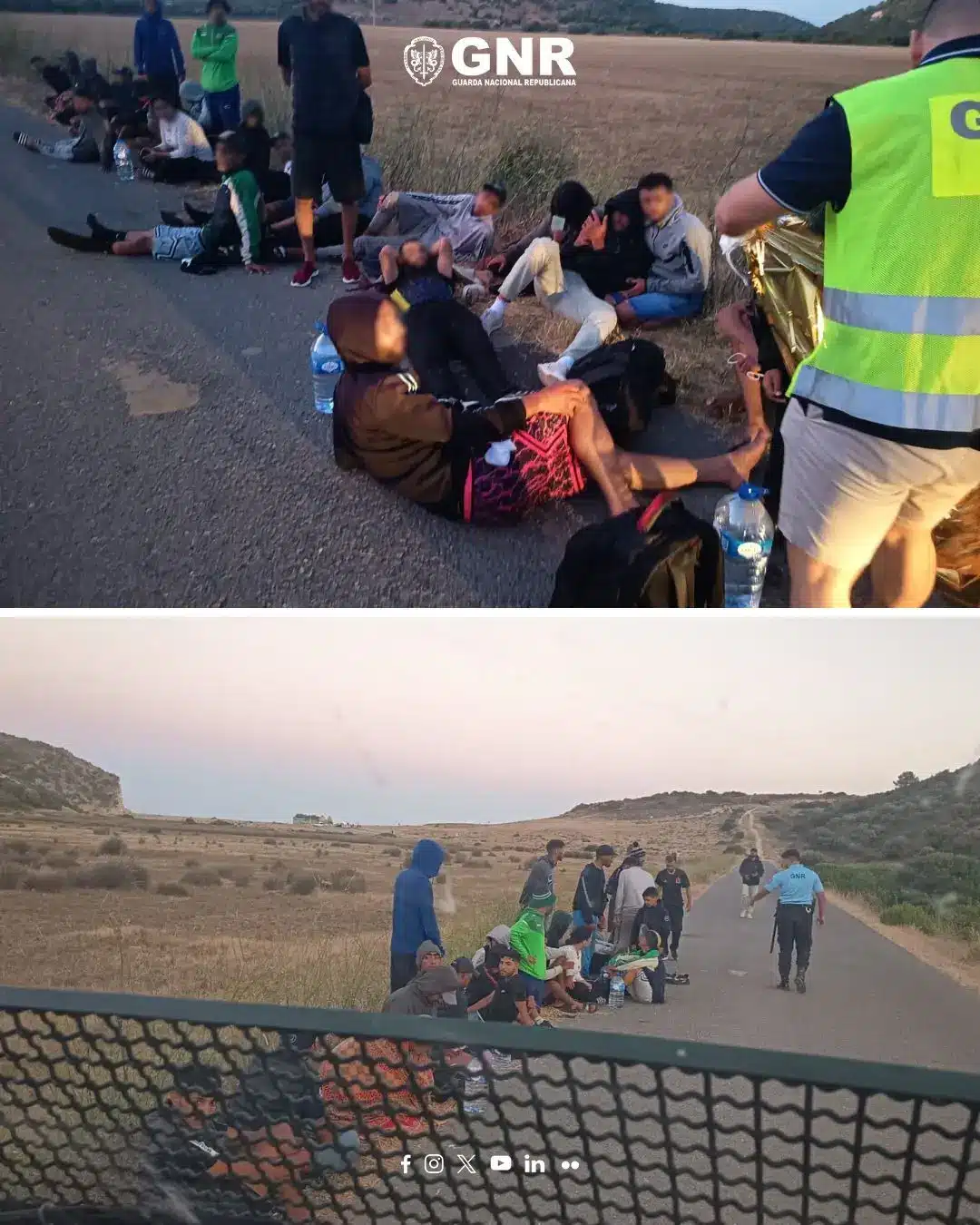
All were given food, water and shelter for the night before being taken before “the competent authorities” at some point today.
The wooden boat is to be inspected by the Criminal Investigation Unit of Olhão Coastal Control Detachment and will subsequently be towed to Porto by the Maritime Patrol Section of the Sines Coastal Control Detachment.
“Screening efforts and the implementation of the National Border Contingency and Return Plan are currently ongoing”, explains an online post by Faro’s GNR Territorial Command, suggesting the 38 may not be staying in this country for very long.
Other entities involved in the process include SSI (internal security), UCFE (the unit of frontier and foreigners control); AIMA (the agency for integration, migration and asylum) and the PSP (public security police).
The GNR concluded its statement on the night’s work, saying: “The police intervention reflects the GNR’s unwavering commitment to safeguarding human life through the effective coordination of various capabilities and resources. The GNR reaffirms its position as a “Humane, Close, and Trustworthy” Force.”
And today, the national maritime authority has announced that costal patrols along the Algarve are to be reinforced “with the aim of ensuring additional capacity to detect and intercept vessels that may attempt to illegally access national territory by sea”.
The authority adds that it “thanks the public for their collaboration and asks that people contact the Maritime Search and Rescue Coordination Center (MRCC Lisboa) or the Local Maritime Police Command if they observe any suspicious vessels or unusual movements along the Portuguese coast”.
Source: Expresso/ GNR/ AMN (national maritime authority)