Monday saw a quiet, political earthquake: out went the country’s ‘President of Affections’ of the last 10 years, and in came a man as different from the high-spirited character the nation had become used to as chalk is from cheddar.
António José Seguro has already said that he will ‘choose the moments when he speaks’. Everything about his composure throughout the presidential campaign showed that he means to be ‘statesmanlike’/measured. He hasn’t referred to the taking, or otherwise, of selfies (which became the trademark of his predecessor), but somehow his stance suggests he may not be a great aficionado.
Certainly, on Monday, there was not the whiff of a selfie anywhere. António José Seguro went through the entire day, from his investiture in the morning through the engagements of the afternoon, with a practically palpable ‘sense of solemn purpose’.
His inaugural speech was ‘word perfect’: saying everything that needed to be said; thanking everyone who needed to be thanked – and not putting a comma out of place.
This will almost certainly be the way in which President Seguro means to continue.
And his message was loud and clear: “This is the moment when all parties need to start talking properly to each other, and coming to understandings that benefit the country, not themselves.”
He went straight into the “long and heavy list” of problems and structural challenges that have been “dragging on for far too long”: “Insufficient economic growth, an economy based on low wages, persistent inequalities, constant poverty, demographic aging, slow justice, public bureaucracy, difficulties in accessing housing and health, a manpower shortage, a lack of opportunities for the young, lack of security for the elderly, and distrust in institutions and in politics.”
With the diagnosis laid out, the country’s new head of state tackled how he would like to see treatment effected. The first step is to “let go of improvisation” of “measures that are immediately exhausted and directed, exclusively, towards an electoral calendar of egotistical convenience.”
“The experience of the recent past, of electoral cycles of two years, is not desirable,” he told the almost 600 guests, including visiting heads of state from Angola, Mozambique, Cape Verde, São Tomé e Príncipe, as well as the King of Spain. “I will do everything to stem the electoral frenzy” – and this includes, very importantly, not ‘dissolving parliament’ simply because opposition parties do not vote in favour of the government’s state budget.
For the minority government that has been battling constantly against political opponents, António José Seguro (a man ostensibly from a completely different party: PS Socialists) is presenting himself as a life-raft to transport it away from the churning rapids.
In the new president’s mindset, “Portugal has a golden opportunity” in that there are just over three years left of the current legislature – meaning three years in which “political parties, parliament and the government can find long-lasting solutions to serious problems that affect the lives of Portuguese people.”
President Seguro doesn’t seek to see ideological differences ‘erased’ or promote ‘artificial unanimity’. He is hoping for “democratic maturity” so that the “national interest is put above short-term logic and electoral interests”.
With this in mind, the new president hopes shortly to encourage ‘a long-term inter-party commitment’ to guarantee people’s access to the country’s health system.
Again, clearly weighing the impact of every word, Portugal’s head of state stressed that in embracing the confrontation of ideas, and ‘the normal function of institutional counter-powers’, he ‘will not tolerate attacks against the democratic system’. “In no circumstances will I allow these red lines, the essence of democracy, to be crossed.”
Perhaps Monday’s investiture was also interesting for what ‘didn’t happen’ during the all-encompassing speech in which President Seguro promised to treat all parties equally: PCP communists did not clap, nor at times did the leader of right-wing CHEGA, André Ventura – the man who stood against António José Seguro in the second round of the presidential elections, coming off very much the loser.
But Portugal’s new president may not have been aware of these early inklings of discontent, or perhaps he chose to ‘rise above them’ and continue using the day to ring changes.
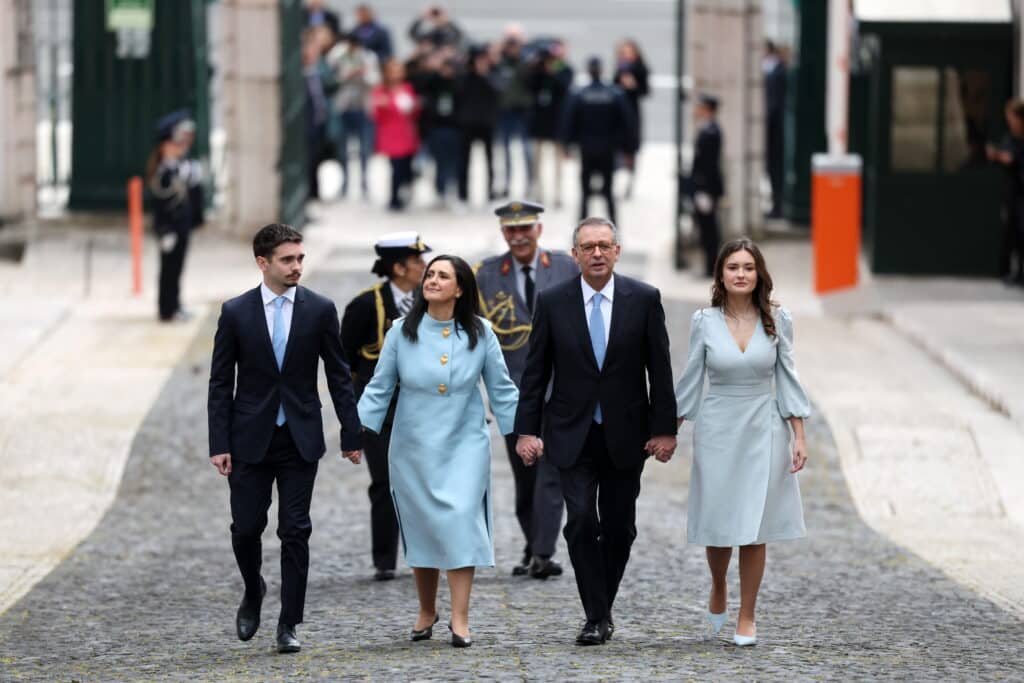
His entrance into his new official residence (Belém Palace) was with his family beside him: wife Margarida Maldonado Freitas, and children in their 20s, Maria and António.
Again, this was an about-change from the last 10 years where the presidency was all about ‘just one man’, no immediate family visible. In the words of Correio da Manhã’s editorial director general Carlos Rodrigues, Monday was the day of the return of the ‘first family’ (…) exercising the narrative of the ‘normal man’ as Portugal’s new president has indicated he wants to be seen.
“The country was eager for a head of state that would be reserved in his public speeches,” Rodrigues commented. A man who “kept his word in a way that saved its relevance and who never contributed to creating permanent confusion.”
If President Seguro’s first five-year mandate is like that, Carlos Rodrigues believes ‘he will be rewarded by public approval’. “The decade of Seguro has begun”.
Meet President Seguro
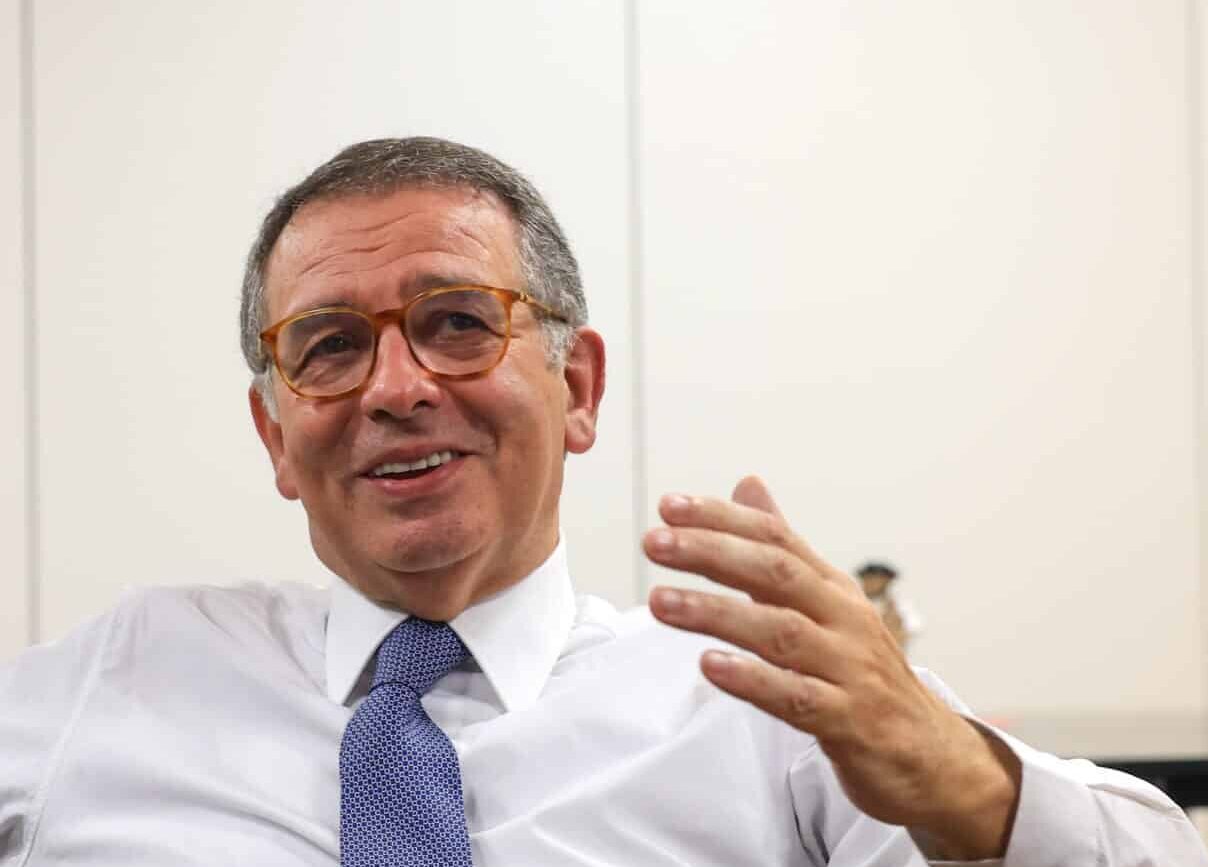
The official site of the presidency posted a fairly long text on Monday, introducing António José Seguro, smiling benignly from behind a desk – and accompanied by a concise bio in which homage was paid in the first paragraph to his parents, “Domingos Sanches Seguro (1926-2017) and Maria do Céu Martins Seguro (1927-2011), whose examples of dedication and integrity moulded (Seguro’s) sense of responsibility and public service.”
Giving a run through of his professional and political journeys (in which he has been both an MEP and the leader of the PS Socialist party), the text refers to President Seguro’s career as having been “marked by a strong connection to his origins and to the people, by an appreciation for the country’s interior, and by a vision of development that articulates economic growth, social justice, and environmental sustainability.
“His path combines local, national, and European political experience, academic reflection, and entrepreneurial activity, reflecting an integrated vision of Portugal and its role in Europe and the world.”
As the ‘wider world’ careers this way and that, Portugal may be able to console itself with the thought that it has a ‘safe (very possibly unflappable) pair of hands’ at the helm, and a man who vows to be ‘President of the whole country’ (without talking too much).