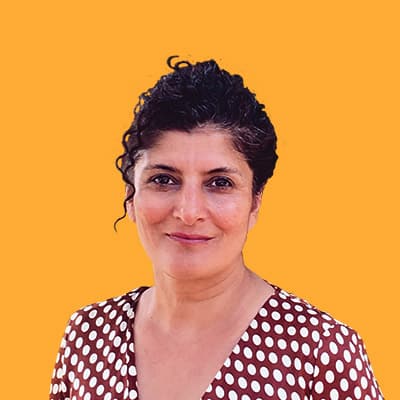
It was said kindly. And of course, it’s moving to be acknowledged — for the campaigning, for more than 35 years of therapeutic work, for the hours I still offer each week at no cost, for the persistence of speaking up when it would be easier not to.
But almost immediately, I felt a strong resistance to the idea that this work belongs to me.
Because it doesn’t.
If my voice has carried, it’s because it has been held. If I have stood upright, it’s because others stood next to me when I couldn’t. Family who absorbed my anger without leaving. Friends who stayed when I withdrew — from happiness, from living, from myself. People who did not require me to be calm, grateful, or “over it” in order to remain.
None of this happens in isolation. Influence is never individual. It is relational. And that feels like an important place to begin a new year — especially the one we are entering now.
The seduction of heroism
There is something deeply seductive about the idea of being a hero. We are encouraged to want it — to imagine that change happens because one person steps forward, speaks loudly enough, carries the moral weight alone.
In uncertain times, hero narratives offer comfort. They simplify complexity. They promise rescue.
That temptation is not accidental. Across Europe and globally, we are witnessing a steady shift towards right-wing politics that trade in certainty, nostalgia, and strength. Strong figures are elevated. Borders are romanticised. Care is reframed as weakness. Cruelty is justified as realism.
In those conditions, the fantasy of the hero becomes dangerous.
“Just for one day”
David Bowie captured this ambiguity long before it was fashionable to analyse it. In Heroes, the most famous line is not a promise of greatness, but a confession of fragility:
“We can be heroes, just for one day.”
Not forever.
Not alone.
Not without cost.
The song isn’t about conquest or power. It’s about two people standing together, briefly refusing fear in a hostile landscape. The courage is temporary. The conditions remain brutal. The heroism is shared — and fleeting.
That distinction matters.
When we chase heroism, we centre the self. We elevate visibility over solidarity. We confuse endurance with virtue. We begin to believe that if we are not exceptional, we are irrelevant. The rest of us become spectators — applauding, scrolling, waiting for someone else to act.
And while we are busy waiting, the ground keeps shifting.
When we outsource responsibility
Across the world, violence against women and children continues to be minimised, politicised, or dismissed as inevitable. War is normalised through distance. Poverty is reframed as personal failure. Abuse is treated as tragedy rather than the predictable outcome of systems that prioritise power over care.
These are not problems that can be solved by heroes. They require citizens.
No gurus either
There is a Zen saying that unsettles people precisely because it refuses comfort:
“If you see the Buddha on the road, kill him.”
In Zen Buddhism, this is not a call to violence, but a refusal of projection — a warning against locating wisdom, safety, or salvation outside ourselves.
One of my closest friends once named this gently but accurately as my own Achilles heel — a tendency, at times, to look for a guru. Someone who might hold certainty when things felt unbearable or chaotic. He was right. Many of us do this, particularly in moments of grief, fear, or moral confusion.
And it is precisely in those moments that hero figures flourish.
The danger is not admiration. It is abdication.
Hero worship and authoritarianism share the same psychological root: the desire to be relieved of uncertainty. To hand responsibility upward. To believe that someone else will carry what feels too heavy for us.
But there is no guru who can carry this moment for us. No hero who can absorb the weight of collective responsibility. And no leader who can replace the slow, difficult work of people staying connected to one another.
Citizenship in an age of outsourcing
The language of New Year’s resolutions doesn’t help us here. It turns our attention inward at precisely the moment it needs to widen. Better habits. Better focus. Better versions of ourselves.
Meanwhile, the social fabric thins.
In an age increasingly tempted to outsource thinking — to leaders, to systems, to algorithms — the question of citizenship becomes even more pressing.
What if this year is not asking us to improve ourselves? What if it is asking us to belong more deliberately?
Citizenship is not a flag or a passport. It is a practice. It is the daily decision to stay connected — to people, to truth, to responsibility — even when it is uncomfortable. It is recognising that we each leave a footprint, and that many of our footprints are too heavy.
That silence is also a form of participation. That disengagement is never neutral.
A different kind of beginning
The answers we need are not hidden in optimisation culture or personal reinvention. They live in community. In friendship. In the willingness to stand arm in arm rather than retreat into private lives and private comforts.
Every meaningful change I have witnessed — in therapy rooms, in campaigning spaces, in grief and recovery — has emerged from relationship. From people holding each other steady long enough for something new to become possible.
Not heroic. Human.
If there is courage worth claiming this year, it does not live in exceptionalism. It lives in reliability. In staying. In taking turns holding the weight. In refusing to look away from war, from murder, from poverty, from the abuse of children — even when it costs us ease or certainty.
So as this year opens, I am less interested in who will rise above the rest and more interested in who will stand alongside.
No heroes.
No gurus.
Only citizens.
People willing to stay awake.
People willing to stay connected.
People who understand that whatever influence any of us has is borrowed — and only ever held in common.
That, to me, feels like a beginning worth making.
Also read Farah Naz’s last month’s article: The space between years