Minister announces 31 measures at press conference in Lisbon
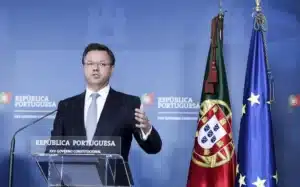
Portugal’s “Plan to Bolster the National Electricity System”, following the Iberian blackout on April 28, will cost €400 million and include 31 measures, Maria da Graça Carvalho, minister for the environment and energy, announced today.
“In all, these measures involve an investment of around €400 million”, she said at a press conference in Lisbon, “and some of the cost will benefit consumers rather than being passed on to them.”
The measures – some of which the government has already implemented – will have a residual impact on tariffs, estimating that for every €25 electricity bill, consumers will see an increase of one cent, or 0.04%.
Measures include speeding up the investment of €137 million to strengthen the operating and control capacity of the electricity grid, which REN – Redes Energéticas Nacionais had already planned and the Energy Services Regulatory Authority (ERSE) had approved, granting autonomous authorisation so that teams can implement it “as soon as possible”.
In addition, the plan provides for the launch of an auction for storage batteries by 2026, as well as support worth €25 million to improve the response capacity of critical infrastructure, such as hospitals, by equipping them with photovoltaic panels and batteries.
“Of course, we could increase the measures we are taking here, but we would pay more. It’s always a balance we have to strike […] We believe these measures are sufficient to increase the operational security of the grid while maintaining tariffs that remain affordable for Portuguese consumers,” the minister stressed.
At the end of June, the minister announced that she would present a series of measures in response to the April blackout, although the final report on the causes of the event was still pending.
Maria da Graça Carvalho indicated at the time that the government intends to increase electricity storage capacity and is therefore working on a “national storage plan,” which, she said, may include both chemical storage, through batteries, and water storage, through the capacity of dams.
Another measure to present consists of changes to the electricity grid control systems, with greater computerisation and use of data, leading to “a single data collection system”.
Earlier this week, the European Network of Transmission System Operators (ENTSO-E) expert group investigating the grid collapse released the conclusions of its 15 July meeting, pointing to a cascade of voltage increases, observed in southern Spain in the final phase of the incident, followed by sudden shutdowns of production, mainly in renewable installations, and led to the electrical separation of the Iberian Peninsula from the continental system, with loss of synchronism and collapse of frequency and voltage.
This type of disturbance was previously unidentified as a cause of blackouts anywhere on the European grid.
During the incident, authorities activated automatic response plans in Portugal and Spain, as required by European regulations. These plans provided a coordinated response, although the grid still collapsed.
Although the legal deadline for producing the factual report on the incident is 28 October 2025, six months after the incident, the expert panel intends to deliver it earlier.
The expert panel will follow this with a final report, containing recommendations for the European Commission and Member States, and is expected to deliver it within two to three months.
LUSA