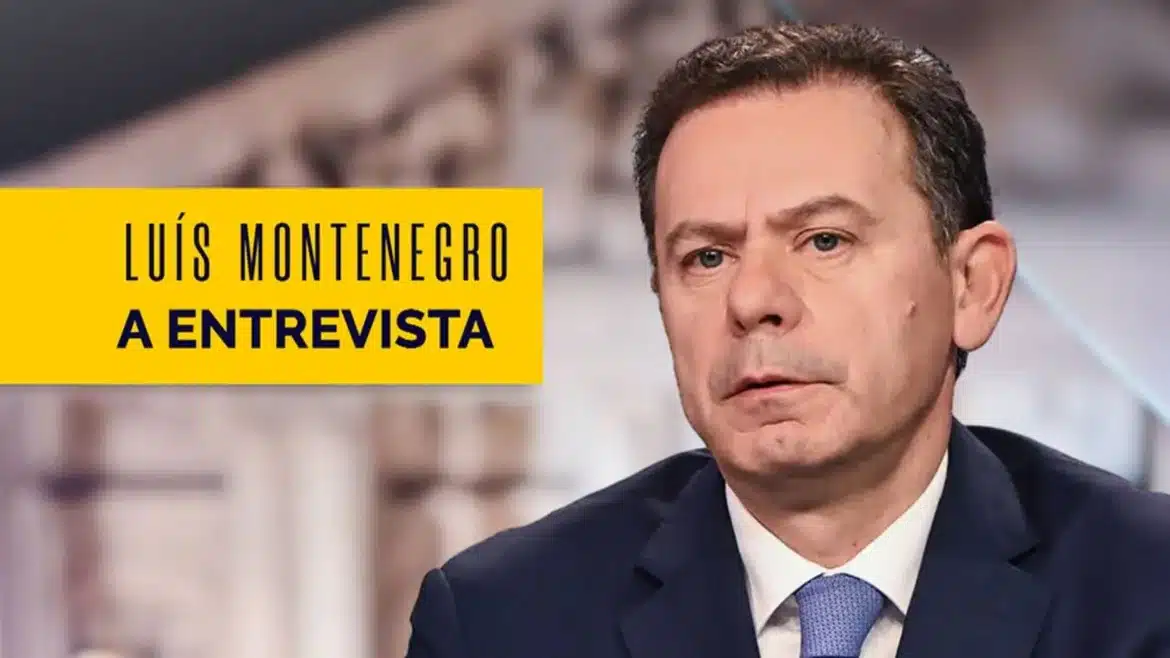
PM uses national radio to promote government’s willingness to dialogue with ‘everyone’
A podcast interview with prime minister Luís Montenegro is being widely aired by the national press today, for the simple reason that politics is destined to remain centre-stage for weeks now: stakes are high in the run-up to municipal elections in October. Will voters show the same preferences for right-wing CHEGA that they showed in May’s legislative elections? Or will the traditionally Socialist strongholds be maintained? This is one of the burning questions. And, treading the careful path he is credited with charting, the prime minister says he believes that CHEGA is “showing responsibility”: it is just a question of whether or not this is a passing trait, or something ‘here to stay’.
As for PS Socialists, Mr Montenegro seems to think they still have quite a bit to learn. Unused to being unceremoniously ousted from power – demoted to the nation’s third political force for the first time in the party’s history – the PS is showing “democratic arrogance”, says the prime minister. “Not used to being in opposition”, they appear to think “either it is as we want, or we will bring everything down”, he told ‘Política com Assinatura’.
In the PM’s view, this kind of ultimatum is not in line with what he expected from José Luís Carneiro, who is more moderate than his predecessor Pedro Nuno Santos.
In contrast, CHEGA, he stressed, is “starting to show” more responsibility, although he admits he wants to see “if it holds”, if this “is sunshine, if it’s just a flash in the pan or if it’s a consistent trajectory” – and he stressed that both PS and CHEGA are “government alternatives” for dialogue/ support as they both have “equivalent, similar representation”.
“That’s the way it is in democracy, anyone who takes offence at this is basically taking offence at the will of the Portuguese people, and I don’t do that,” he said.
No matter how he couches the government’s approach, PS Socialists remain uncomfortable (to say the least). José Luís Carneiro has accused the government of handing “unimaginable political and cultural victory” to the extreme right (referring to the government’s stance on immigration), having repeatedly stressed that the PS is the only ‘logical’ party which which AD should be having dialogues, and since the podcast, Eurico Brilhante Dias has accused the prime minister of “turning politics and the lives of the Portuguese into a reality show”, as well as “normalising CHEGA” by negotiating with a far-right party on “key issues for the country”.
PM believes in viability of 2026 State Budget
Coming hot-on-the-heels of the municipal elections in October will be the debate on the government’s proposals for the 2026 State Budget. Mr Montenegro told Antena 1 that he has the “well-founded expectation that the two largest opposition parties” will be able to make it viable – calling for the PS and Chega “not to unite again” to, for example, approve a permanent increase in pensions.
“It was a line that was crossed last year and I hope it’s an exception, because it jeopardises conditions of governability and it is irresponsible,” he said – considering that the country only has the financial conditions to assess the possibility of a one-off bonus for pensioners every year, as will happen again in September.
Regarding public accounts, Montenegro defended the fact that the government’s distribution has only been possible thanks to “very rigorous” budgetary management and guaranteed that he will do everything to ensure that Portugal does not return to periods of imbalance, stressing that the country’s situation is considered exemplary at European level.
On the international front, the Prime Minister told his interviewer that the government is ‘not satisfied’ with the first version of the EU budget (see story to come) – foreseeing ‘intense months of negotiation’. He also recognised that US tariffs could have ‘significant impacts’ on Portugal.
Source material: SIC Notícias/ Lusa