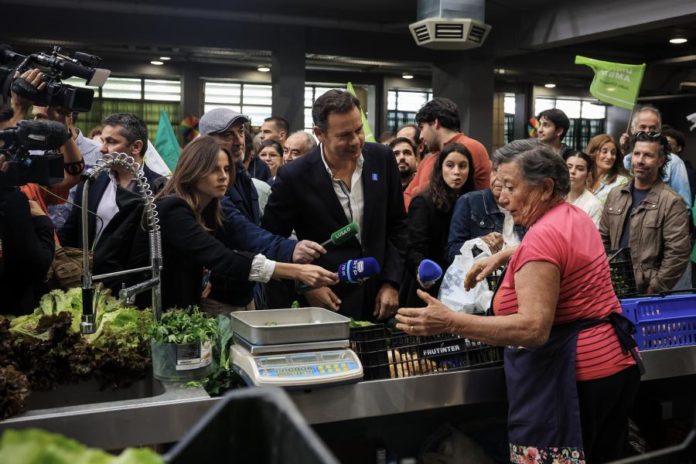
Prime minister Luís Montenegro got a very rough ride as he attended a pre-campaign ‘event’ for the local election in São João da Madeira (Aveiro).
Something of a PS Socialist stronghold (Aveiro being the district that elected Pedro Nuno Santos, Mr Montenegro’s former political adversary), criticism was possibly to have been expected – but the way in which it was publicised has definitely dealt the government no favours.
A furious grandmother buttonholed the PM to complain about the lack of support for the elderly, and the ‘moderate rent’ that the government presented last week, of anything up to €2.300 per month.
The irate grandmother stressed that she had had to sell her home and move in with her grandchildren as she could not afford a rent of €520 a month, nor had any support for such an amount been available.
The PM put the case that ‘support’ would in future transpire in extra leeway given to tenants when it comes to paying their IRS (income tax). But the answer fell on distinctly stony ground.
The woman then launched into the failings of the health service, which have been widely disseminated through the media to the extent that even President Marcelo has agreed that the health minister is “fragilised” (in an extremely delicate position), and that he himself will give his opinions on the situation of the state health system, but only after the municipal elections.
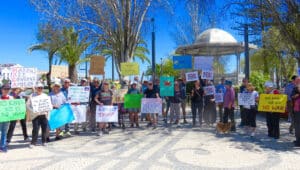
Throughout the country this weekend, towns and villages are involved in ‘pre-campaign’ rallies, as the official run-up to the municipal elections starts on Tuesday.
In spite of the government’s many ‘announcements’, the consensus is that the new measures to ‘fix the housing crisis’ will be as ineffective as the last. (It is largely accepted that measures introduced last year to try and help young people onto the housing ladder have powered overall property prices increases).
Yesterday, also on a pre-campaign rally, but in Vila Nova de Gaia (Porto), PS leader José Luís Carneiro warned what many have already suggested: the government’s housing measures will “cause a spiralling rise in rents”, taking the issue of housing to a point that “could become explosive”.
As young people living in Lisbon/ Porto/ the Algarve will tell you: “It will be impossible for us to think of renting, or buying, on the salaries we are offered”.
The latest introduction of a concept of ‘moderate rents’, rising to as much as €2,300 per month, “will seriously harm middle-class families, and particularly the youngest in our country”, echoed Mr Carneiro yesterday, describing the decision as a new “liberalisation” of incomes.
“Portugal is one of the OECD (Organization for Economic Cooperation and Development) countries where housing costs rose the most in the second quarter of this year, rising by more than 17%”, he said.
“(The cost of) housing has increased, in Portugal, more, and at a dizzying rate, since this government took office, due to the policies it has adopted.”
In short, it is not enough to ‘announce policies’: the state actually has to take responsibility, roll up its sleeves and build housing “at an accelerated rate”, he said.
“Either we can put more housing on the market, working on the supply side, or, working only on the demand side, we will cause housing costs to rise exponentially, and this will have explosive effects on the country’s cities.”
José Luís Carneiro said last week when the government started making its ‘new housing announcements’ that they were coming from a viewpoint that “doesn’t know the country”.
It is a common criticism when governments make decisions from the capital. The feeling always at grass roots is that ministers do not have any grasp of the lives of the general public.
Added to these issues as the general public gets to decide whom they want in positions of local power are the growing horror stories of the SNS public health system.
Beyond accounts of patients “left to die”, of young mothers never knowing where they can safely deliver their babies and endless waits for treatment/ surgeries/ specialist consultations, there now come allegation of doctors ‘glued to football games’ on their mobile phones, and giving poor diagnoses – leaving patients to seek better attention in the private sector.
All in all, the social-democrat vision of a forward moving country, digitally connected to every device so far known to Man, has somehow lost touch with the country’s electorate. The parliamentary recommendation last week that the country start treating injured children from Gaza, bringing into the country with them family members, has somehow acted like the ‘cherry on the cake of ridiculousness’: social media commentary was quick to point out that the health service should be in a position to help national citizens first. As it patently isn’t, it seems bizarre to consider overloading it even further.
Source material: LUSA/ Correio da Manhã/ CNN/ Facebook