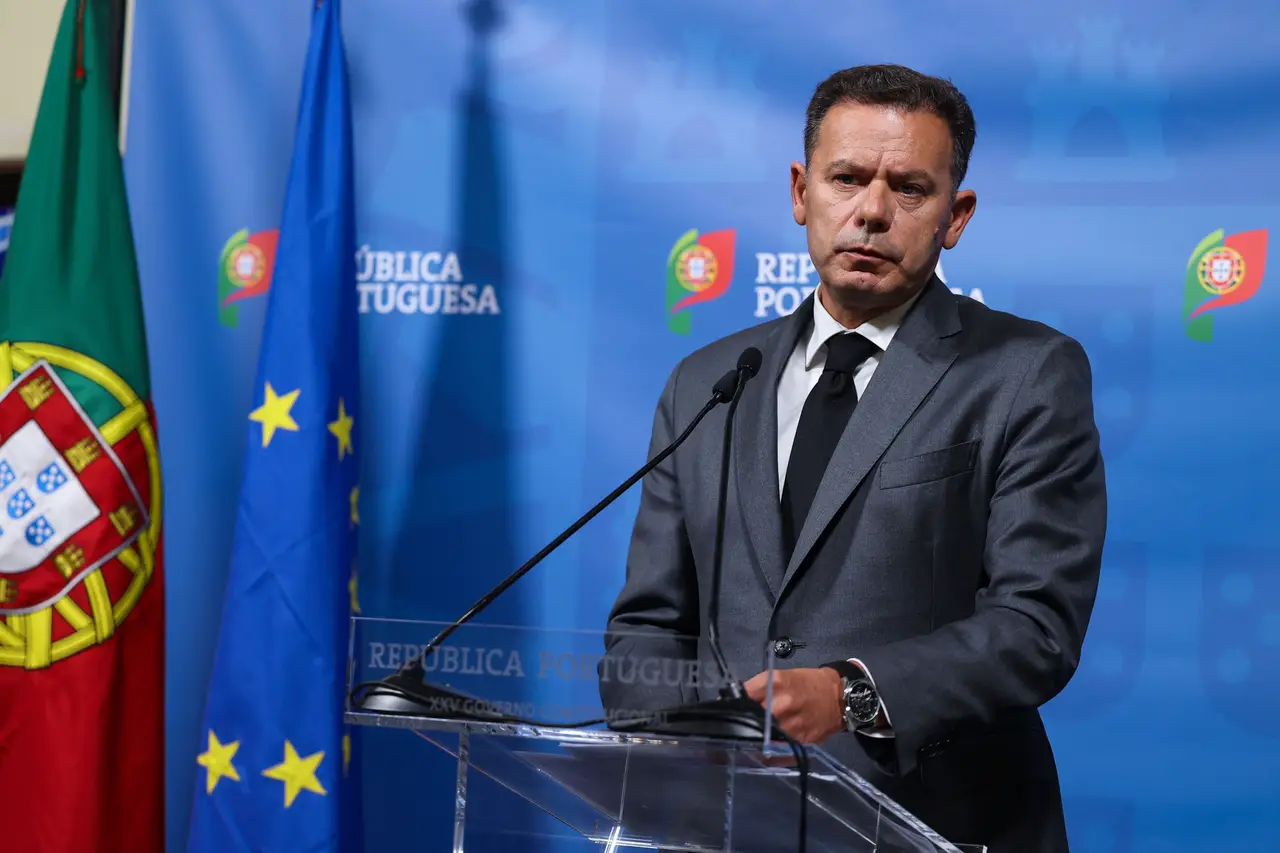
Prime minister Luís Montenegro made a series of announcements yesterday evening following an extraordinary meeting of the Council of Ministers in Viseu to draw up ‘responses’ to the devastating wildfires that have been assailing the north and centre of the country.
The measures cover support in the areas of health, families, businesses and agriculture.
The PM also announced the creation of a new legislative instrument that will speed up the implementation of the various measures – now and in similar situations in the future. This new instrument will thus avoid the need to declare a state of emergency and/ or calamity, he explained.
This was one of the first real occasions for journalists to quiz the PM on the criticisms that have been aired on the government’s lack of empathy with what populations have been enduring. And he made no bones about it: the criticism is unfair. Mr Montenegro said he “regrets (…) some perception” created that the government’s monitoring of the fires “was not so close, so intense and so thorough (…) but I recognise that I may have contributed to this happening. I have no problem saying this, because I am aware that I fulfilled all my responsibilities with my colleagues in the government, but here and there it is necessary for this fulfilment to also be perceived more concretely by the people”, he conceded.
This was the only apology journalists were going to get, but it did at least seem ‘heartfelt’.
Mr Montenegro stressed that the government is “extremely sensitive to the suffering caused by facing intense flames in conditions of absolute inequality”, stressing that he is personally aware that this affects not only those who have “the flames close to them”, but also those who “anticipate the possibility of this happening to them”.
The extraordinary meeting of the Council of Ministers took place on the same day that the Ministers of Economy and Territorial Cohesion and Agriculture and Sea were on the ground in Sernancelhe and Trancoso, meeting with the mayors of various fire-ravaged municipalities.
It was a day to ‘change the vibe’ in other words, and try and show people that things were in hand to help them.
Most important, in the long term, is a 25-year strategy for forestry management: the form of regime pact many have been calling for. This will need to be debated in parliament, but the focus is on getting all parties ‘on board’ so that the country is far better protected against wildfires and poor forestry management in the future.
Mr Montenegro ‘recognised’, in what has become a characteristic form of understatement, that “not everything went well” in this summer’s fire combat – thus the decision for these 45 measures (all of which have been sent to the European Commission, with the aim of their integration into the funding that the EU allocates member states).
Health / Families:
Among the main measures approved by the government is the strengthening of healthcare in the affected areas, with the exemption of user fees (that have not actually existed for three years) and the provision of free medicines.
Support will also be provided to families to cover essential expenses for their sustainability, as well as immediate support for the purchase of goods for animal welfare.
The government has also defined support for the reconstruction of owner-occupied dwellings destroyed, providing for a ‘100% contribution up to the amount of €250,000’. The remaining amount, Luís Montenegro indicated, will be subsidised at 85%.
Businesses and Agriculture:
Among the measures designed to support businesses is the ‘exemption from social security contributions’ for companies and self-employed workers whose activity has been affected by the fires, and support for Private Social Solidarity Institutions (IPSS) involved in solidarity actions for those affected.
Cash support for companies is also planned, with the aim of restoring their productive capacity, and financial incentives for agricultural potential, with a view to recovering activity.
Finally, exceptional support will be made available to compensate for losses – even when there are no fully documented expenses – up to an amount of €10,000 euros per beneficiary.
The prime minister stressed that this is a streamlined process, whereby municipal councils and Regional Coordination and Development Commissions (CCDR) will identify losses and allocate funds accordingly.
Source material: SIC/ LUSA