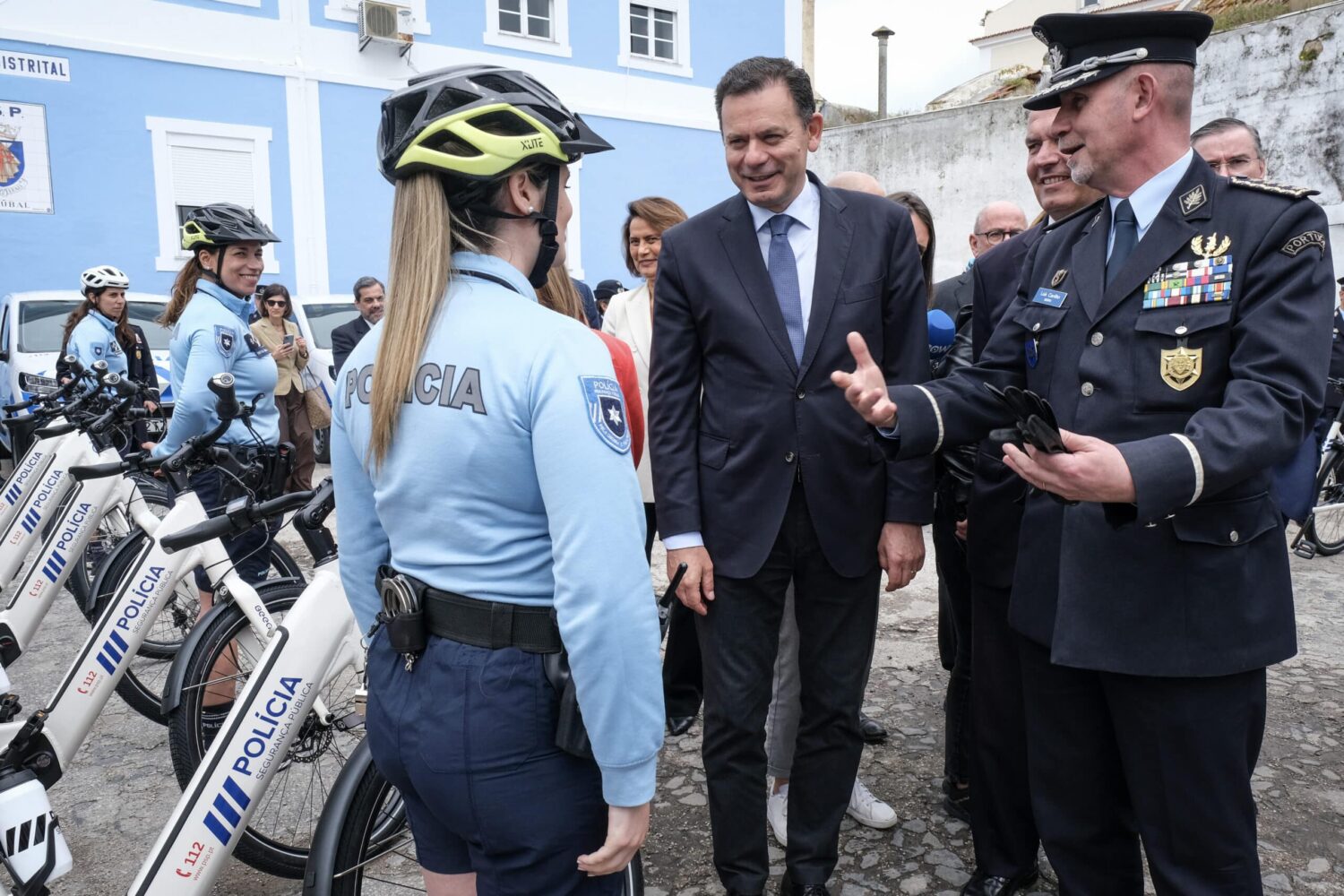
Prime minister announces police reinforcements
Quietly over the weekend, state news agency Lusa carried a generic text on the start of yet another ‘safe summer’ policing campaign, presenting it as very much along the lines of previous campaigns in a country known to be one of the world’s safest holiday destinations.
On the same day, other news outlets carried the horrific fatal shooting of a Hindustani grocer in a suburban area close to Lisbon.
The father of two, expecting his third child, was closing his grocers in Feijó, Almada, when two teenage boys (described as 16 and 17) tried to gain entry. Impressing on them that the shop was closed, the man received three shots to the chest and was left dying in front of his horrified wife and daughters. A ‘manhunt’ ensued – and the story has not appeared to receive any further mentions.
For years, political leaders have refused to accept that Portugal is becoming less safe. They have refused to draw any links with the flood of new citizens arriving through immigration. But on Tuesday, the tide appeared to be turning.
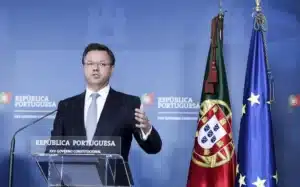
Just as PJ police led one of the largest operations of its kind, dismantling an armed far-right militia – and inspectors elsewhere cracked down on illegal weapons increasingly being used in criminal incidents in Martim Moniz, an area transformed by incoming immigration – prime minister Luís Montenegro was facing parliament, and pledging 1,500 new officers for the GNR (rural) and PSP (urban) forces as well as outlining training programmes for the admission of hundreds more for both services.
His incoming government’s programme reads: “There is an urgent need to reaffirm internal security as a pillar of freedom and economic prosperity.”
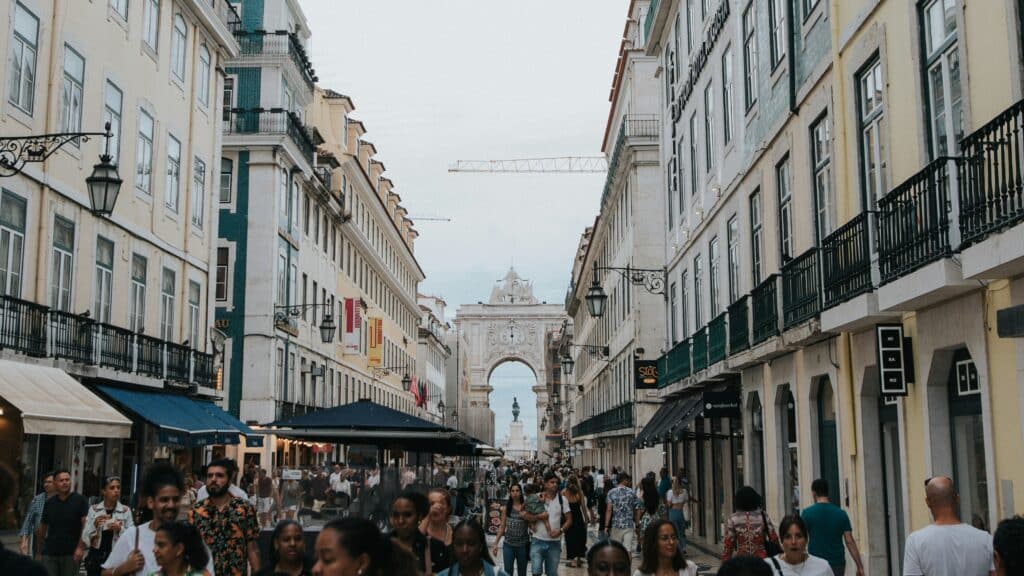
In the words of Observador online, security is one of the priorities of this new mandate that promises to deliver (long-awaited) bodycams, CCTV cameras, and even plans the revision of the workings of municipal police forces.
It is just fortuitous that all three main political parties seem to agree on the subject of security.
“Insecurity, even residual, corrodes civic confidence,” says the government’s four-year programme, “and compromises the attraction of investment”.
However one reads that sentence, mayors in all urban boroughs will be feeling a great deal more reassured than they were last week.
Last week, Porto mayor Rui Moreira called an emergency meeting of the municipality’s executive following attacks on volunteers from the city’s Homeless Support Centre (CASA) and an attack on a policeman.
“The normalisation of violence is something that should concern us all,” he said, referring to any number of violent outbreaks that have scarred Porto in recent years. “Freedom thrives within clear limits, and we should encourage respectful dialogue while fostering an environment that discourages violence and maintains a civilised tone,” he told the meeting.
Moreira stopped short of appealing for more police – but the message coming from his executive was that central government has to act (which the prime minister appears to be doing).
Porto’s mayor also suggested that more newspapers should adopt the approach of Público, and not allow comments at the bottom of texts – as so many of these appear to whip up resentment and intolerance.
Also last week, Lisbon’s mayor Carlos Moedas called for “immediate measures” to address Lisbon’s “situation of insecurity and violence”, particularly impressing the need for CCTV cameras in the ‘problematic neighbourhoods’ of Martim Moniz, Mouraria, Arroios, São Domingos de Benfica and Avenida da Liberdade.
And over the weekend, hundreds marched against ‘racism and violence’, particularly that being meted out by ‘far-right groups’. The attack, for instance, on an actor going into a theatre in Lisbon on Portugal Day was just one of the latest ‘atrocities’ marring the image of the capital and detracting from all those years when Portugal basked in an ambience of old-world security.
“There will be an increase in police presence on beaches/bathing areas, nightlife spots and other places with a high influx of people (summer festivals, airports)“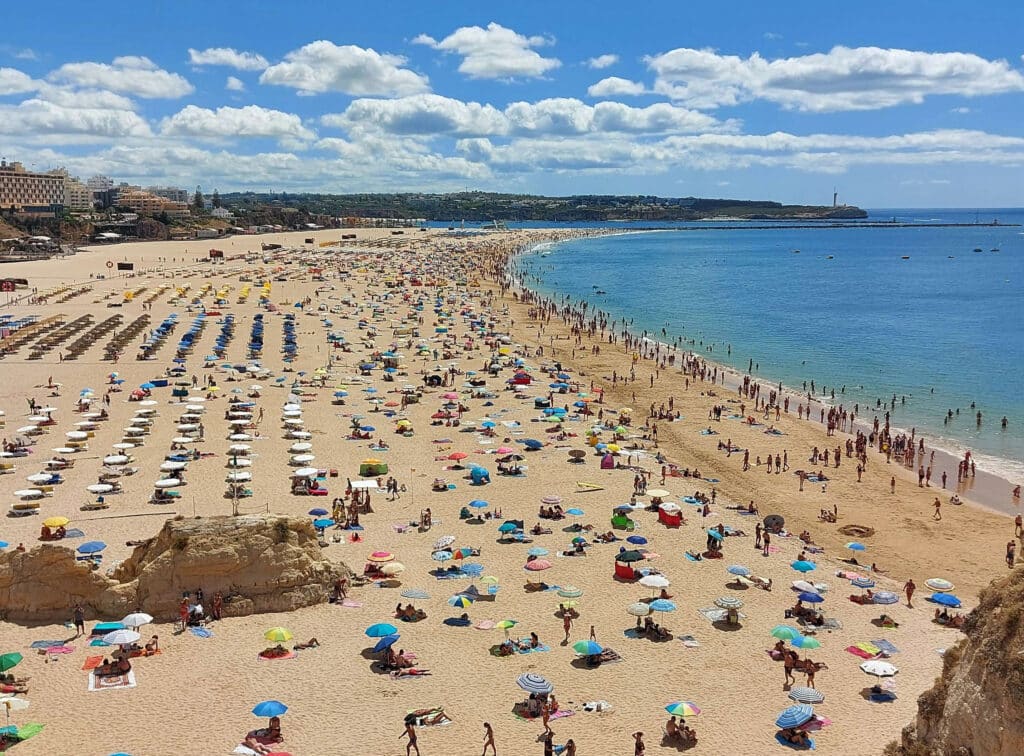
This leads us back to the summer campaign by the PSP: “Police Always Present – Operation Safe Summer”. What does it actually involve? The plan this year is to concentrate operational capacity to “increase the feeling of security in beach, tourist and commercial areas, nightlife areas, residential areas and main road arteries,” says the Lusa press release.
Operation Safe Summer will run right up until the end of the summer holidays – thus ensuring that all visitors get the benefit of “Police Always Present”.
There will be an increase in police presence on beaches/bathing areas, nightlife spots and other places with a high influx of people motivated by seasonality (tourist areas, summer festivals, country fairs), as well as at national airports and air border controls.
And at the same time, “PSP Operation – Portugal Safer Place” will be operating with the aim of raising awareness among tourists about the adoption of self-protection measures, “not only for their own safety, but for the safety of their property in various contexts (in order to reduce the opportunity for criminal offences)”, says Lusa – concluding with the assurance that “during the next three months, the PSP will make available, on its website and over social media, various safety tips about road safety, theft prevention and home protection, self-protection measures and child safety”.
At least one PSP agent arrested in Operation Disarm
One inconvenient detail is that at least one PSP agent (a division chief) has been arrested in the “largest operation of its kind ever to have been undertaken in Portugal” on Tuesday against an armed militia group.
PJ counter-terrorism director Manuela Santos told a press conference following the arrests that “there were plans suggesting the group was preparing an intervention to be carried out” (see story to come).
Preparation included “training with airsoft weapons, and other activities”, as well as the recruitment of young people.
There wasn’t yet a concrete plan, but the group intended to construct a political movement, supported by an armed militia, said Santos. The “violent alteration of the state of Law was one of the final ambitions of this organisation”, she added.
PJ national director Luís Neves stressed: “We are witnessing the recruitment and incitement to violence of young people, based on fake news, disinformation and the manipulation of these people.”