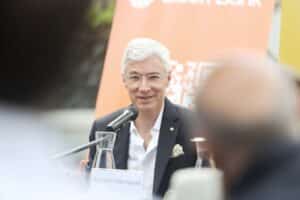
Portugal’s defence minister has urged the United States to “behave like an ally” after renewed pressure from President Donald Trump to take control of Greenland raised alarm across Europe.
Speaking on Monday, Nuno Melo said Portugal expects Washington to uphold the principles of NATO unity. “What is expected of allies is that they behave like allies,” the minister said, stressing that the US remains a “key ally” within the Atlantic alliance.
Melo underlined the need for calm and cohesion at a time of growing geopolitical tension, particularly in Europe. “We must value NATO and use words that promote unity rather than words that promote division,” Melo insisted.
“The fact is that NATO won the Cold War not because it was NATO, but because it was politically and operationally strong and because it had the allies it has,” he said.
Asked whether Portugal had been contacted over possible talks to reinforce NATO’s military presence in Greenland, the minister declined to comment, noting only that NATO meets frequently and that “all issues can be addressed”.
The comments come as Greenland’s autonomous government firmly rejected any suggestion of US annexation, stating it “cannot accept under any circumstances” Washington’s claims to the territory. Authorities in Nuuk said they will instead work to strengthen Greenland’s defence within the NATO framework.
Trump reignited the controversy on Sunday by declaring that the US would take over Greenland “one way or another”, arguing that American control was necessary for security reasons, citing Russia and China. The remarks have heightened concern among European allies and intensified debate over the Arctic’s strategic importance.
Germany confirmed on Monday that NATO is discussing ways to bolster security in the Arctic, reflecting growing unease within the alliance.
Melo was speaking on the sidelines of celebrations marking the 236th anniversary of Portugal’s Military Academy, where he also highlighted what he described as a turnaround in armed forces recruitment, with more personnel now joining than leaving after years of decline.
Source: LUSA