Portugal is unlikely to be swayed by Europe’s sudden 180º change in thinking regarding nuclear energy.
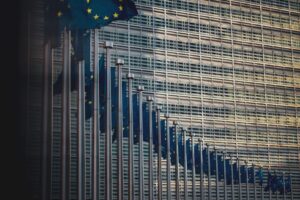
Yesterday in Paris, European Commission President Ursula von der Leyen suggested that Europe’s turn from nuclear power had been “a strategic mistake” that has now been ‘exposed by the Iran war’.
She announced a €200 million fund for European nuclear innovation – recalling that in 1990, a third of the bloc’s electricity came from nuclear “today it is only close to 15%”.
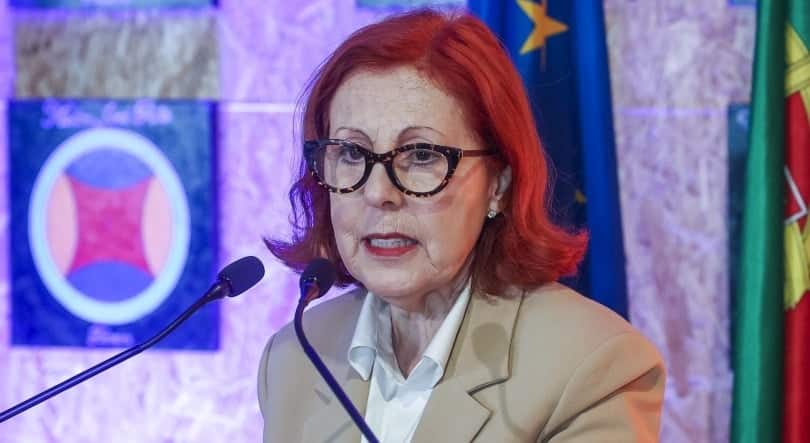
But while other countries may be ready to embrace this new direction, Portugal’s minister for the environment and energy – Maria da Graça Carvalho – is not.
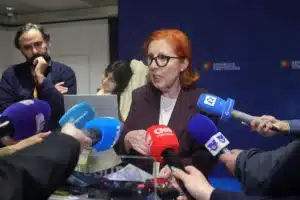
Speaking to journalists in Guimarães, on the sidelines of the European Green Capital presentation sessions, she referred to Portugal’s “big bet on renewables” – in spite of the fact that many projects are hotly contested by communities affected by their rollout.
In the minister’s opinion, investment in nuclear energy is much more important for countries that have “less sun, less wind and less water, and therefore less renewable potential (…) Nuclear energy requires a very high initial investment, which, in our case, does not make sense. We have a lot of renewable potential, we have already invested in it, and therefore our focus should be on renewables,” she said.
Ms Carvalho also suggested that Portugal’s focus on renewables has already given the country ‘competitiveness and strong energy independence’.
Returning a little to Ursula von der Leyen’s announcement yesterday, in the context of a summit on nuclear energy, the European leader presented the goal of rolling out small modular reactors (SMRs) across the EU within the next four years, and harmonising regulations between member states.
Unlike traditional reactors which produce around 1,0000 megawatts (MW), SMRs produce around 300 MW but are more affordable and quicker to build because they can be mass produced in factories.
“The logic is very clear. When it is safe to deploy, it has to be simple to deploy all across Europe,” she said.
Source material: LUSA/ Deutsche Welle