Sunday’s snap election brings new set of problems, but PM survives
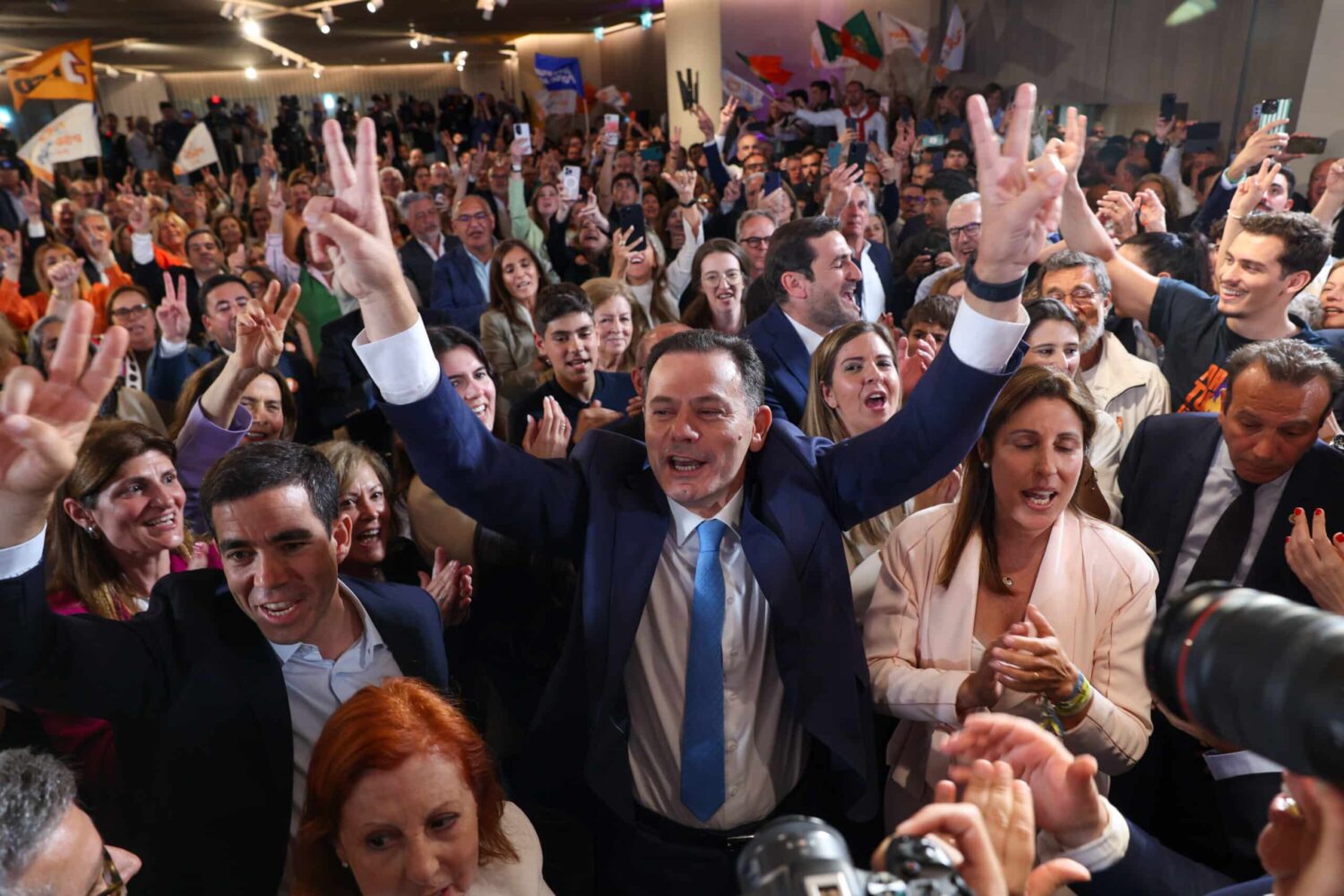
Sunday’s snap election has delivered Portugal a whole new set of problems. The AD (PSD/CDS-PP) coalition may have ‘won’ in terms of votes and elected MPs, but it is nowhere near the absolute majority that prime minister Luís Montenegro was calling for – and no more secure, in reality, than it was before.
These were the elections that every party said they didn’t want, although they were all looking forward to them, in the belief that the results might deliver more in the way of power.
In this respect, almost all of them were wrong.
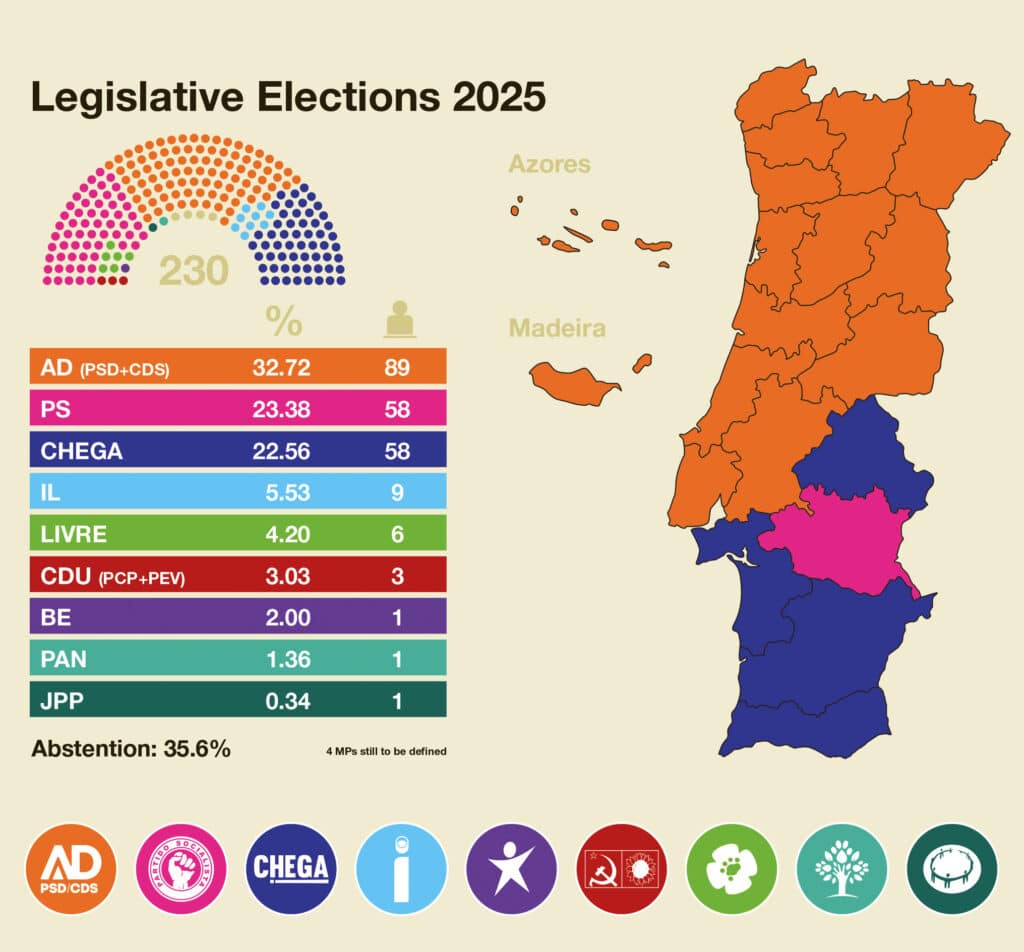
AD has ‘survived’ in terms of numbers, electing 89 MPs (nine more than in the elections last year); PS Socialists have been decimated (losing around 400,000 votes and 20 MPs); PCP communists have continued their descent into irrelevance; ditto Bloco de Esquerda (which lost four MPs); PAN has made no gains (having only one representative in parliament); LIVRE and Iniciativa Liberal improved on past results, but both remain very much parties in the minority. Only CHEGA can beam triumphant, in that it won enormous ground, improving on votes (+176,000), on MPs in parliament (+ eight) and on territories swept up into its domain (the districts of Beja, Setúbal, Portalegre and Faro).
Political commentators, as well as citizens interviewed post-results, agree that CHEGA reaped the benefits of people’s exasperation with the unrewarding ping-pong of the established two-party system (PS and PSD).
CHEGA has completely done away with that system. The party is now on track to be declared the country’s second political force (see section below ‘Emigré votes still to be counted’) – and the ambition of its leader, André Ventura, to topple the prime minister is overwhelmingly acknowledged.
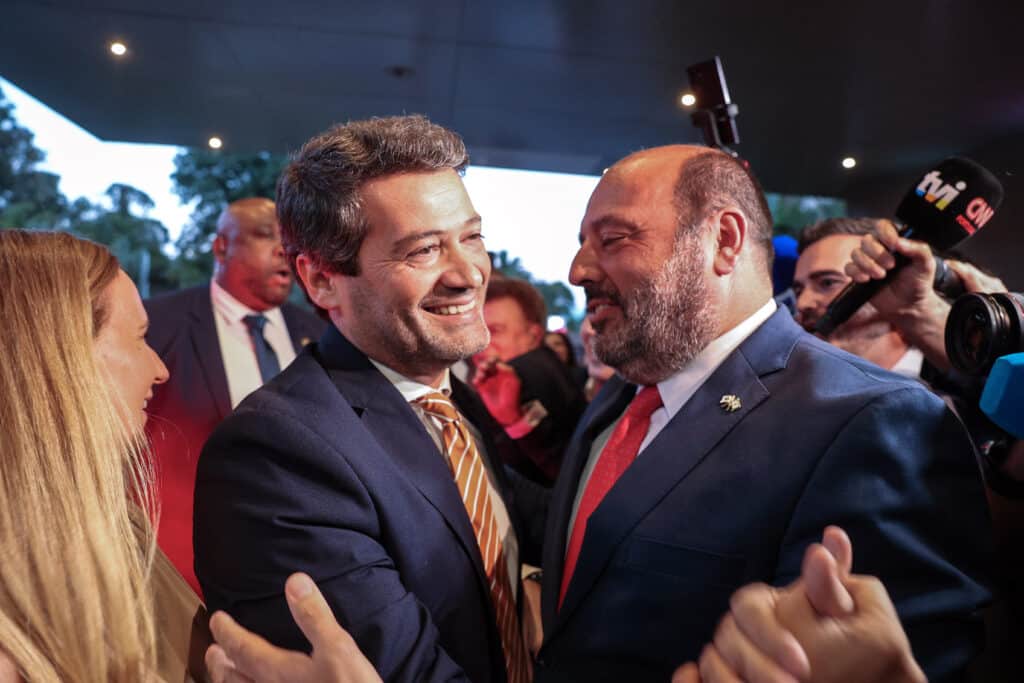
And this is the problem as President Marcelo Rebelo de Sousa tries to negotiate the make-up of the next government.
Months away from the conclusion of his own mandate, Marcelo has stressed that he will not give the green light to an administration that he doesn’t believe has the necessary backing in parliament. Discussions with the three main parties are thus ongoing – and will not be rushed: Marcelo has intimated that this process will take time.
A new government is unlikely to be sworn in before mid-June, and by that time, the other parties’ approach to it must be fully understood, and agreed, whether in writing or otherwise.
With leader writers and commentators expounding on their thoughts over possible scenarios, PS moderates are already saying that the party’s best hope is to start collaborating ‘positively’.
Former Minister of the Presidency Mariana Vieira da Silva warned on a television discussion panel that failure to dialogue with the government will only increase the chances of CHEGA’s continued ascendancy.
“If the two leading parties were sensible, there would be a form of central agreement with the next Socialist leader,” echoed columnist João Pereira Coutinho in his regular column in Correio da Manhã the next day. “Not to block CHEGA, but to block the reasons that feed CHEGA. There would have to be serious combat of corruption; policies to regulate immigration, and a long list of reforms in Justice, Health and Taxation that the country is screaming out for. The most probable, however, is that both parties will continue walking towards the abyss…”
Pereira Coutinho is famous for this rather pessimistic outlook on national politics, but his column puts the situation succinctly: AD may have emerged from this election process ‘the winner’, but it hasn’t won anything yet: it has simply managed to survive.
The principal reason for these elections (doubts over the propriety of the PM’s family business) has not been settled (and remains one of CHEGA’s ‘great crusades’); the Attorney General’s probe into ‘anonymous complaints’ about the PM’s potential conflicts of interest is still ongoing – and the threat of a parliamentary commission of inquiry into Luís Montenegro’s family firm, Spinumviva, has not been taken off the table. Thus, to say these elections ‘settled’ Portugal’s febrile political scene is not to see beyond the end of one’s nose. There is still a very long way to go.
Mathematically, the country has an unbeatable majority of the right in parliament. Taking the number of MPs – AD’s 89, CHEGA’s 58 and Iniciativa Liberal’s nine – there is no room for any left-wing challenges. But, in words used so often by Donald Trump, CHEGA ‘is holding all the cards here’: those 58 MPs can vote whichever way they please – and without them, AD is fairly toothless, even with the backing of IL.
“Everyone should have capacity for dialogue,” the prime minister said when tackled about his party’s prospects in the early hours of Monday morning. But the big question remains: will they exercise that capacity, or push their own agendas?
Emigré votes still to be counted
Right now, PS Socialists and CHEGA are ‘neck and neck’ in terms of MPs in parliament, but the emigré votes coming in (for circles of ‘Europe’ and ‘Outside Europe’) may change that. Last year, for example, CHEGA won an MP in both cycles, while AD and PS only won one MP each. If the same happens this year, CHEGA would end up with more MPs than PS Socialists who haven’t suffered losses of this magnitude for four decades. The results of the emigré votes are expected to be announced next Wednesday (May 28).
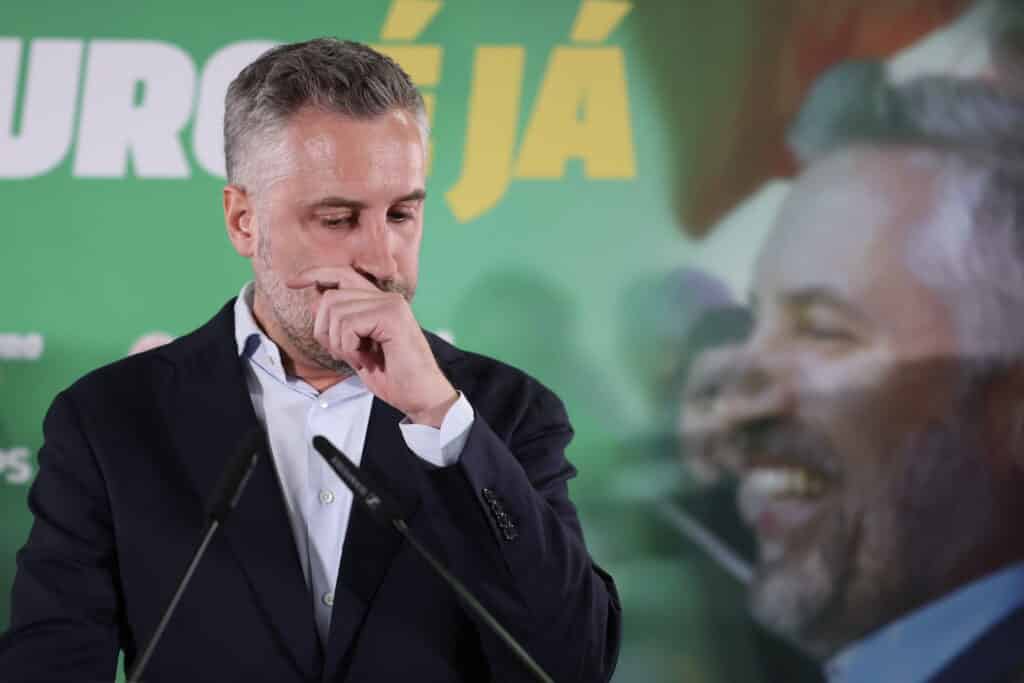
PS leader steps down on Saturday
Socialist leader Pedro Nuno Santos – the man under whose watch Portugal’s PS party has lost roughly a million votes over the last two years – will relinquish his post as secretary-general on Saturday.
The moment – the meeting of the PS’ National Commission – will see PS president Carlos César “temporarily assume the socialist leadership”, until internal elections are concluded.
This may sound like a seamless solution – but it will take months: pundits have been saying that, from what they have gleaned, there will be no announcement regarding the party’s leadership before the results of the municipal elections late summer.
What media sources are calling the “hecatomb of the PS” (meaning ‘massive loss of life’) is, in retrospect, being laid at the feet of Pedro Nuno Santos when it comes to responsibility.
He leaves the scene with less than half the number of Socialist MPs in parliament than when he started. Legacies could hardly get any worse. Indeed, the tabloid Correio da Manhã says that the latest parliamentary mix means that PS Socialists may not even have enough representation in parliament to be part of any future constitutional changes.
For now, the National Commission will meet, go over the dismal election results and, reportedly, decide matters of procedure, including “electoral calendars and regulations”.
This will be a moment for the PS to ‘take a deep breath’ and work out how to repair the damage. Moderates of the party are insisting that dialogue and cooperation are the only way. Without it, former Minister of the Presidency under António Costa, Mariana Vieira Silva, has considered, the popularity of CHEGA will only continue in ascendancy.