In 2026, Portugal is expected to see inflation ease to 2.1% and further income tax relief, but households will still face widespread price rises for a range of goods and services.
Rents, telecommunications, public transport and road tolls are among the services set to rise in line with, or above, the inflation rate forecast for next year. Some staple consumer goods, including meat and fish, are also expected to increase in price, exceeding projected inflation.
Bread is an exception. Prices are expected to edge up, but by less than the forecast inflation rate.
Electricity bills will rise by around 1% for households on the regulated market. In the liberalised market, prices are expected to fall by between 0.5% and 1% for customers of suppliers such as EDP Comercial and Galp.
Spending at pharmacies is also expected to remain stable. In 2026, the prices of antibiotics, painkillers, antidiabetics and other medicines costing up to €30 will not increase.
These are the main price increases expected for next year:
Electricity
The electricity bill for the more than 800,000 customers in the regulated market will increase by an average of 1% from January 1. According to ERSE, the energy sector regulator, the increase will be between €0.18 and €0.28 in the monthly electricity bill, including taxes and fees.
Thus, from next month, considering a power rating of 3.45 kVA and consumption of 1,900 kilowatt-hours (kWh) per year for a couple without children, the total extra amount payable will be, on average, €36.82. For a couple with two children, with a power rating of 6.9 kVA and consumption of 5,000 kWh/year, the average bill will be €95.03.
Next year, consumers on subsidised social tariffs will receive a 33.8% discount on the normal tariff, which translates into average savings of €13.50 for a couple without children and €32.95 for a couple with two children.
In the liberalised market, taking into account that ERSE has announced an average increase of 3.5% in electricity network access tariffs for 2026, which will affect the final amount payable by consumers, EDP Comercial, which leads in this segment, has announced a real decrease of 1%, and Galp of 0.5% in household bills.
Water
Each local authority will set its own tariffs for 2026, but the overall trend is expected to be upwards, after the regulator recommended a 1.8% increase in water collection and treatment charges before distribution.
Natural gas
The 1.5% increase that came into effect on October 1 translated into an average rise of between €0.36 and €0.21 in the monthly bills of households that remain in the regulated market. The new tariff will remain in force until September 30.
Transport
Passenger train operator, CP, ticket prices will increase by an average of 2.26% in 2026, with a single ticket on the Alfa Pendular train between Lisbon and Porto, for example, costing €49.90 in Comfort class and €35.70 in Tourist class.
The cost of the Passe Ferroviário Verde (Green Rail Pass) and the Navegante and Andante passes will remain unchanged in 2026.
The Green Rail Pass (valid on CP) will continue to cost €20 per month, the Navegante Metropolitano (valid throughout the Lisbon Metropolitan Area) €40 per month, the Navegante Metropolitano (valid in one district) €30, and the Navegante +65, for senior citizens, will remain at €20.
As for Andante, the public transport system in the Porto Metropolitan Area (AMP), most monthly passes cost €40 (metropolitan pass) or €30 (municipal or three zones).
The prices of occasional Andante tickets are updated between €0.05 and €0.10, with the exception of the Z2 ticket, which remains at €1.40. The Z3 rises from €1.80 to €1.85, the Z4 from €2.25 to €2.30, the Z5 from €2.75 to €2.80, the Z6 from €3.20 to €3.25, the Z7 from €3.65 to €3.75, the Z8 from €4.10 to €4.20 and the Z9 from €4.55 to €4.65.
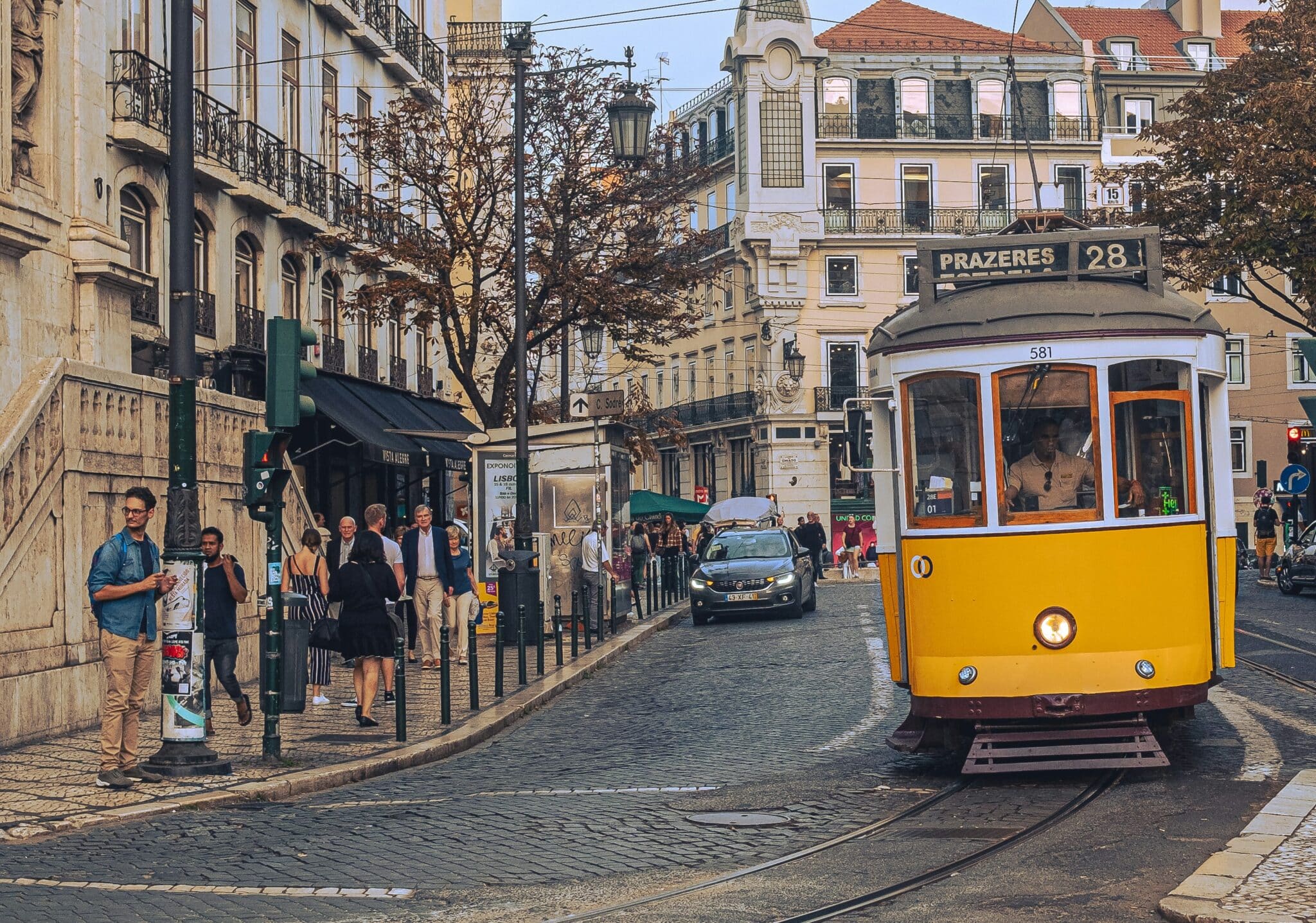
Public transport operator, Carris, will also increase fares in the city of Lisbon on January 1. The on-board ticket price on buses will rise from €2.20 to €2.30, and the on-board fare on trams from €3.20 to €3.30.
A pre-purchased one-hour ticket for the entire Carris/Metro network will cost an additional €0.05, rising from €1.85 to €1.90, while the 24-hour Carris/Metro ticket will increase to €7.25 (currently €7.00), Carris/Metro/Transtejo to €10.35 (currently €10.00), and Carris/Metro/CP to €11.40 (currently €11.00).
A pre-purchased one-hour trip on the entire Carris network with the “Zapping” card, which can be loaded with amounts between €3 and €40, will increase from €1.66 to €1.72.
Telecommunications
NOS will increase prices for some services in 2026, in line with the expected inflation rate.
Meo has also announced that it will raise prices next year, with the exception of “services from the digital brand Uzo and the brand for the youth segment Moche”.
On January 9, it will be the turn of Vodafone Portugal to update its prices, “up to the maximum inflation rate forecast for 2025”.
“The price update does not apply to new contracts or renewals made from November 11 onwards in the private segment. It also does not apply to these customers, prepaid customers and the most recent tariffs, namely RED All In, Yorn Chill and Net+ and the Black Friday offer,” according to Vodafone.
For new subscriptions, renewals and upgrades of business services, “the price update will not be applied during the first six months, i.e. until July 8, 2026”.
Post Office
The prices to be applied by the post office, CTT, in 2026 will rise by an average of 6.20%, with the standard national postal service (up to 20 grams in weight) costing an additional €0.04. The new prices for postal services that are part of the universal service will come into effect on February 2.
Rents
House rents will increase by 2.24% in 2026, according to the National Statistics Institute’s (INE) rent update coefficient notice.
In practice, the increase is equivalent to a rise of €2.24 for every €100 of rent, which means that a rent of €1,000 is expected to increase by €22.40 next year.
Property rates, IMI
The average construction cost per square metre used in the calculation of IMI (Imposto Municipal Sobre Imóveis) will rise by €38 in 2026, increasing from €532 to €570, according to a decree published in the Official Government Gazette.
Although this figure forms part of the Taxable Asset Value (VPT) used to calculate the IMI payable by property owners, the updated amount will apply only to new buildings, properties undergoing alterations or reconstruction, or cases where a new valuation is carried out.
This marks the first increase in the average construction value since 2023.
Road tolls
Motorway tolls will be updated by 2.29% in 2026, based on the year-on-year inflation rate excluding housing in October, plus 0.1% compensation to concessionaires.
This increase is the result of an agreement signed in 2022 by the government to compensate concessionaires for the freeze imposed on an increase of around 10% in 2023.
From April onwards, the entire A25 Costa da Prata and Beiras Litoral e Alta motorways, and two sections of the A6 and A2 motorways in the Alentejo (between the A2/A6/A13 junction and Caia, and between the A2/A6/A13 junction and Almodôvar) will be toll-free.
In the case of the A6 and A2, the exemption only applies to people residing and companies based in certain “areas of influence” of the two motorways.
Under a proposal by the Socialist Party (PS), approved during the vote on the 2026 state budget, heavy vehicles on the Porto Regional Ring Road (A41) and part of the A19 and A8 in the Leiria region will also be exempt from payment.
Meat and fish
The Portuguese Association of Distribution Companies (APED) estimates increases of around 7% for meat and fish in 2026, according to its president, Gonçalo Lobo Xavier, in an interview with radio broadcaster Antena 1 and the Jornal de Negócios newspaper.
For the head of the association representing the main hypermarket and supermarket chains, such as the Continente, Pingo Doce, Lidl and Auchan groups, it is “inevitable” that the price of most foods will continue to rise next year.
Bread
Bread and pastry products are expected to see a “slight increase” in price next year, impacted by labour costs resulting from the rise in the National Minimum Wage (SMN) and the rise in the cost of eggs, nuts and cardboard. Added to this could be the effect of the possible withdrawal of state support for fuel.
Medicines
Antibiotics, painkillers, antidiabetics and other medicines costing up to €30 will not increase in price in 2026.
The decree that annually reviews the cost of medicines, published on November 14, extends the number of drugs sold in pharmacies that will maintain their price next year.
Bank fees and commissions
The exemption from early repayment fees on variable-rate mortgages, intended to help families most affected by the rise in interest rates since 2022, will end at the end of this year.
The fee that is now being reinstated is 0.5% of the amount repaid early in the case of variable-rate loans. For fixed-rate loans, the penalty, which was never suspended, remains at 2%.
Subsidised credit
The interest rate on subsidised credit for home purchases by people with disabilities will increase by 0.06 points, from 2.563% to 2.623%, in the first half of 2026, reflecting the trajectory of the six-month Euribor rate, as decided by the Directorate-General for Treasury and Finance.
In practice, the reference rate for calculating subsidies (TRCB) acts as a “discount” applied to the market interest rate associated with bank loans.
Source: Lusa