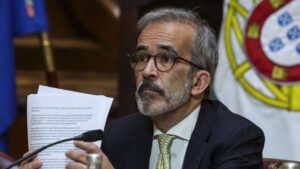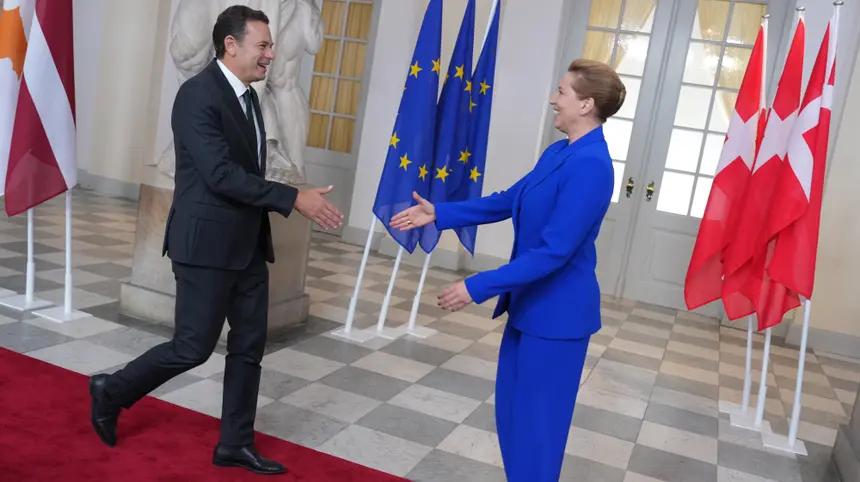
Portugal’s prime minister Luís Montenegro has said today that Portugal wants to be “an active part” of the European proposal to use frozen Russian assets to support Ukraine.
“I believe that what is being proposed is a well-thought-out solution,” he said on his way into an informal meeting of the Council of Europe in Copenhagen where this idea will be one of the topics on the agenda.
The West is currently sitting on frozen Russian assets estimated to be worth around £200 billion (roughly €230 billion) which could be used either to fund Ukraine’s war effort directly or underpin a loan to buy weapons and continue the fight against Russian invaders.
“Periodically there are calls for this money to be tapped, only for Western leaders to back away”, explained the Telegraph earlier this week. “But, in a sudden reversal of his country’s previous policy, German chancellor Friedrich Merz has called on his fellow EU leaders to use the frozen assets”.
Under the plan, Kyiv would not need to repay the loan until Russia covers the costs of war reparations.
“What matters now is to strengthen the European Commission’s proposal from a legal point of view, so that there are no future flaws or implications”, considers Portugal’s prime minister, who is also calling for joint action by EU member states to combat “a war of disinformation and almost invisible penetration into the social fabric” of each country.
“It is a reality that we have (…), we all need to work together to protect our territory and our infrastructure,” he said.
The Kremlin has already denounced the use of frozen assets plan as “pure theft”, saying that it would erode confidence in Europe’s financial institutions. “The boomerang will very seriously hit those who are the main depositories, countries that are interested in investment attractiveness,” Kremlin spokesman Dmitry Peskov hit back.
But it is a plan now that is fast taking shape.
A World Bank study this year estimated that as of December 2024, Ukraine’s reconstruction would cost $524bn over the next decade – about 2.8 times its gross domestic product for that year.
There are about $300bn in frozen Russian assets, including €210 billion euros ($247bn) held in Europe. Of that, €185 billion euros ($217bn) is in Euroclear, a Brussels-based central securities depository.
Interest earned on Moscow’s frozen assets is already being used to fund a separate loan program for Ukraine organised by the Group of Seven major world powers, and this would not be impacted by the EU’s new proposal, writes Aljazeera.
Sources: LUSA/ Telegraph/ Aljazeera