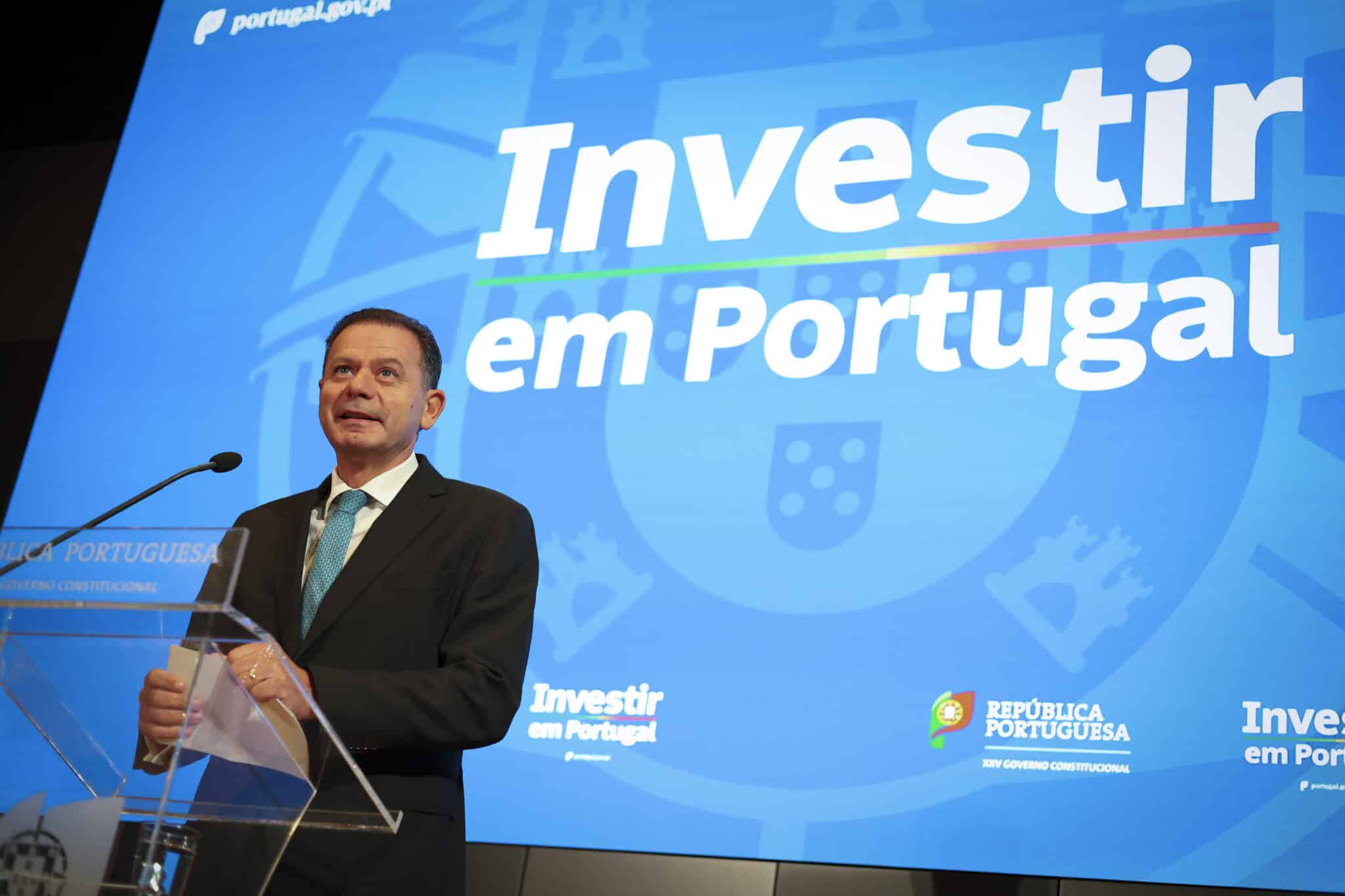
Portugal is gearing up for a major investment push this year, with more than €3 billion in new projects officially unveiled this week – and with heavy backing from the government.
Presented at a ceremony in Sines chaired by Prime Minister Luís Montenegro, the package of investments was contracted through AICEP, Portugal’s investment and trade agency, and is expected to create 2,336 new jobs, nearly 650 of them highly qualified, across key strategic sectors including electric mobility, energy storage, health, chemicals, agri-food and mining.
The headlining project is a €2.065 billion lithium battery gigafactory to be built in Sines by Chinese group CALB. The plant, aimed at supplying batteries for electric vehicles and energy storage systems, is expected to create 1,800 jobs, almost 500 of them highly skilled, the Portuguese government says in a statement on its website.
Last year, CALB said the Sines factory was designed to anchor the Chinese group’s expansion in Europe’s fast-growing electric vehicle and energy storage markets.
“We are excited to bring this major project to Sines, contributing to the future of green energy in Portugal and supporting the European automotive sector’s transition to electric vehicles,” Liu Jingyu, chairman of CALB’s board, said at the time. “Our factory will not only create new jobs, but will also place Portugal at the forefront of electric vehicle battery production in Europe.”
Another lithium-related project backed by the government is a €514 million sustainable lithium refining plant by Portuguese company Lift One, to be built in Estarreja, creating 134 jobs.
In Boticas, British firm Savannah Lithium will invest €313 million in a spodumene extraction and processing unit, a key raw material for lithium batteries, creating 136 jobs, nearly half of them highly qualified. The project has been fiercely opposed by locals but continues to move ahead despite environmental concerns.
Also planned is a €109.5 million factory for cathode active materials in Sines, led by Danish company Topsoe Battery Materials, which will create 62 jobs.
Further north, Everbio, a Portuguese company, will invest €39.5 million in Portalegre in a factory producing PET film for food and medical packaging, incorporating recycled and bio-based materials. The project will create 154 jobs.
Meanwhile, Belgian group United Petfood will invest €32.9 million in Rio Maior to build a dry pet food plant, creating 50 new jobs.
Altogether, the projects benefit from €699.7 million in public incentives, the government says.
Speaking at the ceremony, Prime Minister Luís Montenegro said that change is needed if companies are to grow and pay higher wages. “Only profitable companies can pay better salaries,” he said, arguing that Portugal must embrace change to avoid falling behind.
“The government does not want to hurt anyone or their fundamental rights, nor penalise the social balance of our country. On the contrary, we want to improve it, which means we must this mentality (of change),” the PM said.
Montenegro went even further, stating that those who are “scared of change” and refuse to move forward “will be left behind.”
The Prime Minister insisted that labour rights would not be undermined but defended a more agile labour market to support productivity, competitiveness and wealth creation. “We all want higher wages and lower taxes, but to achieve that we need to create more wealth and be more productive,” he said.
According to AICEP, investment projects supported in 2025 alone totalled €3.58 billion, backed by €803 million in incentives, and are expected to create around 6,600 jobs, one in five of them qualified.