Government incentive aimed at energy transition and affordability will return to standard rate
Since 2021, homeowners in Portugal have benefited from a reduced VAT rate of 6% on the installation of residential solar systems, a fiscal measure introduced by the government to support the country’s broader climate and energy transition goals. This incentive is set to expire on June 30, 2025, after which the standard VAT rate of 23% will once again apply.
Source: Portuguese State Budget Law 2021 and confirmed in Orçamento do Estado para 2024 (Lei n.º 82/2023)
A measure to support energy transition
The reduced VAT was introduced under the Portuguese State Budget Law as part of a wider strategy to promote decarbonization and reduce household energy costs. It aligns with EU-wide directives to encourage the uptake of renewable energy in private homes, while also reducing dependency on fossil fuels.
By applying a lower VAT rate to specific renewable energy investments, such as solar panels and storage batteries, the aim was to make these technologies more accessible to the average homeowner. The measure is limited to installations carried out on residential properties, and only for systems that are installed and completed before the end of June 2025.
What equipment and services are covered?
The 6% VAT rate applies to various components and services related to residential solar installations. This includes solar photovoltaic panels, inverters, including both traditional inverters and hybrid models, which are essential for converting the direct current (DC) generated by the solar panels into alternating current (AC) for use in homes.
In addition to the panels and inverters, the reduced rate applies to solar battery systems that store the energy produced by the solar panels for later use, enhancing the efficiency and reliability of the system. The installation services, materials, and equipment required to set up and ensure the proper functioning of the solar system are also included under the reduced VAT rate.
Impact on costs
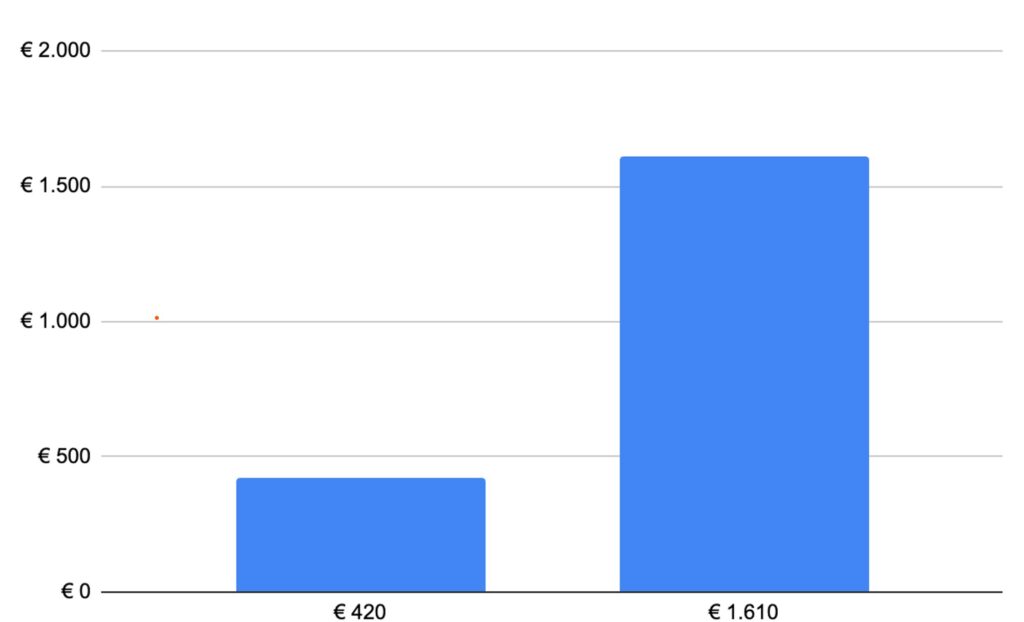
The tax reduction has made a clear difference in the affordability of residential solar. A typical system costing €7,000 would incur only €420 in VAT at 6%. After June 2025, that same system would be taxed at the standard 23% rate, increasing the VAT to €1,610, nearly €1,200 more.
Planning ahead
Though the deadline may seem distant, planning a solar installation can take time. Site assessments and installation logistics often require several weeks or even months. As the June 2025 deadline approaches, installers may see higher demand, which could lead to longer waiting lists.
Homeowners who wish to benefit from the reduced rate will need to ensure their system is fully installed and operational before the end of June 2025.
Portugal’s renewable energy targets
Portugal has been a leader in renewable energy, with nearly 60% of its electricity generation coming from renewable sources in recent years. The government has set targets to achieve 80% renewable electricity production by 2030, with solar playing a major role.
Source: Portuguese Ministry of Environment and Energy — Plano Nacional Energia e Clima 2030 (PNEC 2030)
Incentives like the reduced VAT were introduced to help households contribute to these national targets, while also lowering their energy bills and increasing energy independence.
What happens after the deadline?
There has been no announcement so far about extending the reduced VAT rate beyond June 2025. Unless the government introduces new legislation, the standard VAT rate of 23% will apply to all residential solar systems installed after this date.
As a result, homeowners considering solar are encouraged to seek information early, evaluate their options, and keep the upcoming deadline in mind during the planning process.
Voltaicos solar installations (voltaicos.pt) | +351 926 250 355 | info@voltaicos.pt