Miranda Sarmento does not accept ‘downward revision’ by Brussels
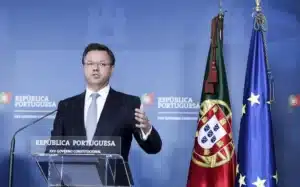
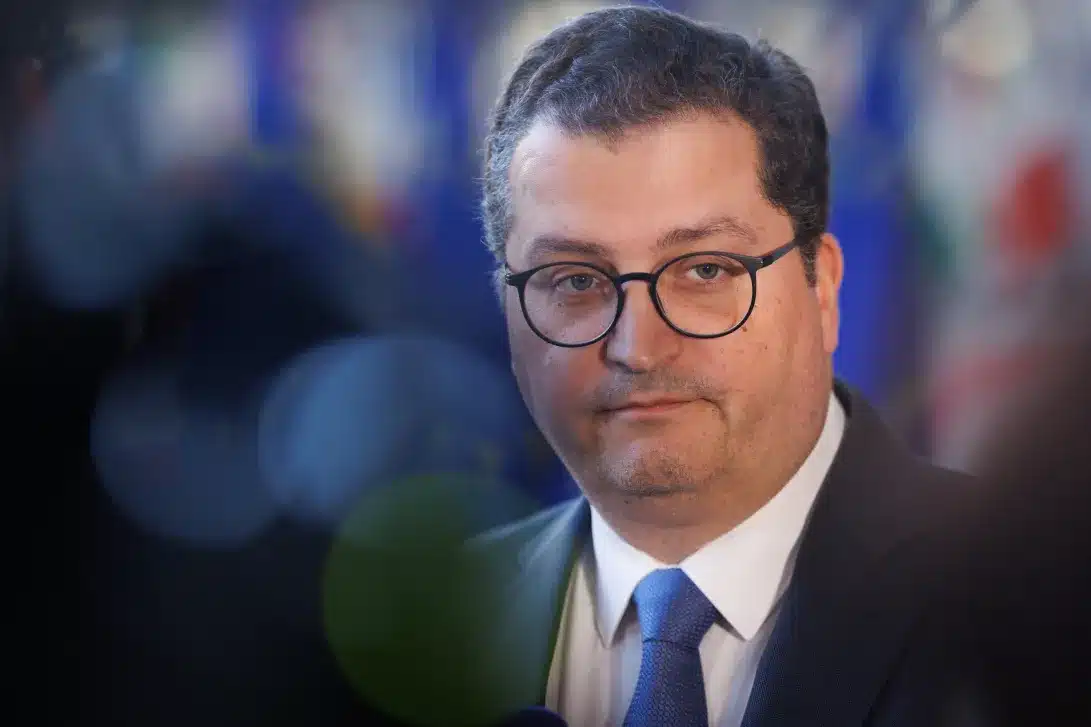
Portugal’s minister of finance, Joaquim Miranda Sarmento, has stressed that the government remains confident that the economy will grow above 2% in 2025 and that it will maintain a surplus in 2026, despite the European Commission’s contrary forecasts.
“(The estimate of 2.4%) is not ruled out, but it is more demanding. In any case, the figures we have point to growth above 2% with all the uncertainty that exists, recession in the US, very high tariffs, that is, several factors of uncertainty,” Miranda Sarmento stressed in the ’Grande Entrevista” on state broadcaster RTP3 yesterday evening.
Miranda Sarmento told his interviewer that the European Commission had reduced its growth forecasts for all countries, as it did not know the effect of international uncertainty and tariffs imposed by the United States.
According to its spring economic forecasts, released on Monday, Brussels estimated that Portugal will achieve a budget surplus of 0.1% of Gross Domestic Product (GDP) this year, which will turn into a deficit of 0.6% in 2026.
These projections represent a downward revision from November’s forecasts, when Brussels predicted a surplus of 0.4% this year. They are also more pessimistic than the estimates included in the State Budget for 2025 (OE2025).
At the same time, the EU executive reduced its forecasts for Portuguese economic growth this year to (1.8%), but is now confident that gross domestic product (GDP) will grow by 2.2% in 2026.
For Miranda Sarmento, between the “recovery in consumption, positive tourism figures, the acceleration of private investment with major projects approved in recent times and the acceleration of the PRR (Plan for Recovery and Resilience), there are conditions for the economy to grow above 2%” this year.
Regarding the budget surplus, the minister of finance stressed that the government continues to forecast a surplus for 2025 and 2026, noting that for 2026 “it is more demanding”.
Again, here the minister is discounting warnings given by the Bank of Portugal.
“For 2026, on the one hand, we have uncertainty from an international perspective and a more demanding budgetary exercise, as I have always said, due to the one-off effect of €3 billion in PRR loans,” he pointed out, recalling that this is expenditure without revenue.
Asked about Portugal’s increase in defence spending, Miranda Sarmento stressed that a NATO summit will be held in June, where decisions will be taken – still pointing to Portugal’s current commitment to only reach 2% of GDP in 2029.
Last week, NATO secretary general Mark Rutte suggested all member states could be spending 2% of their GDP on defence before the next leaders’ summit, saying he was “eagerly awaiting” the outcome of the legislative elections in Portugal. He has previously stressed that 2% spending is “manifestly insufficient”.
Miranda Sarmento admitted during the interview that the figure “may have to be brought forward; there is naturally pressure and we will try to accommodate this within budgetary margins.
“It is important to understand that, on the one hand, defence spending can have an effect on the economy to help the reindustrialisation of Portugal and Europe. Portugal can play a role in some areas, such as the naval or aerospace industries. If we invest, we can have an impact on our economy”.
Discounting Rutte’s 5% of GDP target for defence spending by NATO members, which he said is “unfeasible for any European country except Poland” (which is already close to that figure), Miranda Sarmento said that the international situation “places greater demands” but that any target “cannot jeopardise the welfare state”.
This is very much a political stance, in that presidential candidate Henrique Gouveia e Melo has already pointed out that there is not much point worrying about a welfare state ‘if you have lost your country…‘ ND
source material: LUSA