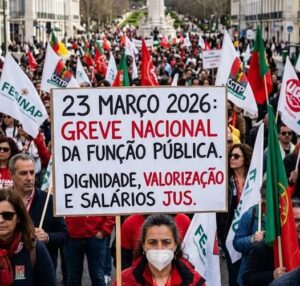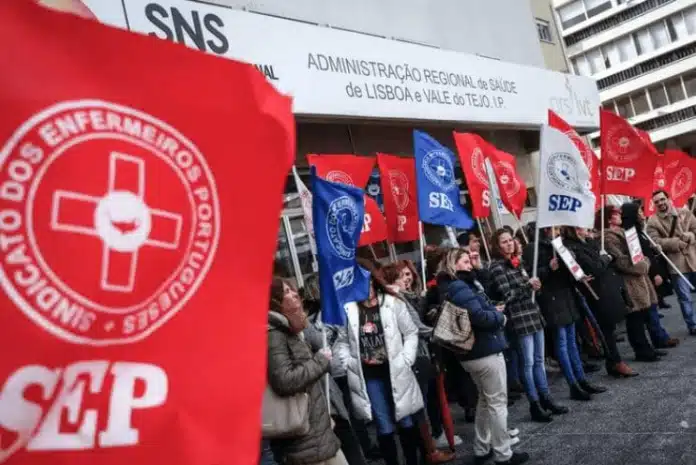
Grassroots support for a general strike, called by syndicates for December 11, is increasing by the day. Today, SEP, the syndicate of Portuguese nurses, has announced it too will be joining the protest against the government’s labour reforms.
This amplifying shambles has come about principally because the government announced its reforms before it came to any agreement with syndicates.
According to a statement by SEP today, the package will make work contracts more precarious and remove benefits. “On December 11, nurses in the public sector will also protest against the Collective Work Agreement proposed by the health ministry which seeks to save money at nurses’ cost”, says the text.
According to the union, the proposal “imposes flexitime and adaptability and no longer considers time allocated for the transmission of information on hospitalised patients as effective working time”.
In addition, SEP points out, the plan “hinders progression, removes the extra pay for night work, weekends and public holidays (so-called “arduous hours”) and exacerbates the already difficult balance between personal and professional life”.
For SEP, “the seriousness” of the proposed changes to labour legislation requires that “nurses in the public, private and social sectors join all workers in rejecting them.
“The government’s proposal to make a profound change to labour legislation, which has not been supported, can only be considered as revenge against an improvement, albeit very insufficient, in the legislation that resulted from the Decent Work Agenda,” the union adds, highlighting what it sees as the ‘most serious measures’ included in the labour package: the facilitation of dismissals, eliminating reinstatement in cases of unlawful dismissal, and the precariousness of labour relations, by making rules on fixed-term contracts more flexible, meaning that, in extreme cases, workers may never be guaranteed a permanent contract.
SEP’s statement also highlights “the deregulation of working hours and the generalisation of individual time banks, the attack on the right to strike, the weakening of trade union action, as well as the reduction of maternity and parental rights and the reduction of guarantees in collective bargaining”.
Strike unites CGTP and UGT
This issue is being taken so seriously by unions that it has united syndicates that are generally rather distant from each other: CGTP is synonymous with ‘the workers’ struggle’ and left-wing parties, whereas UGT has always been seen as more open to the employers’ side of things. But, in the situation today, it is UGT that has suggested the general strike (scheduled for a Thursday) could span two days, not just one (which would effectively see the general strike last until the weekend). Speaking to Antena 1 and Negocios, UGT secretary-general Mário Mourão said that it is the moment now for the government to ‘stop, listen and reflect’. If it doesn’t “we have to think about scheduling two days of strike, instead of just one”.
This will be the first strike to bring the two trade union centres together since June 2013, when Portugal was under the intervention of the “troika”.