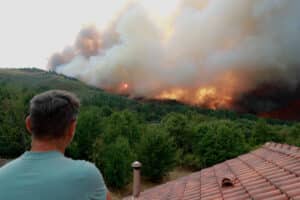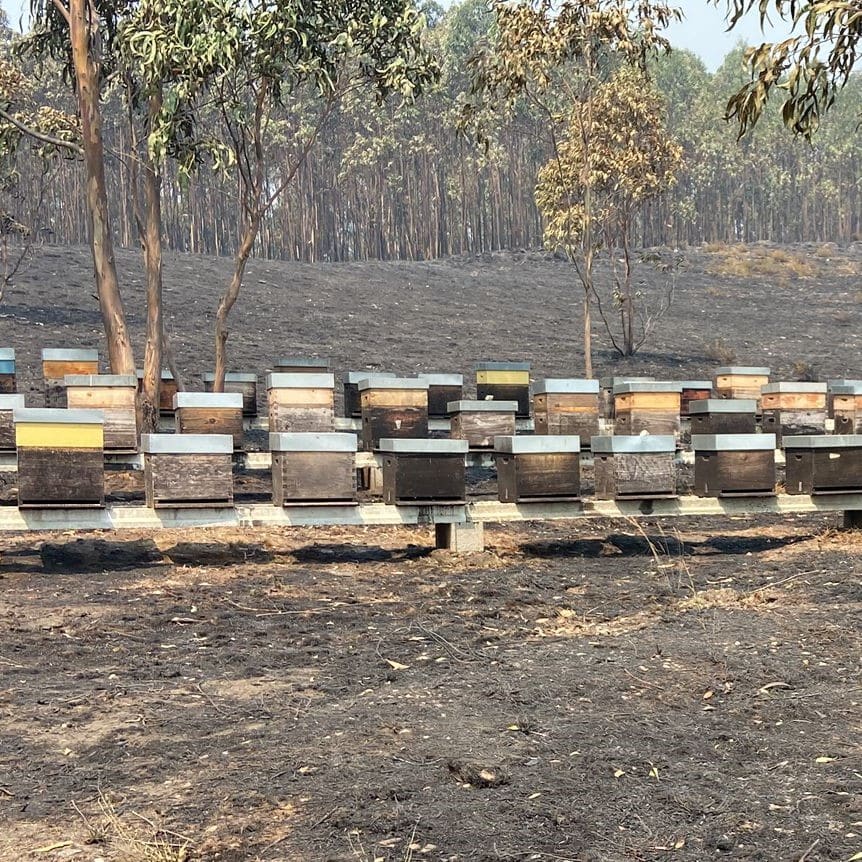
Honey production in Portugal has been through some tough times, but this year is the worst that beekeepers can remember for 15 years. The combination of climate change and relentless summer wildfires, particularly in the north, has precipitated losses of between 50-90%. In total more than 14,000 hives have been destroyed, and many others left surrounded by a scorched landscape.
Manuel Gonçalves, of the national federation of beekeepers, has been telling SIC of the embattled sector’s woes. “Last year, we faced losses in certain areas”, he explained. “This year it has been in every area of the country”.
Bees naturally try to adapt to climate change, he said. But they still need flowers; they need plants to flourish – and this year there just has not been enough ‘flourishing’. The fall in production in hillside/ mountain areas has been up to 90%, he told SIC. In flatter regions, production has fallen by around 50%.
And while prices won’t be affected instantly, fears are much more about ‘the future’ – and how many beekeepers will just ‘give up’ because the activity is so fraught with uncertainty.
The government (in the form of the Ministry of Agriculture) has pledged financial support, but whether this will be considered sufficient reason for producers to keep battling on is what no-one can predict.
Beekeepers in Portugal are ‘a dying breed’, they will tell you themselves: it is not a ‘line of work’ that attracts many young people.
As of 2020 (last recorded data), the national federation had a universe of 12,000 registered beekeepers, and 740,000 hives.
Source material: SIC Notícias