Left-wingers revolt against government plan to bring immigration under control
Just over a week ago, key amendments tightening the Portuguese law relating to the entry, stay and removal of foreigners were approved in parliament, carried by votes from AD (the PSD and CDS-PP coalition in government) and right-wing party CHEGA.
At a point where immigrant shanty towns have started springing up in inner city (and even rural) areas, the government insists there is no more time to waste: the country has to bring order to a situation that has seen Portugal’s immigrant numbers skyrocket from a point where foreigners accounted for 10% of the population in 2023 to their making up 15% just a year later.
Minority parties, however, bemoan what they call the “lack of mandatory consultations” over these ‘get tough’ amendments, claiming “government haste” which shows that AD has “allowed itself to be manipulated” by CHEGA’s far-right ideologies.
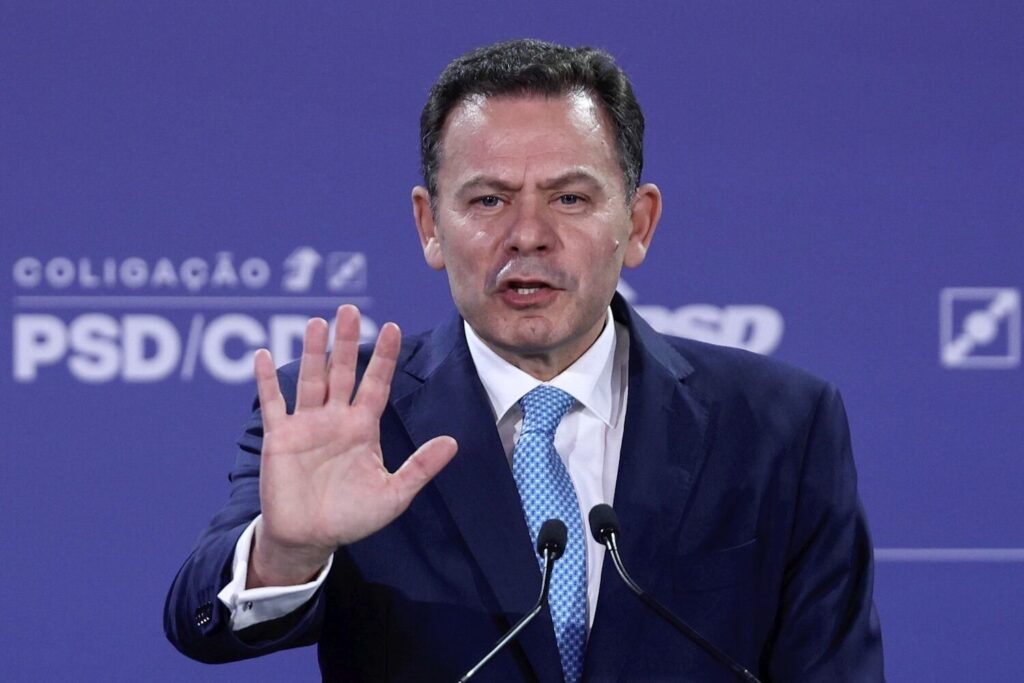
In an interview on Monday with Antena 1 (RTP), prime minister Luís Montenegro was keen to say this is all ‘bla bla’ – that parties of the Left (PS Socialists particularly) are simply in a froth of outrage that they are no longer in any kind of control.
AD has repeatedly said it is trying to rein in a situation that is unsustainable. Anyone visiting inner-city Lisbon, or areas of the Costa Vicentina in the Alentejo, will see how excessive some influxes have been, changing the entire fabric of neighbourhoods.
As Montenegro told his interviewer, immigration demands rules and the conditions to be able to accommodate people, and “it is very visible” that Portugal does not have these.
“It is not a question of perception, it is a question of observation, of realism,” he said, refuting that AD has in any way ‘yielded to CHEGA’. More to the point, the party is listening to the people who voted for it in May’s election, he said.
As such, the PM made out that he is actually quite confident that President Marcelo will rubber-stamp the amendments to the Foreigners Law – even though multiple sources have suggested that he won’t. Expresso last week, for example, claimed “there is an elevated probability” that Marcelo will be sending the various changes approved in parliament to the Constitutional Court. Indeed, it is almost a certainty, as if he doesn’t, “the PS (Socialists) will join the rest of the Left to request analysis of the law”, says the paper.

As the Resident went to press, President Marcelo was meeting with the various parties, ahead of making his decision. Months from retiring from public life after 10 years as the head of state, Marcelo has yet another red-hot political potato in his lap – and he has to look at it from all sides: Portugal’s ties with Portuguese-speaking countries could also suffer with these amendments, as the foot-through-the-door enjoyed by the likes of Brazil, East Timor, Mozambique, Guinea Bissau will all be pushed a little further backwards, and that could negatively affect “Portugal’s image abroad”.
Speaking very obliquely on this subject earlier this month, Marcelo called for “talent” in decision-making, saying: “Talent is finding a way in this area that does not increase fear, that does not increase insecurity, that is not negative for those who have to lead the country’s destiny and that does not undermine an essential factor of our presence in the world.”
Thus, it remains unclear what the president will ultimately decide: he knows that AD/Luís Montenegro believe “there is no time to lose”; ditto CHEGA, which has gone a step further, saying that any decision not to usher the amendments into law would be “an obstacle to immigration control and the country’s security”. Marcelo also recognises the antipathy of the Left, the angst of immigrant associations, and the concerns of constitutionalists.
It won’t be an easy call – and the window for referring the amendments to the Constitutional Court closes on Thursday. After that, under the terms of the Constitution, the president has another 12 days in which he has to make up his mind – and all the while, immigrants who are not yet legalised, or who want to put in papers for Portuguese nationality, have been queuing outside the offices of AIMA (the agency for integration, migration and asylum) in the hope that they will pip any changes to the post.
Nuts and bolts of the amendments
In the government’s own words, its new migration policy “seeks to ensure that those who come to Portugal find an organised country that is fair and ready to accommodate, and that does so in a humane manner, yet is also responsible and firm in complying with the law and the country’s capacity to integrate”.
As such, it is revising the Citizenship Law, “demanding a longer period of effective residence and eliminating periods of illegal stays, ensuring that Portuguese nationality reflects a real and responsible relationship with the country”.
The policy seeks to suit migration flows “to the capacity of public services and Portuguese society. The visa to find a job is reserved for candidates who are highly qualified (with special focus on Portuguese emigrés and Portuguese descendants). The introduction of learning Portuguese language criteria is also being assessed for renewals of certain residence permits”.
The plan seeks to slim down the current definition of ‘family reunification’ to exclude parents-in-law, aunts, uncles, cousins, stepchildren, etc., and focus only on dependent children.
Other parts of the government’s policy – like the creation of a national border and immigration unit at the PSP (public security police) – have already received the president’s rubber-stamp.