Changes approved in parliament with support of CHEGA; opposed by left-wingers
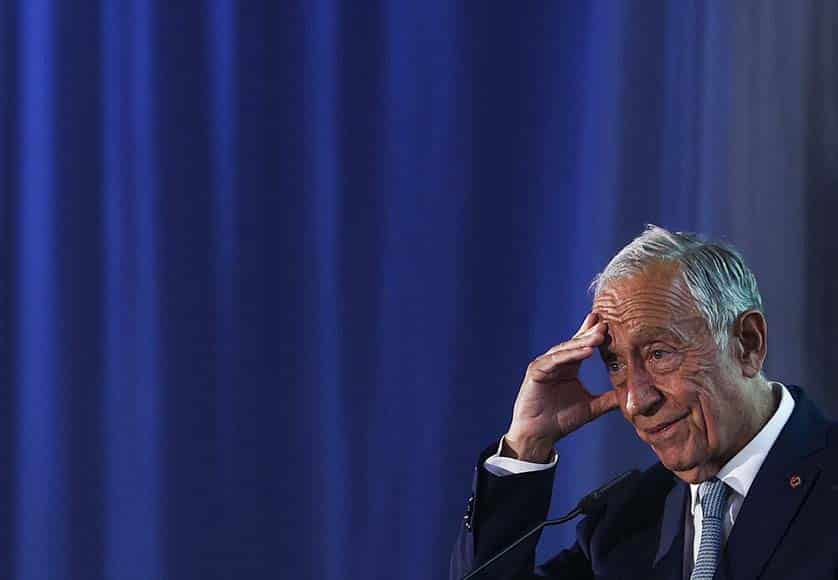
President Marcelo will be receiving delegations from CHEGA, LIVRE and PCP communist parties today, to hear their views on the proposed changes to the ‘foreigners law’ that has inflamed immigrant groups and left-wingers.
Marcelo will also be receiving the newly-elected leader of Iniciativa Liberal, Mariana Leitão, who is taking over from Rui Rocha.
CHEGA, which supported the government’s amendments to the entry, stay and removal of foreigners in this country, will be received by Marcelo at Belém Palace at 5 pm, followed by left-wing LIVRE at 6 pm, Iniciativa Liberal at 7 pm and the Communists (PCP) at 8.15 pm.
A hearing of the Bloco de Esquerda (Left Bloc) is scheduled for Thursday (in spite of the fact that it was the Left Bloc that first asked for an audience with the president as a result of this policy).
As most people will already be aware, LIVRE, PCP and the Left Bloc are all vehemently opposed to the amendments approved last Wednesday, while CHEGA wants President Marcelo to enact the decree as fast as possible.
The new regime limits work visas to “skilled work” – for people with “specialised technical skills”, to be defined later by decree – and restricts family reunification to dependent children/ minors.
The amendments were approved with votes in favour from the Social Democratic Party (PSD), CHEGA and the Christian Democratic Party (CDS-PP), votes against from the Socialists (PS), LIVRE, the Communist Party (PCP), the Bloco de Esquerda (BE), the People-Animals-Nature Party (PAN) and the Popular Party (JPP), and abstentions from Iniciativa Liberal (IL). According to the parliament’s website, the decree was sent to the Belém Palace the following day, Thursday.
On the day of the vote, BE leader Mariana Mortágua announcedshe would appeal to the country’s president as a “last resort” to veto the decree – not only because of its content, but also because of the rushed process of its approval in parliament – without time for opinions from the Superior Council of Magistrates and the Superior Council of Administrative and Tax Courts, nor for any form of consultation with immigrants’ associations.
Later, the parliamentary leader of LIVRE, Isabel Mendes Lopes, announced a similar initiative, with the same objective, that Marcelo Rebelo de Sousa return the decree to parliament for a broader debate.
Two days later, it was turn of CHEGA leader André Ventura to announce a request for a hearing with the head of state on the same subject – but to ask him to promulgate the decree as a matter of urgency, considering that, otherwise, President Marcelo would stand as “an obstacle to immigration control and the country’s security”.
On Sunday, leader of the PCP Paulo Raimundo announced that he has also requested a more comprehensive audience with the country’s president on “the general situation in the country”, which he described as being “held together with string” – highlighting the closure of hospital A&E departments, and including the issue of changes to the rules on entry and residence for foreigners.
The changes to the regime governing the entry and stay of foreigners were brought together in a replacement text presented by the Committee on Constitutional Affairs, Rights, Freedoms and Guarantees, drawn up on the basis of a proposal by the PSD/CDS-PP government and a draft bill by CHEGA.
As regards the granting of residence permits to citizens from the Community of Portuguese Language Countries (CPLP) covered by the respective mobility agreement, the new regime imposes as a condition the prior possession of a residence visa – whereas currently a short-stay visa or legal entry into Portuguese territory is sufficient.
Under the Constitution, the country’s president has 20 days to promulgate, or exercise his right of veto, in relation to any decree of parliament and may request the Constitutional Court to review its constitutionality within eight days of receiving the decree.
Those eight days will be up around the time Marcelo has his audience with Mariana Mortágua.
Source material: LUSA