Minority parties decry government’s haste
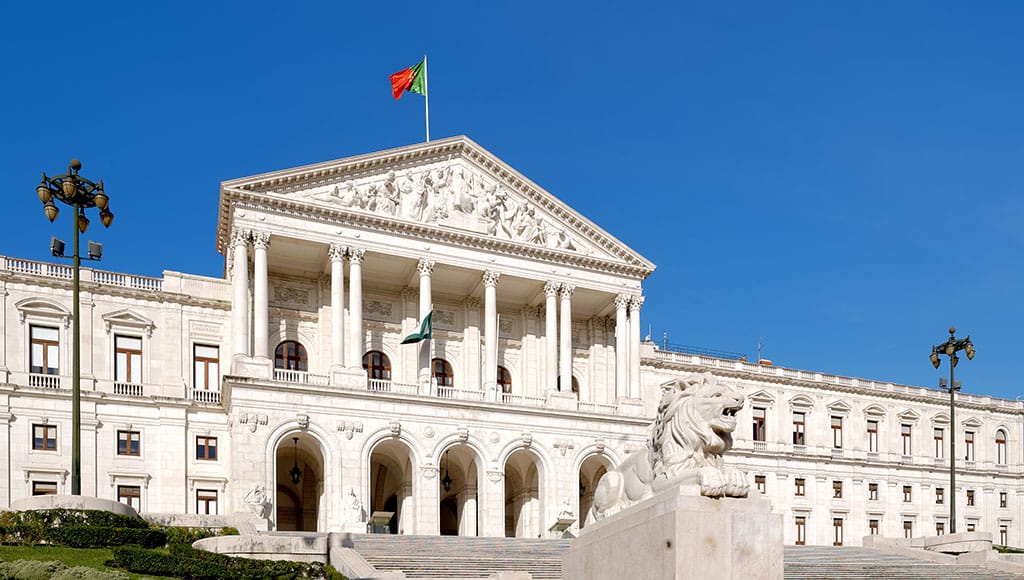
Key amendments, tightening the Portuguese law regulating foreigners were approved in parliament this afternoon, thanks to votes from AD (the PSD and CDS-PP coalition in government) and right-wing party CHEGA.
Minority parties bemoaned the “lack of mandatory consultations” and “government haste”.
The parties against these amendments were all those of the left, as well as IL (Iniciativa Liberal), which objected mostly with the haste with which the government is seen to be moving.
The amendments – governing the entry, stay, departure as well as removal of foreigners from national territory – were approved by the Constitutional Affairs Committee earlier this month, with votes against from the left, which alleged violations of the law due to the ‘lack of mandatory consultations’ (ie discussions with affected groups).
This time, however, IL opted to abstain – not because of the lack of mandatory consultations, but more because of what party leader Rui Rocha called: “legislative proposals at the 25th hour”.
This is “sensitive legislation that did not have all the guarantees in its legislative process,” said Rocha, referring to the absence of ‘mandatory consultation and hearings with immigrant associations and constitutional experts, as requested by opposition parties’.
To be fair, it has been clear from the outset that immigrant associations are against any changes that make it more difficult for them to enter and stay in Portugal, while the government clearly believes its decision-making does not violate the constitution.
Nonetheless, opposition MPs were in no mood for taking today’s approval without vehement objection: PS Socialist MP Pedro Delgado Alves criticised “procedural abuses” and the government’s “hyper-speed”, which he interpreted as seeking to prevent constitutional experts and members of immigrant associations from “participating in the legislative process”.
The “contents are problematic”, imposing “limits on access to rights” for immigrants, with “risks for the Portuguese economy and risks for our life in community”, he said, heaping scorn on the fact that the government coalition has “allied itself with far-right CHEGA”.
“The government has chosen its partner,” opting for “a dangerous agenda” that opens “the doors to extremism,” he said, adding: “Please do not be held hostage by the far right,” because “this is a disgrace”.
Again, to be fair, one has to recall the results of the recent legislative elections: immigration and the whole issue of foreigners in Portugal saw large numbers in the country vote for right-wing CHEGA, which has been calling for change to national policies on immigration for years. Indeed, PS Socialists lost thousands of voters to CHEGA in May – very possibly for this reason.
As PSD’s António Rodrigues countered: “The issue of immigration has been the most discussed in the last 15 months in Portugal”. PS Socialists “had the opportunity to propose, to reflect” during their years in power, but they didn’t, he said, because “they wanted to continue in the same quagmire they were living in.”
None of this sat well with the rest of the left wing: Bloco de Esquerda’s Mariana Mortágua accused the government and CHEGA of “repugnant opportunism”, saying she hopes President Marcelo will veto the law when it comes up for promulgation
Paulo Muacho, of LIVRE, said the changes were creating a “malicious law”, “made without listening to anyone” “imposed by an arrogant majority” against “people who help build” the country every day.
“You didn’t even want to listen to entities whose hearing is mandatory,” he repeated previous critics.
Inês Sousa Real, of the PAN (People-Animals-Nature), railed against what she called the “outrageous violation of the law” and recalled that new rules on family reunification should require a hearing of the National Commission for Children and Young People: “We all recognise that migratory flows must comply with the law,” but “it must be (a law) that is humanitarian”, she said.
Similar criticism came from PCP communists, and JPP.
João Almeida, MP for the CDS-PP (government coalition member), stressed that not only is this new law “necessary”, it is “urgent” – due to the state in which the country is in: “People are not asleep and will adapt their behaviour to what is going to happen”. The effect of speed “would be lost” between the discussion and the approval of the new legislation if parliament had not moved with the speed that it has, he said.
Now, the country waits to see if President Marcelo agrees.
Source material: LUSA