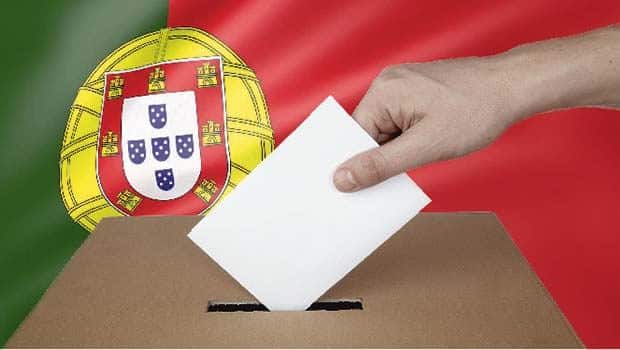
President of the Republic, Marcelo Rebelo de Sousa, has scheduled the elections for his successor for Sunday, January 18th.
With so many contenders and an already febrile atmosphere surrounding this contest, it is very possible that the first date will not bring an outright ‘winner’ – a candidate securing more than 50% of the votes.
In that case, a second round would be held on February 8.
The dates have been carefully considered, so as not to collide with dates like Carnival.
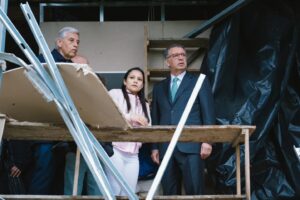
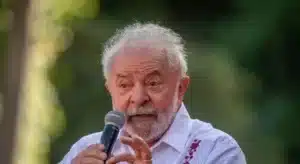
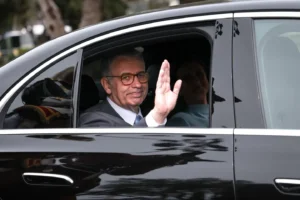
This far, candidates include CHEGA’s André Ventura, Luís Marques’ Mendes, backed by PPD and PSD social democrats, António José Seguro, backed by PS Socialists, António Filipe (PCP communists), Catarina Martins (Bloco de Esquerda), João Cotrim de Figueiredo (Iniciativa Liberal), Joana Amaral Dias (ADN), José Cardoso (PLS) and various independents, including Henrique Gouveia e Melo, Jorge Pinto, Vitorino Silva and André Pestana.
In spite of the number of contenders, it is essentially seen as a contest between the main political choices and former Naval Chief of Staff Henrique Gouveia e Melo.
As such, it is CHEGA’s choice, André Ventura, that has been fomenting controversy after controversy, particularly as a result of his latest billboard campaign.
The outrage generated by simple phrases that in themselves are essentially factual: “This is not Bangladesh” and “Gypsies must comply with the law” has resulted in a cascade of complaints to the national commission for elections, which has in turn referred them to public prosecutors.
Fellow candidate Luís Marques Mendes has spoken of the potential folly of taking judicial steps in this regard, suggesting it would only feed into the gathering furore.
Talking to journalists in Moscavide, Loures, earlier this week, Marques Mendes agreed that the billboards were “provocative, racist and in very poor taste (…) André Ventura wants only one thing: to provoke, in order to have more publicity. In this case, I suspect that he even seeks to provoke to see if someone puts a case against him in court, so that he becomes a victim and a hero at the same time. I hope no one in Portugal falls into this trap, of taking out a case against him,” he added.
André Ventura meantime has posted over social media that “a candidate for President of the Republic cannot be afraid to tell the truth, even if it provokes violent reactions from the system. It was the fear of speaking out, it was political correctness, that brought the country to the state it is in today. The Portuguese people deserve to win this battle! I know that many immigrants agree wholeheartedly with this message”.
These are thus turning into perhaps the most unusual presidential elections in Portugal to date.
Presidential elections began after the April 25, 1974, revolution – and this far there has only been one occasion (1986) when they went into a second round in February.
Sources: LUSA/ SIC/ Facebook/ Wikipedia