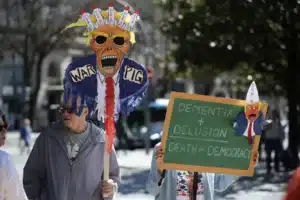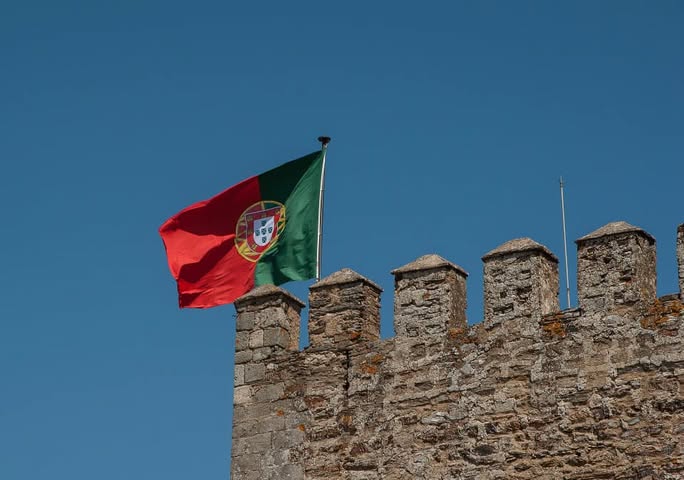
With European leaders meeting today to discuss the response to President Trump’s economic blackmailing attempts in order to take control of Greenland, reports in Portugal are referring to the increasing pressure on ‘undocumented Portuguese’ living in the United States.
As odd as it may sound, there are understood to be substantial numbers of ‘Portuguese emigrés’ who, for whatever reasons, have not acquired legal status in America, in spite of having lived there sometimes for decades.
These citizens have been ‘living in fear’ for the past year, since Donald Trump won the 47th presidency on an anti-immigration ticket – and now that feeling has been exacerbated by the publication over social networks of messages in Portuguese, saying words to the effect that: “If you come to the United States to rob Americans, President Trump will put you in jail and send you back to wherever you came from.”
The message, writes Correio da Manhã today, has also been posted in Spanish and English, “generating criticism from human rights groups” and further worrying immigrant communities.
Since taking office in January last year, the government of President Trump has deported over 600,000 people, while an estimated 1.9 million have left the country voluntarily as a result of the ‘threats’ regularly appearing on social networks, and ‘financial incentives’ offered in some cases.
Meantime, President Trump’s announcement – that he will be increasing tariffs on European countries that oppose his position over Greenland – has resulted in an emergency meeting of European leaders being called today (Sunday), and a great deal of ‘outrage’ and discussion.
European Commissioner Ursula von der Leyen, along with Portugal’s former prime minister António Costa – now running the European Council – has warned that Mr Trump’s plan to increase tariffs on countries not going along with him would “undermine transatlantic relations and risk a dangerous downward spiral. Europe will remain united, coordinated, and committed to upholding its sovereignty,” both said in posts over ‘X’ social network.
Thus, as the Portuguese nation goes to the polls to elect a new head of state for a rapidly changing world, the wider context is showing no signs of ‘calming’. 2026 threatens to be a(nother) rollercoaster year.
Sources: Correio da Manhã/ BBC/ Reuters