Portugal has been singled out for ‘thanks’ by the United States administration in the context of the continued help and assistance it has been giving with the ongoing war effort.
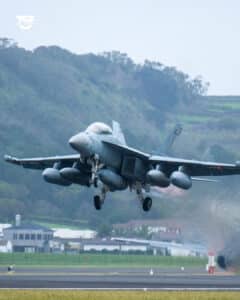
The gratitude wasn’t quite packaged that way, but it is clear that while Spain and Italy have started digging in their heels (both refusing access to air bases that the United States military seeks, with regard to its ongoing war in the Middle East), Portugal has not. The number of aircraft passing through the Azorean air base of Lajes has increased exponentially since the start of the war, and only this week, for the first time, Portugal received a fleet of U.S. ‘killer drones’ – the most lethal and possibly expensive in the American armory.
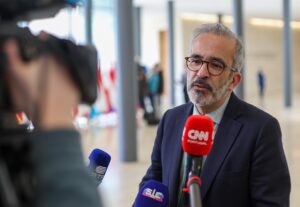
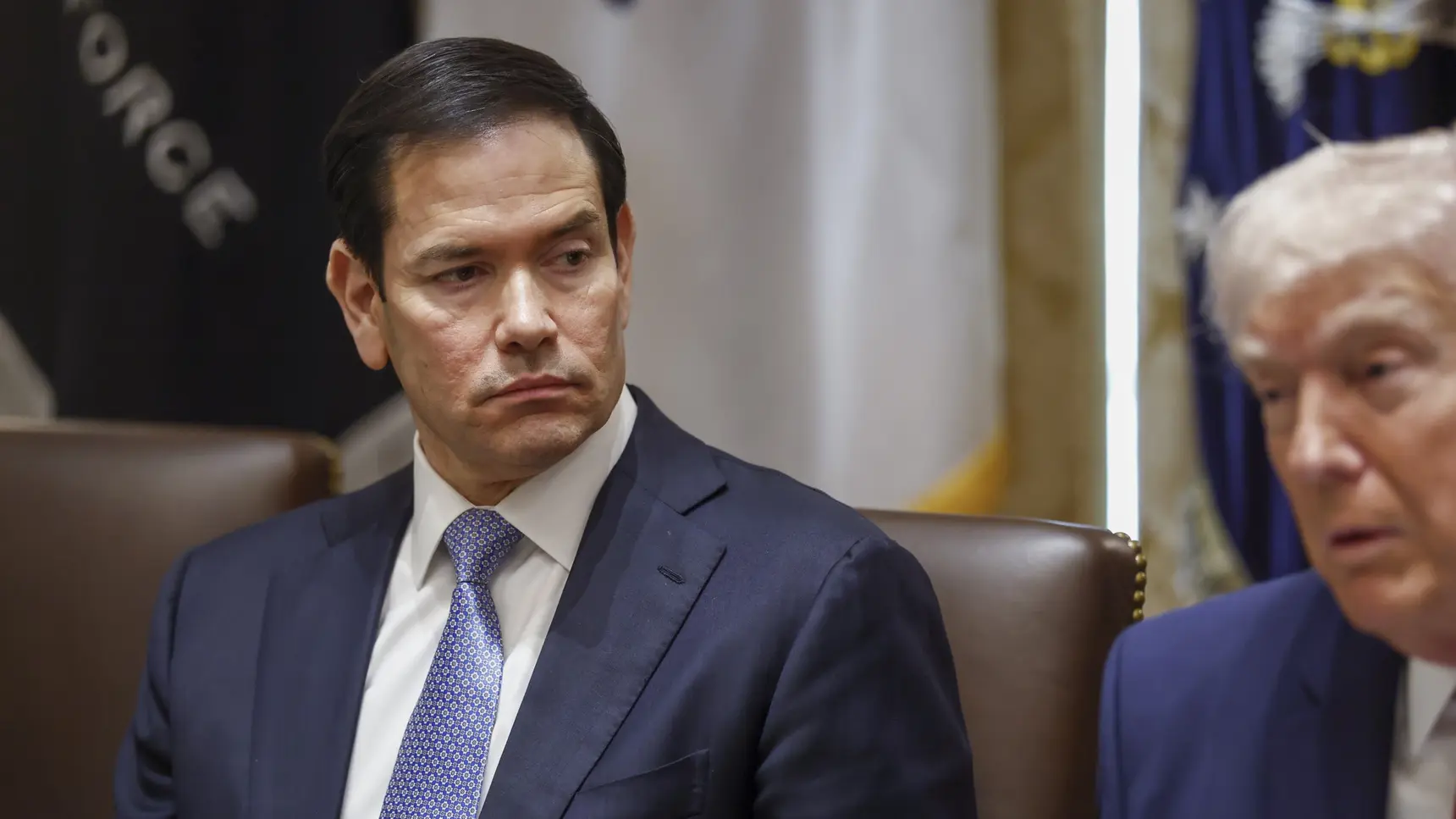
In this context, U.S. Secretary of State Marco Rubio has thanked Portuguese Foreign Minister Paulo Rangel for what the State Department termed: Portugal’s “close” economic and defence cooperation.
Donald Trump’s national security advisor, Rubio “highlighted the continued strength of bilateral ties” during a conversation between the two diplomatic chiefs, according to Deputy Spokesperson Tommy Pigott.
“Secretary Rubio thanked Minister (Rangel) for Portugal’s close economic and defence cooperation. Both leaders expressed their commitment to transatlantic security,” says the State Department note.
On social media platform ‘X’, the Portuguese Ministry of Foreign Affairs also reported that Rubio and Rangel “discussed the situation in the Middle East and noted the importance of the transatlantic link while addressing bilateral economic and defence relations.”
The U.S. and Israel launched a war against Iran on February 28, which has since led to the bombing of several countries, a blockade of the Strait of Hormuz – holding up deliveries of oil, gas and fertilizers – and precipitating global ‘panic’. At this point, no one seems to know how or when the conflict will be concluded as narratives change by the hour.
As Lusa recalls, with regard to Portugal’s continued access to the United States when it comes to Lajes air base – the Portuguese government granted “conditional authorisation” for the use of the base after the attacks started. This approval required that the infrastructure only be used “in response to an attack, within the framework of defence or retaliation”, that the action remain “necessary and proportional”, and that it “target only military objectives”.
Prime Minister Luís Montenegro told parliament in mid-March that the U.S. use of the Lajes Base has “fulfilled the conditions underlying the authorisation” granted by Portugal. But it was clear even then that he was saying this on the basis of information provided to him by the United States (which has since been seen to have had its failings).
Spain has stood out in this conflict as the country that, from the outset, was uncomfortable with the United States using its military bases for any Iran-related operations – on the basis that the war, in Spain’s perception (and that of many other countries) is illegal, and a violation of international law. Spain has since also refused U.S. military access to its airspace.
Italy followed, more recently – refusing the United States access to its military base on the island of Sicily – and none of this has ‘gone down well’ with the Americans, who appear to believe that NATO allies should be coming to the United States’ aid (even though the United States started the war: it was not attacked – and NATO is a defensive alliance, not an offensive one).
Earlier this week, Rubio said: “We have countries like Spain, a NATO member we are committed to protecting, denying us the use of its airspace and boasting about it, denying us the use of its bases (…) Other countries have done the same, and so we wonder: what does the United States gain?”
Rubio nonetheless suggested that he supports NATO because its bases (in Europe and elsewhere) provide the U.S. with “influence, flexibility, and operational capacity worldwide.”
“But if NATO only serves for us to defend Europe if it is attacked, while they deny us access to their bases when we need them… it is not a very good deal (…) It has been very frustrating,” he said, noting that the U.S. maintains tens of thousands of troops and billions of dollars in weaponry across Europe.
All these resources exist to defend Europe rather than the United States, Mr Rubio stressed.
“We are going to have to review all of this” once the offensive against Iran ends, he concluded, positing that NATO ‘would end if the US decided to withdraw its troops from the continent tomorrow’.
These remarks align with recent criticism from President Trump himself. In recent months, Trump has criticised the Spanish government, led by Pedro Sánchez, for its stance on the Middle East war and its refusal to increase the national defence budget to 5% of Gross Domestic Product (GDP), a commitment shared by other NATO members.
But at least for the time being, Portugal can bask in the fact that it is not being seen as an irritant, and has actually been thanked, for allowing America to pursue its ambitions, even though this is leading to what many fear will be a long, global recession, and a world that is no more safe than it was before.
Source material: LUSA