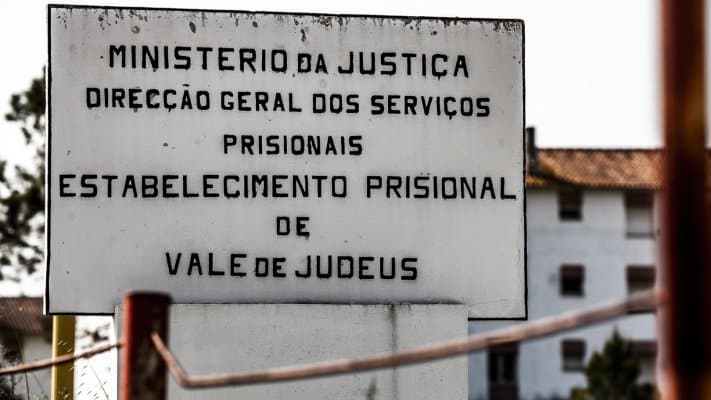
Disciplinary proceedings instituted over the daylight prison break by five ‘dangerous men’ exactly a year ago today have concluded – with prison guards coming off the worst.
No reprimand emerged for the chief guard and director of Vale de Judeus prison, but seven prison guards on duty that were either suspended from duty (two) or fined (five).
President of the National Union of Prison Guards, Frederico Morais, has vowed to appeal, saying the decision amounts to ‘persecution’.
Speaking to Lusa, he said: “It is unfortunate that the association of directors and assistants had the power to archive this case, but nothing surprised us, because we had the case against the head of the prison archived during the process!
“Institutional power overrode the prison guards.
“This is a conspiracy, a serious and severe persecution of the prison guards,” he stressed, recalling that the SNCGP (National Prison Service) requested an external investigation into the incident that occurred on the first Saturday in September last year: Argentine Rodolfo Lohrmann, Briton Mark Roscaleer, Georgian Shergili Farjiani, and Portuguese nationals Fábio Loureiro and Fernando Ribeiro Ferreira escaped from Vale de Judeus in Alcoentre (Azambuja). All have since been recaptured. They were serving sentences of between seven and 25 years for drug trafficking, criminal association, robbery, kidnapping, money laundering, and similar serious and violent crimes.
Disciplinary proceedings were opened following a report by the Audit and Inspection Service (SAI) of the General Directorate of Reintegration and Prison Services (DGRSP), which deemed, in the case of the former prison director, Horácio Ribeiro, that he had been in “violation of the general duties of pursuing the public interest, zeal and loyalty”and “did not ensure compliance with the guidelines on surveillance and security, namely, in the approval of the shifts”.
Regarding the chief in charge of prison guards, the report concluded that he was responsible for surveillance and security in the prison that day, in particular determining the scale of surveillance (physical and video) of the inner courtyards.
But both these cases were archived, with the men receiving no sanction whatsoever.
“It was intentional, to condemn us. I regret that the minister was caught up in this power play by the Directorate General (of Reintegration and Prison Services),” Frederico Morais tells Lusa.
Hermínio Barradas, president of the Union Association of Prison Guard Chiefs, agrees that “the first institution to be targeted by disciplinary proceedings, for having created the conditions (for the escape), should be the general management.”
Noting that “all the conditions were in place for something serious to happen,” Barradas adds: “They are the ones who allow the system to be like this: deficient, obsolete, bankrupt…”
In this context, there was “a very high probability” of “undesirable phenomena such as the escape” occurring, he said, recalling that the number of personnel in Vale de Judeus that day was “below 40%” of what is adequate.
“It is terribly unfair to try to assign blame and responsibility to people who are carrying out their tasks under the conditions provided by the government,” Barradas stressed.
“Obviously, we’re going to appeal. Obviously, we won’t stay silent; obviously, we’ll go wherever we need to go,” assured Morais, although he said he is “aware” that this appeal will ultimately go to the DGRSP itself, which will be “the same as doing nothing”.
What will have to happen, Morais suggests, is that the case will need to be taken to the European courts and Portuguese euro MPs, to whom he wants to show “the shamelessness of the Portuguese prison system and the conspiracy and persecution that general management itself carries out against prison guards.”
The union leader added that the harshest penalties – a 20-day suspension – were applied to the head of service and the guard who was on the video surveillance cameras (CCTV).
Hermínio Barradas also believes that the current government “has no solution” for prisons and that the prison career is “losing its attractiveness (…) Any citizen who sees this type of news and events would have to be crazy to get involved in a profession like this…” he told Lusa.
Source: Lusa