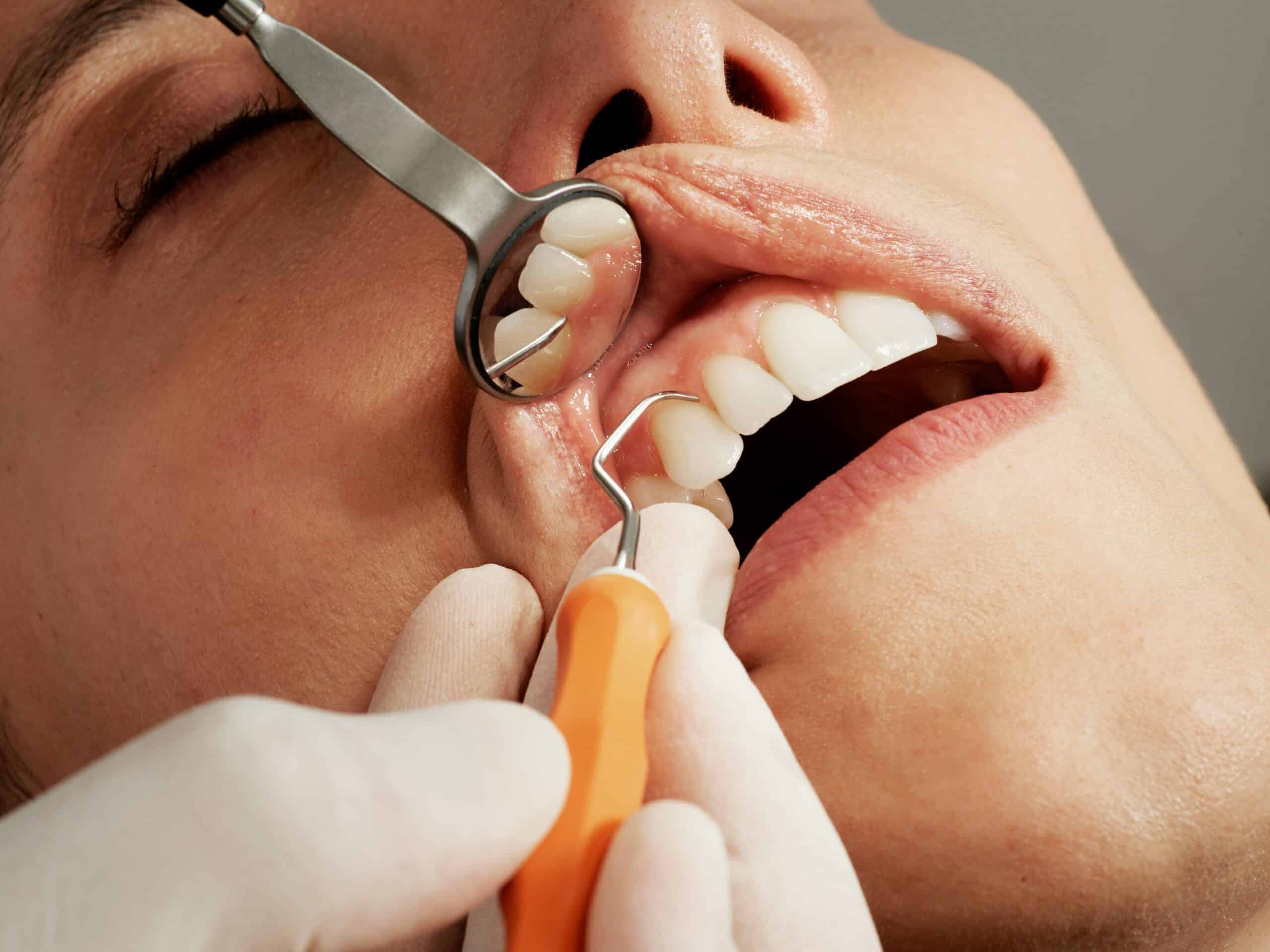
Six in every 10 Portuguese people do not have a full set of teeth, according to the 2025 Oral Health Barometer released last week by the Portuguese Dentists’ Association (Ordem dos Médicos Dentistas, or OMD).
The report, based on a survey of 1,200 people across mainland Portugal and the Azores and Madeira, paints a troubling picture of “significant inequality” in prevention and access to dental care across the country, OMD says.
According to the survey’s findings, 64.6% of respondents were missing teeth, while one in four (26%) only visit the dentist in emergencies — and 2.5% have never gone at all.
The main reason for skipping regular check-ups for 53.8% of respondents is a lack of feeling like they are needed. Another 22.2% blamed financial constraints.
“The public sector’s role in providing dental care remains minimal,” the OMD warned, calling for a stronger partnership between the National Health Service (SNS), local councils and schools to improve oral health education. Only 6% of Portuguese people had their last dental appointment within the SNS, and a striking 70.3% didn’t even know that the SNS offers dental consultations.
“These figures show that oral health is still seen as optional, not as part of overall health,” said OMD president Miguel Pavão, adding that while progress has been made, “there is still an invisible line dividing those who can afford to care for their teeth and those who cannot.”
The association also highlighted issues with the ‘Cheque Dentista’ (Dentist Check) programme, designed to expand access to care but “still underused compared to its potential.”
In 2024, 764,000 dental vouchers were issued, but only 62.5% were actually used, below the average of 67.5% recorded between 2008 and 2024.
“It’s time to modernise the system so that it reaches those who need it most,” Pavão urged, calling for a digital reform that includes a Digital Oral Health Record to integrate dental care more effectively into the national health system.
As of September 2025, there were 5,845 dentists registered in the programme, concentrated mainly in Porto, Braga and Aveiro, which together account for nearly half of all participants. Usage rates in the Azores and Madeira remain lower, showing territorial inequalities and persistent barriers to access, the association added.