PS accuse government of taking country back more than 40 years
PS Socialists have accused the government of wanting to take the country ‘back more than 40 years’ by removing sex education from Citizenship classes, and replacing it with more classes on financial literacy and entrepreneurship.
With support from Bloco de Esquerda (BE), the PS is calling for the mobilisation “of the whole of civil society” to prevent what they call “extremely serious” changes to the compulsory subject of Citizenship.
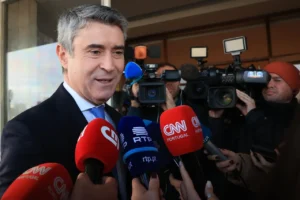
Talking to reporters today, vice-president of the PS Mariana Vieira da Silva said: “The government is preparing to take a decision that the PS considers very serious in terms of citizenship education and sex education. The first time this parliament passed a law on this subject was in 1984, so we’re talking about a step backwards for decades in terms of valuing human rights, the education of our children and sex education.”
According to Vieira da Silva the decision comes at a time when all over the world there is “a worsening of inequalities between men and women and, in particular, between boys and girls”.
“A 2009 law from the Portuguese Parliament is in force which obliges schools to include sex education either in their subject programmes or afterwards in citizenship education. We could be seeing the start of a very serious process of worsening public health crises in Portugal,” she warned.
The PS’s appeal is for everyone to take part in the ‘short public discussion’ that the government has prepared on the subject, running until August 1.
“Let’s all mobilise to ensure that human rights, sexual and reproductive rights and the right to sex education are not something of the past in our schools, but something of the present and the future”, she said – adding that as far as she is aware, “the government will not change anything in the law”, which means that “the programme it is going to approve will not comply with the law passed in 2009”.
According to Mariana Vieira da Sila, this is “yet another sign of a clear rapprochement with the CHEGA agenda”. Luís Montenegro’s executive is moving closer to “the most radical discourses on these issues, which calls into question decades of national consensus and work that is being done in schools and health centres”.
BE’s Joana Mortágua has also called for a “large movement” of parents and school communities against these changes.
“We cannot allow the government to use children’s rights to compete for votes with the far right and CHEGA. Sex education is essential for preventing the sexual abuse of minors, sex education is essential for respecting children’s rights,” she said, accusing the executive of legitimising “far-right conspiracy theories about the content of sex education, trampling all over good practice, international recommendations and everything scientific”.
“Children either learn about these fundamental contents at school, accompanied by professionals, or they learn them on TikTok with “influencers”, often who don’t respect and violate women’s rights and who have unhealthy perspectives on these matters,” said Mortágua.
Earlier articles about these changes show that the government has also decided to defer the subject of ‘gender identity’ to secondary school ages/ the 3º cycle in the education system.
It will be very interesting to see the results of this public consultation because parents up and down the country will be acutely aware how poorly the current education system ‘prepares young people’ in terms of financial literacy and/ or entrepreneurship. There is undoubtedly an argument for boosting the teaching of both; it just remains to be seen if ‘sex education’ should the area that needs to lose ground.
Source: LUSA