Birding society stresses projects “not in line with national or EU nature conservation legislation”
The true agenda behind the plethora of renewable energy projects pushed through in Portugal (particularly in the south) is being questioned now by SPEA, the Portuguese Society for the Study of Birds.
Civic groups, like CARE Algarve, have highlighted the fact that Portugal (particularly the south) is being used as a kind of ‘European service provider’ when it comes to renewable energy, at the expense of its own biodiversity.
At a point now where even President Trump has lambasted ‘hideous’ battalions of wind farms, ‘ruining landscapes and killing birds’, and solar plants ‘messing up the countryside’, SPEA has taken the plunge.
In a statement sent out to the press, and backed by environmental organisations Fapas, Geota, Liga para a Proteção da Natureza, Quercus and WWF Portugal, the NGO says it is “monitoring with concern the increase in renewable energy projects (particularly solar power plants and wind farms) in ecologically sensitive areas, often supported by inadequate and deficient Environmental Impact Assessments (EIA), which are not in line with good environmental impact assessment practices and national and EU nature conservation legislation”.
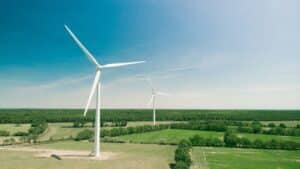
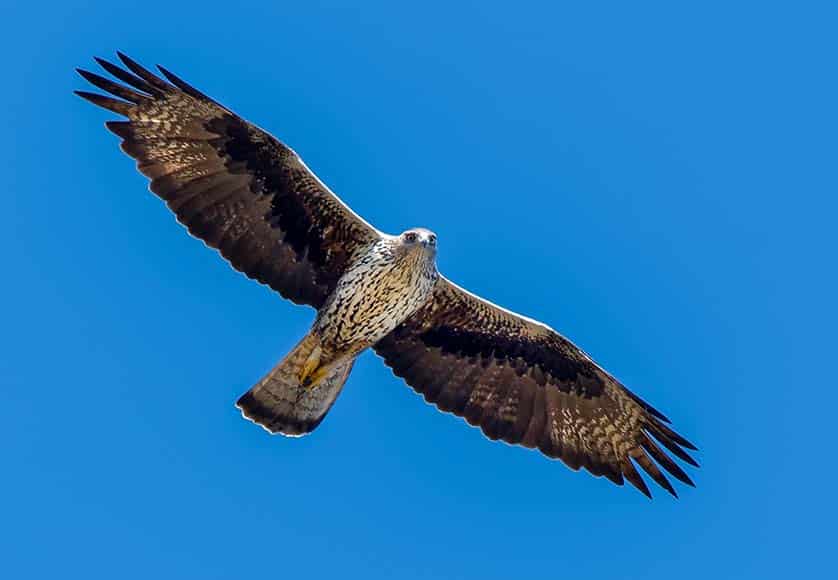
Majestic ‘gliding birds’, particularly birds of prey, are among the groups most directly affected by collisions with wind turbines and/or collisions and/or electrocution with power lines (due to their flight behaviour, high longevity and low productivity). “Mortality in these infrastructures can affect already fragile populations, especially when projects are installed in their breeding, feeding or dispersal/migration areas”.
And this is the crux of the matter: “Several projects with a strong territorial and ecological impact on the interior of the Algarve are currently undergoing environmental impact assessments, namely: Alcoutim Photovoltaic Power Plant Hybridisation Project (Solara4); Wind Projects for the Hybridisation of the Viçoso, Pereiro, São Marcos and Albercas Photovoltaic Power Plants; Pereiro Solar Photovoltaic Power Plant and its very high voltage line; Silves Wind Farm and Cachopo Wind Farm.
“Adding up the projects under review and already operational, it is expected that 110 wind turbines will be installed in an area of around 500 km², without an integrated territorial approach, compromising the ecological sustainability of the region”, says SPEA.
Just like civic group CARE has warned, SPEA’s senior conservation technician Rita Ferreira stresses that the “energy transition cannot be achieved at the expense of biodiversity. The way these projects are being planned compromises decades of effort in the conservation of emblematic species and their future”.
A lot of these projects are planned for the north-east of the Algarve, near Spain (underscoring CARE’s contention that the region is being used as a “power funnel for foreign markets”. This is a crucial region for the conservation of endangered species protected by national and European legislation, “such as Bonelli’s eagle (which has its main breeding ground in the country here), the Iberian imperial eagle (classified as Critically Endangered), the golden eagle and the griffon vulture, which use the important bird dispersal and migration corridor that crosses the Algarve mountains. All areas dependent on these species during the various stages of their life cycle are protected by law”.
Serious shortcomings in environmental impact assessment processes
SPEA also warns of the weaknesses of EIAs, particularly for these hybridisation projects, which have serious flaws, such as the absence of a study of alternative locations/ insufficient analysis of flight patterns and use of space by gliding birds/ underestimation of the risk of disturbance to breeding pairs and the risk of collision, and underestimation of cumulative impacts.
Projects envisage wind turbines just 1 km from active nests of Bonelli’s eagle and Iberian imperial eagle, “without analysing their effects on the abandonment of the territory and on population dynamics at regional, national and Iberian level”
A first stop should be to avoid mortality
“The Malhanito Wind Farm, with 29 wind turbines, is located in the dispersion and migration corridor of the north-east Algarve, close to other projects currently under evaluation.
“According to the Final Report on Bird and Bat Monitoring (Bioinsight 2016), between 2013 and 2016, eight griffon vulture deaths were recorded, with corrected estimates of nine to 10 per year. Located in areas of deep valleys and ridges that give rise to orographic and thermal currents that concentrate the movement of gliding birds, the wind farm exposes them to a high risk of collision – an impact that could be avoided by more careful consideration of the project’s location. Despite this, the EIAs for the projects under review for adjacent areas, such as Solara4, ignored this evidence”, says SPEA.
“To minimise mortality from collisions with wind turbines, the EIAs propose as a central measure the installation of automatic bird detection and avoidance systems (ADS) based on video and artificial intelligence. These systems, which have been little tested and are of uncertain effectiveness, cannot justify the installation of wind turbines in ecologically unsuitable areas – they violate the principle of mitigation hierarchy provided for in European legislation, which requires first to avoid and only then to minimise and compensate”.
SPEA’s conclusion: “projects located in ecologically sensitive areas that are fundamental to the conservation of protected and endangered species – such as the north-east Algarve – should not be allowed to go ahead.
“The energy transition is essential, but it must be based on sound and robust Environmental Impact Assessments that ensure compliance with environmental legislation and the safeguarding of biodiversity.
“The absence of viable alternatives, the pressure for rapid licensing and the devaluation of impacts on natural heritage compromise the credibility and trust in these processes. Projects must be compatible with the ecological values of the territories in which they are located and not imposed on already vulnerable communities and ecosystems.
“It is the responsibility of the public administration to ensure the application of the precautionary principle, the rigorous evaluation of alternatives and institutional transparency, ensuring that the public interest prevails over short-term economic interests.
“SPEA will continue to demand that the energy transition in Portugal is compatible with biodiversity conservation and national and European environmental commitments”.
The quiet rumble of environmental conscience is finally building into something everyone will be forced to start hearing.
Source material: SPEA