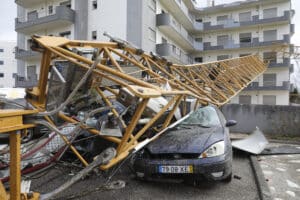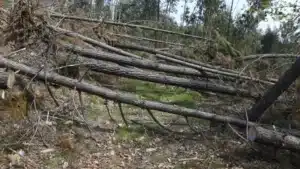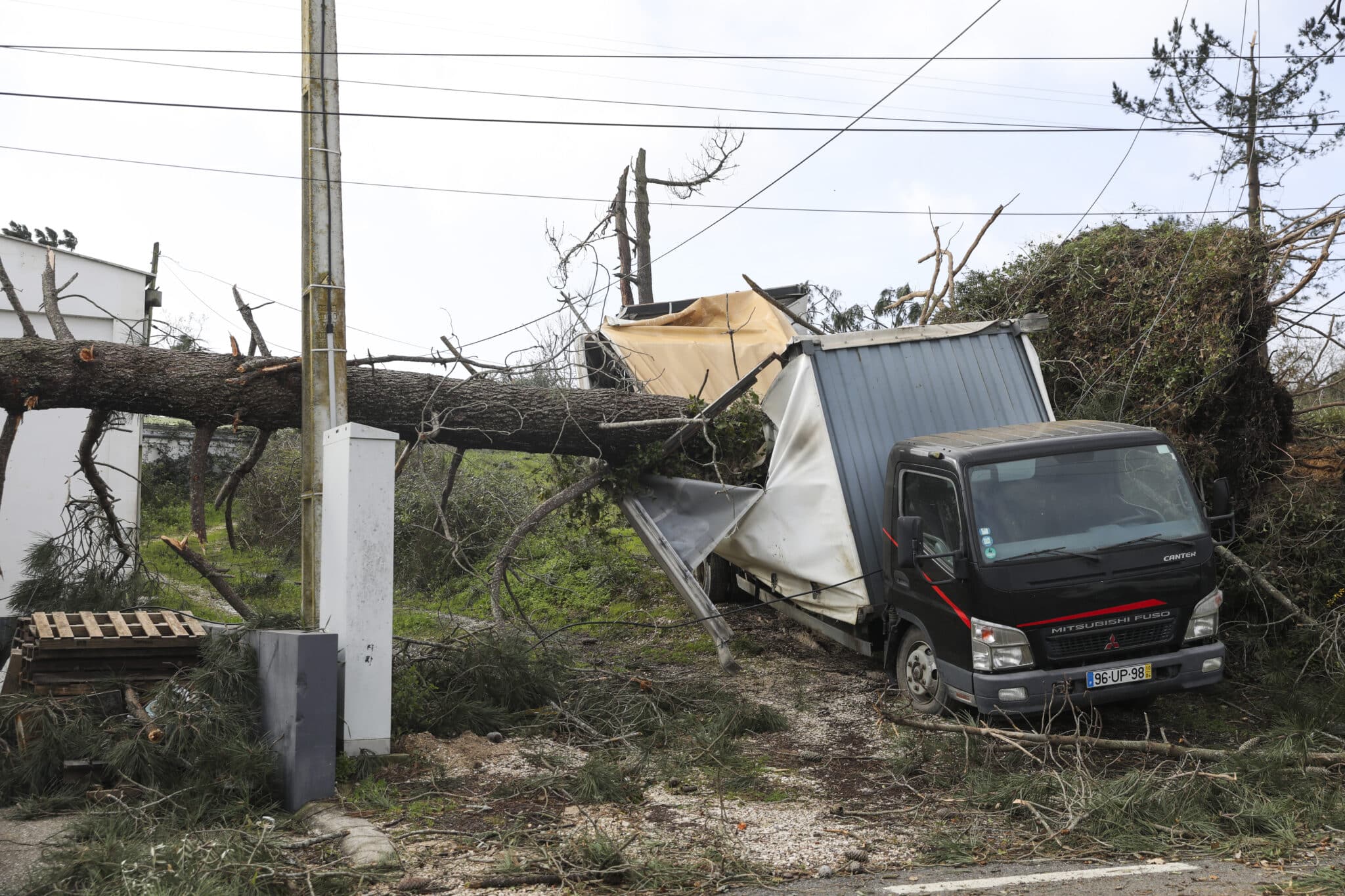
Two months after the absolute devastation caused to central areas of Portugal by Storm Kristin, many companies in the Santarém district continue to face high losses and a slow recovery – with state support considered insufficient, and payment delays worsening the risk of bankruptcy, the Business Association of the Region (Nersant) warns.
“The assessment remains the same. We recognise the government’s effort in launching support instruments, but they continue to fall short of the actual scale of needs on the ground. The imbalance between the speed with which the losses occurred and the slowness of the arrival of support remains too great,” Rui Serrano, Nersant president, tells Lusa news agency.
Nersant represents about 4,000 member companies, mostly micro and small businesses that were particularly affected by damage to facilities and equipment, and by loss of activity.
According to a survey conducted in coordination with regional entities, total losses in the business sector amount to €60 million, reflecting direct damage and production and turnover losses, in a scenario where recovery remains uneven across sectors and territories.
“Two months later, the economic impact continues to be felt very significantly, especially in municipalities like Ourém and Ferreira do Zêzere. We have moved from a shock phase to a quieter, but equally serious phase, marked by loss assessments, contract renegotiations, and difficulties in returning to normality,” explains Serrano.
The sectors of agribusiness, manufacturing, logistics, and warehousing are among the most affected, along with construction, trade, and services located in more exposed industrial areas, which are still facing supply chain constraints and difficulties in restoring productive capacity.
“Capital-intensive companies, with damaged machinery, facilities, and stocks, are the ones continuing to face the greatest difficulties, especially when they depend on value chains that have not yet fully recovered,” said the Nersant figurehead.
Despite measures announced in the meantime, the association considers that support still fails to reach the business fabric in a sufficient and comprehensive way, pointing to limitations in access criteria and speed of execution.
“It arrives, but it doesn’t reach everyone, and it doesn’t arrive as quickly as desirable. There are companies that manage to benefit from the support, but others feel excluded, either due to overly narrow criteria or difficulty in fitting their reality into the existing typologies,” Serrano continues.
The bureaucracy associated with application processes is another identified hurdle, especially for micro and small companies, which constitute the majority of the region’s business fabric and have limited administrative capacity to meet formal requirements.
The SIFIC line (Business Innovation Incentive Scheme) for regions affected by storms, launched recently with a focus on innovation, is seen as a positive instrument, but is insufficient to meet the most immediate needs of affected companies.
“The main gap is the mismatch between what companies need now – ensuring survival and liquidity – and the type of instruments available, which are more oriented toward medium-term strategic objectives,” Rui Serrano adds.
The delay in paying approved support is another critical factor that could jeopardise the survival of viable companies and worsen short-term debt, interest, and supplier defaults.
“It is absolutely urgent that payments arrive quickly. An approved decision that takes months to be paid loses much of its effectiveness. In a context of calamity, time is a critical economic factor and can lead viable companies to close their doors,” he warned.
To prevent the crisis from turning into a structural crisis for the business fabric, Nersant suggests concrete measures: strengthening non-reimbursable support, credit lines with public guarantees and extended grace periods, and maximum flexibility in reprogramming incentives already underway.
“If there are no rapid and proportional responses, many of these companies will not be able to withstand the pressure. Their survival is essential for local trade, industry, and services,” Serrano alerted. It is also ‘essential’ for the government to maintain the ‘historic’ economic performance with which it has been crediting itself.
At a strategic level, Rui Serrano highlighted the need to prepare the business fabric of Médio Tejo and Lezíria for future extreme weather phenomena, integrating climate risk, adaptation, and prevention into investment decisions and the corporate culture.
Nineteen people died in Portugal as a result of the passage of storms Kristin, Leonardo, and Marta, which caused several hundred injuries, homelessness, and displacements. More than half of the deaths were recorded during recovery work.
The storms, which hit the mainland territory for three weeks, caused the total or partial destruction of thousands of homes, businesses, and equipment, the falling of trees and structures, power, water, and communication cuts, and floods and flash floods, with damage totalling billions of euros.
The Centre, Lisbon/ Vale do Tejo, and Alentejo regions were the most affected.