The Florentine Renaissance political thinker and diplomat, Niccolo Machiavelli, made the piercing observation: “Wars begin when you will, but they do not end when you please”. We can debate whether President Vladimir Putin’s nostalgic vision of Russia’s place in the world permits reflection on Machiavelli’s remark.
Russia’s territorial advances in Ukraine this year have been minimal, achieved field-by-field and house-by-house, with the Russian High Command cynically prepared to employ ‘meatgrinder’ tactics which have generated a sickening number of Russian casualties. It is expected, however, that the Ukrainian city of Pokrovsk – a strategic gateway for Russia to seize the entire Donetsk region – will fall in the very near future.
In a November 11 interview with The Economist, John Foreman, former United Kingdom Defence Attaché in Moscow, spoke of a Russian military leadership often incompetent, prone to out-dated, conventional thinking. According to Foreman, Russia’s huge advantage of its much larger population is gradually being offset by a weakening economy. For now, diplomatic efforts to end the war churn like wheels stuck in mud.
Nonetheless, Ukraine and its allies are already thinking about how to rebuild and shape the country when war does eventually end. Build Ukraine Back Better, for example, is a Ukrainian platform for efforts by civil society organisations, think tanks and academia to develop a roadmap for sustainable recovery.
Negotiations for Ukraine’s accession to the European Union opened in June 2024, but it is not expected membership will be achieved for several years and this is conditional on reforms in areas such as anti-corruption. As for Ukrainian membership of NATO, Russia has made it unmistakably clear it will not accept any form of peace agreement which countenances NATO membership.
A Recovery Conference in Lisbon
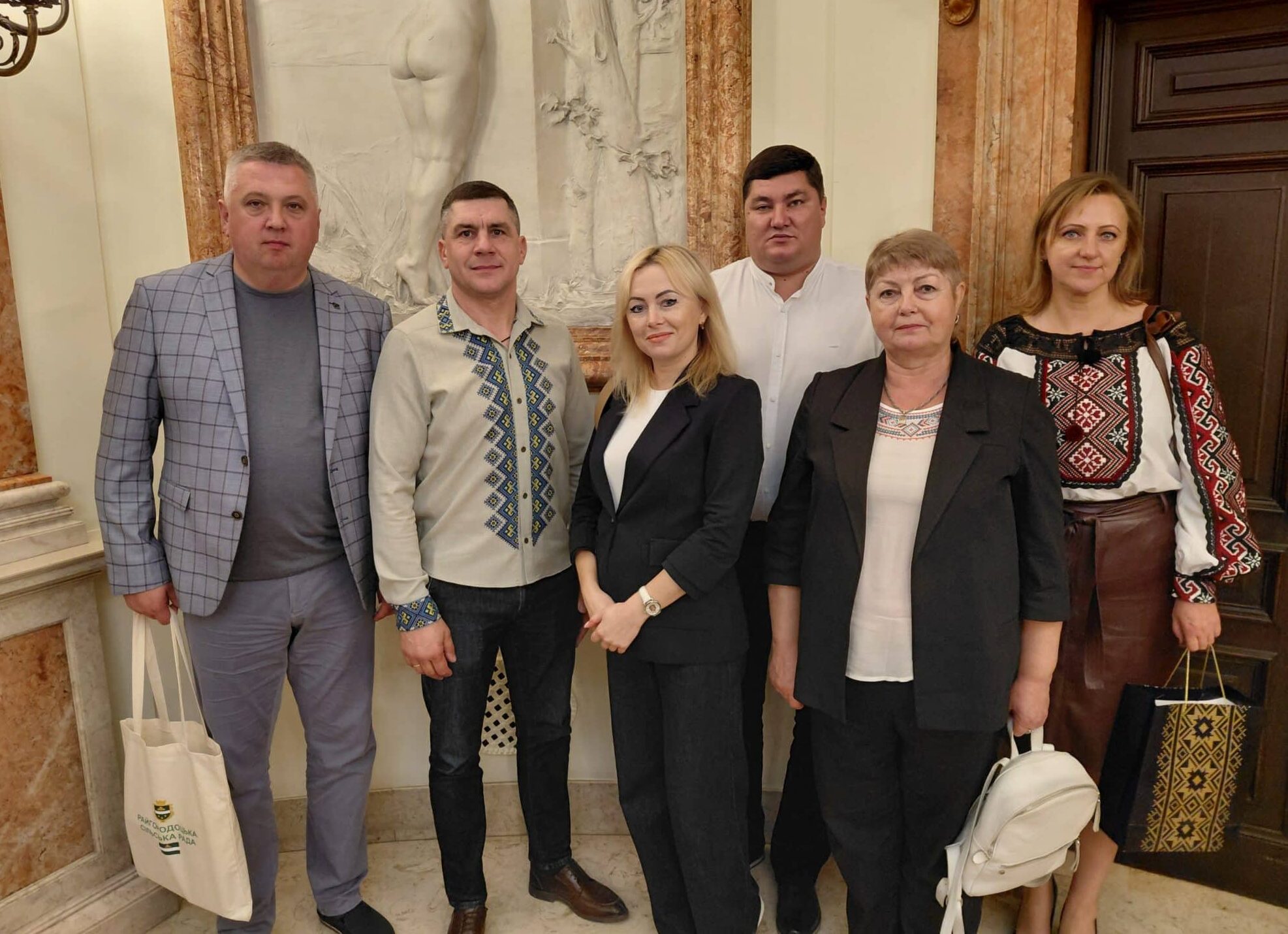
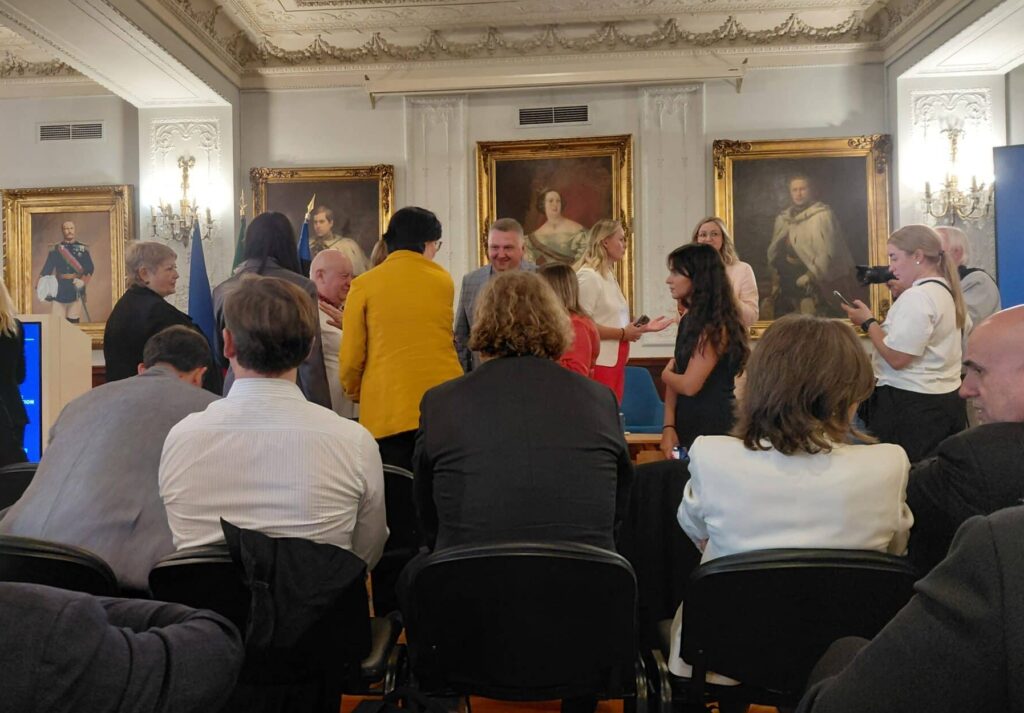
The Resident recently attended an International Conference, ‘Ukraine Recovery: from URC-2025 to Action’, organised by Ukrainian Ambassador Maryna Mykhailenko and Estonian Ambassador Moonika Kase, hosted at the Portuguese Chamber of Commerce and Industry, in Lisbon, on October 17.
The organisers’ aim was for the conference to build on the Ukraine Recovery Conference held in Rome in July this year to support Ukraine’s resilience and modernization. At the Lisbon event, the UkraineInvest agency outlined investment and partnership opportunities.
October saw the highest number of ballistic missiles launched by Russia against Ukraine since the start of the full-scale invasion, attacks often occurring at night, depriving citizens of sleep and increasingly challenging the country’s air defences.
As autumn approaches winter, people in Ukraine’s cities and countryside face lengthy, often daily, power outages. Russia aims to destroy Ukraine’s civilian and industrial energy infrastructure, hoping this will impact the population’s morale, erode support for President Zelenskyy’s government and achieve the slow strangulation of the entire Ukrainian economy.
Reports last week of an energy sector embezzlement scheme, leading to the resignations of Energy Minister Svitlana Grynchuk and Justice Minister Herman Halushchenko, show the Ukrainian state has still not vanquished the cancer of corruption. This latest governance scandal, involving two close allies of Zelenskyy, has occurred as American support continues to crumble, leaving Ukraine ever more reliant on Europe.
“We all miss normalcy in our lives”, Olena Zelenska, Ukrainian First Lady
Besides attacks on civilian energy infrastructure and residential buildings, Russian missiles have destroyed or damaged many schools. Although it is now compulsory for schools to have a bomb shelter, a third of classes take place online with frequent interruptions from power outages.
As a result, children’s levels of educational attainment have suffered, affecting their future potential as adults. According to the United Nations Office of the High Commissioner for Human Rights, as of December 2024, an estimated 737,000 children had been internally displaced within Ukraine, with a further 1.7 million living as refugees outside the country, figures which are undoubtedly higher nearly a year later.
Over 20,000 Ukrainian children have been deported to Russia, while 1.5 million live in Russian-occupied territories at risk of deportation. Inside Russia, these children are educated to be ‘little Russians’ following the Russian school curriculum, with restricted access to education in the Ukrainian language, their Ukrainian identity gradually stripped away, in violation of international humanitarian law.
When talking about their country’s children, Ukrainians refer to the ‘Generation of War’, a generation with deep physical and psychosocial scars, in danger of suffering from lasting trauma, such as separation or even loss of a parent, exposure to violence, landmines, destruction of homes, nights spent in shelters, and difficulties in experiencing normal schooling.
The Lisbon Ukraine Recovery Conference highlighted practical opportunities for cooperation, including the reconstruction and modernization of educational facilities in the Zhytomyr region.
Portugal’s Camões Institute is partnering with the Olena Zelenska Foundation, founded by Ukraine’s First Lady, to provide support for the network of Superheroes Schools which continue to educate hospitalised children. On the Foundation’s website, Olena Zelenska writes that, during the war “we all miss the feeling of normalcy in our lives”. She explains the Superheroes Schools aim to give hospitalised children “renewed interest in life”.
Where do we stand with European creative thinking?
At the other end of Europe to Portugal, Estonia, a Baltic state with disproportionately high soft power for its population of 1.3 million, shares a frontier with Russia. The Estonians are not ready to forget their long occupation by the Soviet Union, from 1940 to 1991, an occupation never recognised by Portugal or the United Kingdom.
If Europe’s countries were a class of students, Estonia would likely scoop up many of the prizes, such as the prize for clean air, digital and tech innovation, and education. In the Pisa 2022 Creative Thinking Test, Estonian students came in Nº 1 out of 36 in Europe.
Kaja Kallas, European Commission High Representative for Foreign Affairs and a former Prime Minister of Estonia, is convinced of the need to prepare militarily for likely escalation during the next few years in Russian aggression against Europe. In February 2024, Kallas told Le Monde: “When one aggression pays off, it’s an incentive to commit others”.
The Ukrainian community in Portugal numbers around 85,000 people. Since Russia’s full-scale invasion of Ukraine in February 2022, Portugal has granted Temporary Protection to more than 55,000 Ukrainian refugees.